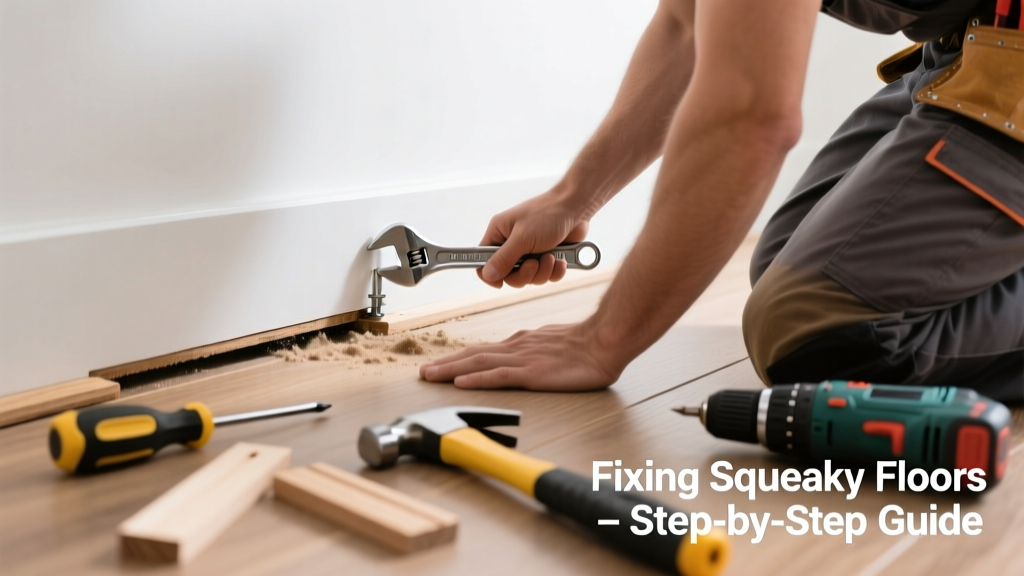
That one spot in your hallway that groans every time you walk past? It’s not just annoying—it’s a sign of shifting subfloor, loose fasteners, or moisture-related movement. Ignoring it can lead to worse structural issues over time, especially in older homes built before modern nailing standards.
Quick Diagnosis
Squeaks aren’t random—they point to specific mechanical failures. Before grabbing tools, rule out these common culprits:
- Loose nails or screws connecting the floorboards to the joists
- Gaps between subfloor and joists due to seasonal wood shrinkage
- Subfloor panels (like OSB or plywood) rubbing against joist edges
- Joist deflection caused by undersized lumber or overloaded spans
- Moisture damage weakening fastener grip or warping wood
Tools & Materials Needed
| Item | Purpose | Estimated Cost |
|---|---|---|
| Drill with countersink bit | Drives screws without splitting wood; creates clean recess for screw heads | $18–$45 |
| 1¾" coated deck screws | Stronger hold than nails; resist loosening from vibration | $6–$12 |
| Shim kit (wood or composite) | Fills gaps between subfloor and joist where access is limited | $8–$15 |
| Stud finder with joist mode | Locates joists through finished flooring—critical for accurate screw placement | $25–$60 |
| Fein Multimaster or oscillating tool | Cuts small access holes in baseboards or drywall for underside repairs | $120–$220 |
Step-by-Step Fix
Try these methods in order—from least invasive to most effective. Most homeowners resolve >80% of squeaks using Method 1 or 2.
- Top-down screwing: Use a stud finder to locate joists beneath the squeak. Drill pilot holes, then drive 1¾" coated screws at a slight angle into the joist—countersink flush. Cover with wax filler or touch-up stain.
- Shimming from above: If screws won’t bite (e.g., on concrete slab with floating floor), inject powdered graphite or use a thin wood shim driven into the gap between board and subfloor using a putty knife and hammer.
- Access from below (basement/crawlspace): Locate the squeaking joist, then drive screws upward through the subfloor into the joist—or tap shims between joist and subfloor until snug. Add construction adhesive for long-term hold.
- Subfloor reinforcement: For widespread squeaking, sister a 2×6 or 2×8 alongside the offending joist using construction adhesive and 3" structural screws spaced every 6".
When to Call a Pro
DIY has limits—and crossing them risks injury or worsening damage. Call a licensed contractor if:
- You hear cracking or popping sounds *alongside* squeaking—signs of joist failure (per the American Wood Council’s 2022 Residential Structural Design Guide)
- The floor feels spongy, dips more than ½" over 6 feet, or shows visible sagging
- You’re working in a crawlspace with standing water, mold, or exposed wiring—OSHA requires confined-space training for safe entry
- Your home was built before 1970 and lacks proper joist bridging or blocking, requiring engineering review before modification
Prevention Tips
Squeaks thrive in unstable environments. Reduce recurrence with these proactive steps:
- Maintain indoor humidity between 30–50% year-round—wood expands/contracts less within this range (U.S. Forest Service, Wood Handbook, 2023)
- Install blocking between joists every 4–6 feet during renovations—it stops lateral movement that causes friction
- Use construction adhesive (e.g., PL Premium) between subfloor and joists during new builds or major repairs
- Avoid dragging heavy furniture—lift instead. Casters with rubber wheels reduce abrasion on floor joints
Can I use lubricants like baby powder or graphite?
Yes—but only as a short-term fix. Powdered graphite works well for gaps between boards or tongue-and-groove joints. Sprinkle, sweep in, and vacuum excess. Avoid oil-based lubes: they attract dust, degrade finishes, and can void hardwood warranties.
Will carpet padding stop my squeaky floor?
No. Padding muffles sound but doesn’t fix the root cause—movement between layers. In fact, thick padding can mask worsening movement, delaying needed repair. Address the structure first, then add padding.
Why does my floor squeak more in winter?
Dry indoor air shrinks wood, widening gaps between subfloor and joists. This allows boards to flex and rub. According to the U.S. EPA, average winter indoor humidity drops to 15–25% in northern climates—well below wood’s ideal 30–50% range.
Can I screw into engineered hardwood without damaging it?
You can—if you pre-drill and use fine-thread screws no longer than 1¼". But avoid screwing near board ends or edges where delamination risk is highest. Better yet: use a specialty tool like the Squeak-No-More Kit, which drives break-away screws through finish flooring without surfacing.
How long do DIY fixes last?
Top-down screws typically last 10–15 years in stable environments. Shims may compress over time, especially in high-moisture areas. Adhesive-reinforced repairs often exceed 20 years—provided humidity stays controlled and loads remain within design limits.
Does insurance cover squeaky floor repairs?
Generally, no. Homeowners insurance covers sudden, accidental damage—not wear-and-tear or maintenance issues. However, if the squeak stems from covered water damage (e.g., a burst pipe that warped subfloor), related repairs may be reimbursable under your policy’s dwelling coverage.
"Over 60% of floor squeaks originate from inadequate fastener spacing—not poor materials. Modern code requires screws every 6 inches along joists, but many pre-2000 homes used nails every 12–16 inches." — International Residential Code Commentary, 2021 Edition
A truly quiet floor isn’t about silencing noise—it’s about restoring stability. Whether you choose a quick screw fix or reinforce the entire substructure, each repair brings your home closer to solid, confident footing. And if you’re tackling other aging elements, check out our guides on sagging ceiling drywall and cracked tile floor repair—they share similar principles of support and adhesion.