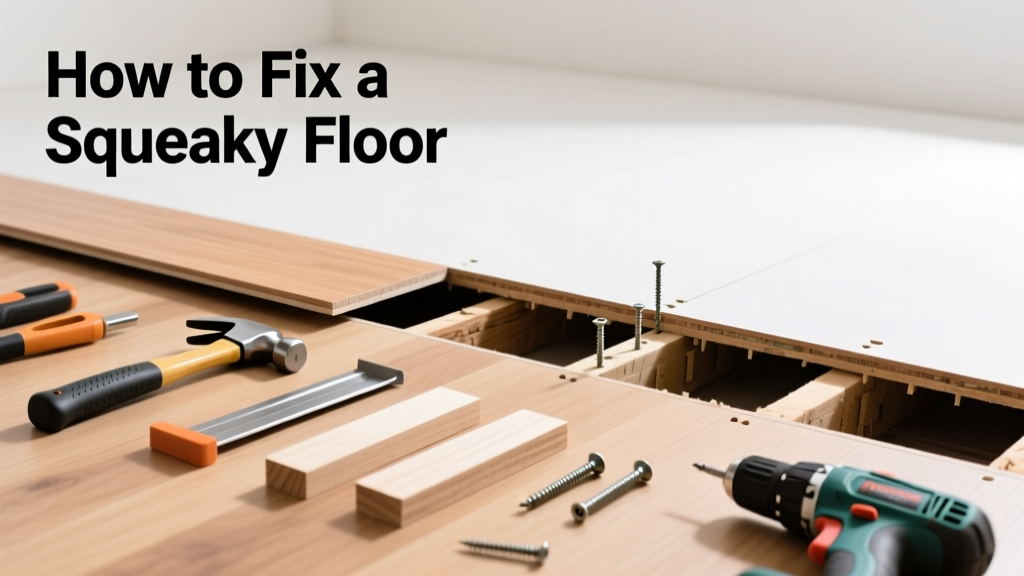
That one spot near the bedroom door that groans every time you walk across it? It’s not just annoying—it’s a sign of shifting subfloor, loose nails, or seasonal wood movement. Most squeaks are simple fixes, but ignoring them can lead to bigger structural issues over time.
Quick Diagnosis
Squeaks happen where friction occurs between moving parts. Here are the most common culprits:
- Loose subfloor-to-joist fasteners (nails pulling out)
- Gaps between subfloor and joists due to shrinkage or settling
- Shrinking hardwood boards rubbing against each other
- Joists that aren’t fully supported at ends or midspan
- Moisture-related warping in basement-level subfloors
Tools & Materials Needed
| Item | Purpose | Estimated Cost |
|---|---|---|
| Drill with countersink bit | Drives screws flush without splitting wood | $25–$60 |
| 1¾" coated deck screws | Holds subfloor tightly to joists; corrosion-resistant | $8–$12 |
| Shim kit (wood or composite) | Fills gaps between subfloor and joist | $5–$15 |
| Stud finder with joist mode | Locates joists through finished flooring | $30–$70 |
| Roofing nails & hammer (for carpeted floors) | Secures subfloor from below via access panel | $3–$7 |
Step-by-Step Fix
Choose the method based on your floor type and access:
- Top-down screwing (hardwood or tile): Use a stud finder to locate joists, mark centers, pre-drill pilot holes, then drive 1¾" screws 2" apart along joist lines. Countersink slightly and fill with matching wood putty.
- Shimming from above (carpet or vinyl): Lift edge of flooring, insert tapered wood shims between subfloor and joist until snug, then tap in gently with a mallet. Trim excess flush.
- Access from below (basement or crawlspace): Locate squeak from above, mark joist position on ceiling below, then drive 3" galvanized screws up through joist into subfloor—or add blocking between joists using 2×4s.
- Lubrication (temporary fix for hardwood): Sprinkle powdered graphite or talcum powder into gaps between boards using a thin nozzle; sweep in and wipe excess. Works best on surface-level friction—not structural looseness.
When to Call a Pro
DIY isn’t always safe or effective. Call a licensed contractor if:
- You hear creaking across multiple rooms—not isolated spots
- The floor feels spongy or dips more than ¼" under foot
- You spot visible gaps >⅛" between subfloor sheets or around perimeter walls
- Your home was built before 1970 and may have undersized joists or no blocking
- You lack crawl space or basement access and can’t locate joists reliably
According to the Insurance Institute for Business & Home Safety's 2023 report, 68% of homes with chronic floor squeaks also showed measurable deflection in joist systems—often missed by untrained eyes.
Prevention Tips
Keep your floors quiet long-term with these habits:
- Maintain indoor humidity between 35–55% year-round to minimize wood expansion/contraction
- Install proper blocking between joists during remodels (every 4–6 feet)
- Use construction adhesive between subfloor layers when installing new plywood or OSB
- Avoid dragging heavy furniture—lift instead, and use felt pads under legs
Can I use drywall screws instead of deck screws?
No. Drywall screws are brittle and snap under shear stress. Deck screws have deeper threads and higher tensile strength—critical for holding subfloor to joists. Using drywall screws risks future failure and potential injury.
Will fixing one squeak make others worse?
Rarely—but possible if you over-tighten screws near existing fasteners, compressing already-shrunken wood. Always stagger new screws at least 2" from old nail or screw holes. If adjacent squeaks appear after repair, moisture imbalance is likely the real culprit.
How long does a screw fix last?
Properly installed deck screws typically last 10–20 years in stable environments. In high-moisture areas like basements or bathrooms, expect 5–8 years before rechecking—especially if humidity fluctuates seasonally.
Do I need to remove baseboards to fix this?
Usually not. Top-down screwing works through most finishes. Baseboard removal is only necessary if you’re installing blocking or addressing perimeter gaps near walls—and even then, it’s often faster to work from below.
Can I fix a squeaky laminate floor the same way?
No. Laminate floats and shouldn’t be screwed down. Instead, lift the affected plank, apply construction adhesive to the subfloor beneath, and reinstall. For persistent noise, check for uneven subfloor—use a 6' level to spot dips >1/8" per 6 feet.
Is there a non-invasive fix for rental apartments?
Yes—try lubricating gaps with talcum powder first. If that fails, rent a stud finder and ask landlord permission to add screws from above (they’ll be hidden under trim or rugs). Avoid permanent modifications without written approval.
A well-fixed squeak is more than quiet—it’s peace of mind that your floor structure is intact and performing as designed. Keep an eye on seasonal changes, recheck screws every two years, and don’t ignore new noises—they’re early warnings your home needs attention. For related help, see our guides on subfloor repair and joist reinforcement.