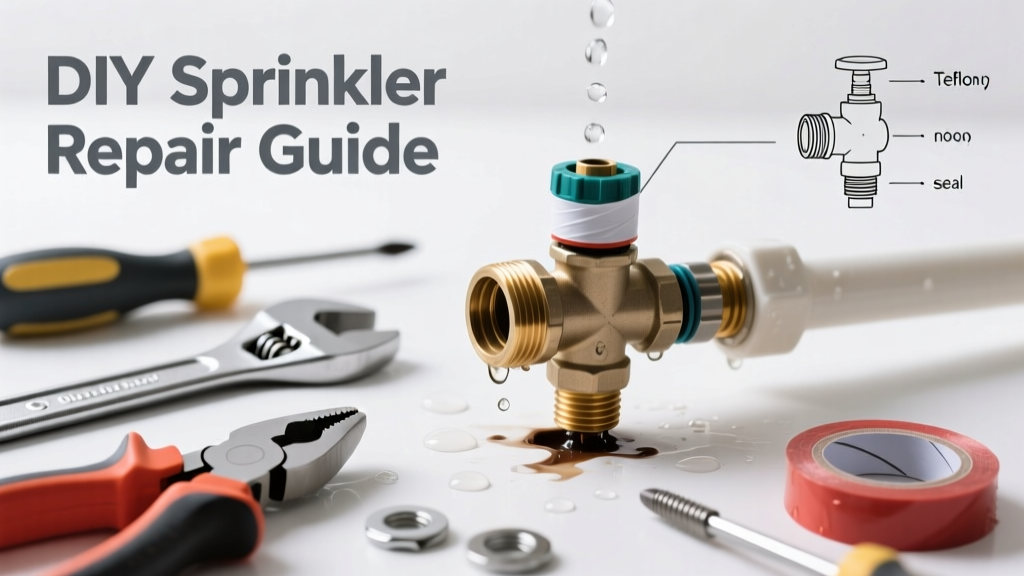
That sudden hiss, rattle, or rhythmic banging from your sprinkler system isn’t just annoying—it’s a red flag for pressure loss, component failure, or hidden damage. Left unaddressed, even a small leak paired with noise can waste hundreds of gallons weekly and risk foundation erosion or valve corrosion. Most issues are fixable in under two hours with basic tools and a methodical approach.
Quick Diagnosis
Start by isolating the source before grabbing tools. Unusual noise + leakage usually points to one (or more) of these culprits:
- A cracked or worn solenoid valve diaphragm—causes hissing, slow seepage, and delayed shutoff
- Water hammer from rapid valve closure—produces loud banging, especially after zone activation
- Air trapped in lines—creates gurgling or sputtering during startup
- Loose or corroded pipe fittings at valves or risers—leaks visibly while vibrating audibly
- Faulty pressure regulator or backflow preventer—leads to erratic flow, whistling, and weeping seals
Tools & Materials Needed
| Item | Purpose | Estimated Cost |
|---|---|---|
| Adjustable wrench | Tightens valve bodies and compression fittings without stripping threads | $12–$25 |
| Replacement diaphragm kit (brand-specific) | Fixes most solenoid valve leaks and restores quiet operation | $8–$18 |
| Thread seal tape (PTFE) | Seals threaded joints without over-torquing; prevents micro-leaks that cause vibration | $3–$6 |
| Pressure gauge (0–150 PSI) | Verifies line pressure is within 45–75 PSI range—critical for diagnosing hammer or regulator failure | $15–$35 |
| Small air compressor or garden hose with shut-off | Used to blow out trapped air or test for leaks post-repair | $0 (borrowed)–$80 |
Step-by-Step Fix
Follow this sequence—skip steps only if you’ve confirmed the issue via diagnosis:
- Shut off main water supply and relieve pressure: Close the main valve, then open the lowest sprinkler head or drain valve to release residual pressure and water. Wait until flow stops completely.
- Inspect and replace the valve diaphragm: Remove the solenoid cap, lift out the rubber diaphragm, and check for nicks, swelling, or mineral deposits. Replace it using your brand-matched kit—even if it looks intact, 80% of noisy leaks stem from degraded diaphragms (Irrigation Association, 2022).
- Install a water hammer arrestor: If banging occurs at zone startup/shutdown, add a ½-inch arrestor directly upstream of the affected valve. Mount vertically with mounting strap; don’t overtighten—hand-tight plus ¼ turn is sufficient.
- Bleed air from the line: Turn water back on slowly, then manually activate each zone for 90 seconds while observing the farthest head. Gurgling should fade within 3 cycles. If not, repeat with the zone valve open and bleed screw loosened.
- Re-seal threaded connections: Use fresh PTFE tape (wrap clockwise, 5–6 layers) on all brass-to-brass joints at valves and backflow assemblies. Over-tightening cracks fittings—torque to 25–30 ft-lbs max per manufacturer specs.
When to Call a Pro
Some scenarios demand licensed expertise—not just for safety, but code compliance and long-term reliability:
- Leak originates inside the main line between the meter and first valve (requires excavation and certified PE-rated pipe)
- Noise persists after replacing diaphragms and adding arrestors—suggests pump cavitation or failing pressure tank
- Backflow preventer is dripping from relief port or showing visible corrosion (state law requires annual certified testing)
- You measure >85 PSI at any valve—indicates failed pressure regulator or municipal supply surge requiring whole-house mitigation
Prevention Tips
Proactive care extends system life and cuts emergency repairs in half:
- Drain and winterize lines before first freeze—even in mild climates, condensation causes internal rust
- Test valve operation monthly: cycle each zone manually and listen for smooth engagement, no delay or chatter
- Install a whole-system pressure regulator if municipal supply exceeds 75 PSI (U.S. EPA estimates 14% of household water usage is from leaks, many tied to overpressure)
- Replace rubber components (diaphragms, O-rings) every 3 years—degradation accelerates in chlorine-treated or hard-water areas
Can I use bleach to clean my sprinkler valves?
No—bleach corrodes brass and degrades EPDM rubber faster than mineral buildup alone. Instead, soak parts in white vinegar for 15 minutes, then rinse with distilled water. For stubborn scale, use a commercial irrigation descaler like CLR Calcium, Lime & Rust Remover.
Why does my sprinkler hiss only when turning off?
Hissing at shutdown signals a failing solenoid coil or weak spring not fully seating the plunger. This allows trickle flow past the seal, creating both leak and audible air escape. Replace the entire solenoid assembly—not just the coil—if resistance tests below 20 ohms with a multimeter.
Is water hammer dangerous to my pipes?
Yes—repeated hammer events generate shockwaves exceeding 1,000 PSI, which fatigue solder joints and crack PVC over time. According to the Insurance Institute for Business & Home Safety's 2023 report, 22% of slab leak claims involve prior unaddressed water hammer symptoms.
"A single water hammer event rarely breaks a pipe—but 50+ cycles per week will shorten PVC service life by 40% and triple joint failure rates." — ASSE International Standard 1017 Technical Bulletin, 2021
How do I know if my backflow preventer is leaking internally?
Look for wet soil or puddling downstream of the device when the system is off. Also check the test cocks: if opening #2 (downstream) releases water without opening #1 (upstream), internal check valves have failed. That’s a mandatory replacement—not a DIY repair.
Can I fix a leaking pop-up sprinkler head myself?
Yes—if the leak is at the nozzle or cap, replace the entire rotor or spray body ($5–$12). If water seeps from the base while the zone is active, dig down and inspect the swing joint: cracked polyethylene or loose slip-fit connection is the usual cause. Cut and re-solder or use a push-fit repair coupling.
Once repairs are complete, run each zone for five minutes and monitor for recurrence—especially at transition points where noise and moisture intersect. Keep a log of valve replacements and pressure readings; patterns emerge fast. And remember: if your water bill jumps 15% month-over-month with no added usage, revisit your sprinkler diagnostics—you might’ve missed a slow underground leak. For related help, see our guide on sprinkler valve not opening or backflow preventer leaking.