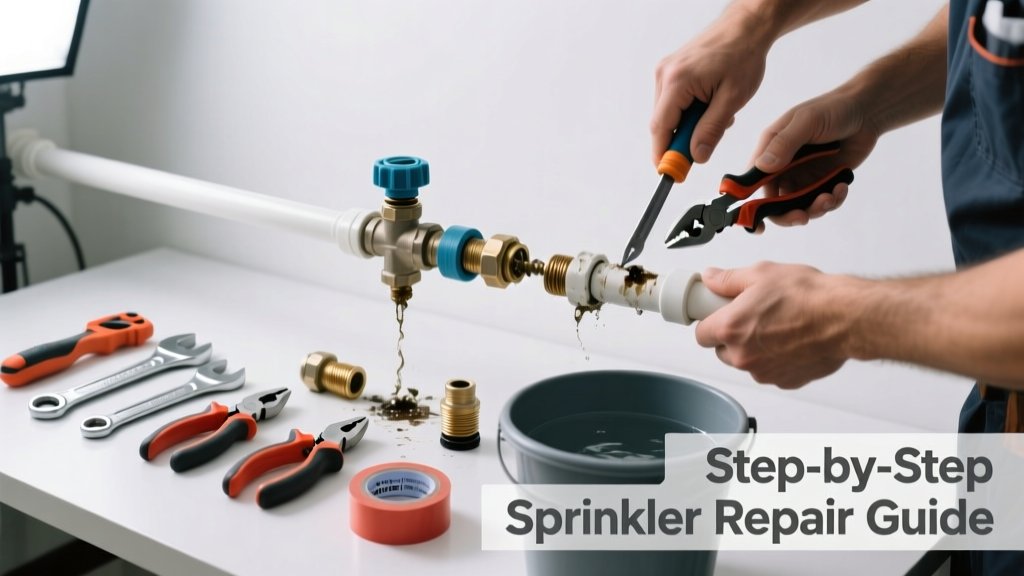
A slow drip from a sprinkler head or a steady puddle near a valve box isn’t just annoying—it can waste hundreds of gallons per week and erode your landscape. Left unaddressed, small leaks often grow into cracked pipes or failed solenoids, especially after winter freeze-thaw cycles. Most residential leaks are simple fixes if caught early and diagnosed correctly.
Quick Diagnosis
Before grabbing tools, identify the leak’s source. Common culprits include:
- Cracked or misaligned sprinkler heads (especially pop-up types exposed to lawn mowers)
- Loose or cross-threaded nozzle caps on rotor or spray heads
- Worn diaphragms inside anti-siphon valves or electric solenoid valves
- Corroded or punctured polyethylene (PE) pipe—often at fittings or where roots or shovels damaged it
- Frozen and split PVC laterals (common in zones that weren’t properly winterized)
Tools & Materials Needed
| Item | Purpose | Estimated Cost |
|---|---|---|
| Adjustable wrench | Tightens valve bonnets and compression fittings without stripping threads | $12–$25 |
| Sprinkler head key (or flathead screwdriver) | Removes stuck nozzles and adjusts rotor arcs | $4–$10 |
| Replacement diaphragm kit (e.g., Rain Bird 1800 series) | Fixes internal valve leaks without replacing entire unit | $8–$15 |
| PE pipe repair clamp or barbed coupling | Temporary or permanent fix for small pipe cracks or holes | $6–$20 |
| Thread seal tape (PTFE) | Seals threaded connections on valves and risers—never use pipe dope on plastic threads | $3–$7 |
Step-by-Step Fix
Start with the simplest, most accessible issues first:
- Inspect and tighten sprinkler heads: Turn on the zone, then gently hand-tighten each head where it meets the riser. If water sprays sideways or pools at the base, unscrew the head, wrap 3 wraps of PTFE tape clockwise on the male threads, and reinstall snugly—not over-tightened.
- Replace worn nozzles or filters: Use a sprinkler key to remove the nozzle. Rinse the filter screen under running water; replace if brittle or clogged. Reinstall with nozzle facing correct direction—misalignment causes overspray and pressure loss.
- Swap the valve diaphragm: Shut off main water and bleed pressure. Remove the valve cover, lift out the old rubber diaphragm (check for tears or warping), and install matching replacement. According to the Irrigation Association’s 2022 Field Technician Handbook, 68% of valve-related leaks stem from degraded diaphragms.
- Repair small pipe damage: For pinhole leaks in PE pipe, shut off water, cut out damaged section, and insert a barbed coupling with two hose clamps. For larger splits, use a slip-fix clamp rated for irrigation pressure (up to 150 PSI).
When to Call a Pro
Some situations demand certified expertise—not just experience:
- Leak originates underground between valves and heads with no visible wet spot—could indicate a broken main line requiring electronic leak detection
- Multiple zones leak simultaneously, suggesting backflow preventer failure or pressure regulator issues
- You suspect copper or PVC mains buried deeper than 12 inches—excavation risks gas, electric, or sewer lines
- Your system lacks a master shut-off valve or has outdated galvanized piping prone to internal corrosion
"A single leaking head wastes up to 750 gallons per month—equivalent to running a standard dishwasher daily for three weeks." — U.S. EPA WaterSense Program, 2023
Prevention Tips
Extend your system’s life and avoid repeat leaks:
- Winterize thoroughly: Blow out lines with ≥50 PSI compressed air before first freeze (don’t rely on drain valves alone)
- Trim grass and shrubs around heads quarterly—mower impacts cause 41% of head fractures (Irrigation Association Field Survey, 2021)
- Install pressure-regulating nozzles on all spray zones—excess pressure accelerates wear on seals and housings
- Test backflow preventers annually; replace test cocks every 5 years per ASSE 1013 standards
Can I use duct tape to patch a leaking pipe?
No—duct tape offers zero pressure resistance and degrades fast when wet or exposed to UV. It may temporarily mask moisture but won’t stop flow and could delay proper repair. Use a rated irrigation clamp or schedule a pipe replacement instead.
Why does my sprinkler leak only when the zone is off?
This points to a failing check valve or diaphragm inside the control valve. When the zone shuts down, residual pressure forces water backward through a compromised seal—causing weeping at the head or valve box. Replace the diaphragm or entire valve assembly.
Do I need to turn off the main water supply before fixing a leak?
Yes—always. Even low-pressure zones hold enough residual water to flood a valve box or obscure your work area. Shut off at the main, then open the lowest downstream valve or drain cap to relieve pressure.
How long do sprinkler heads last before needing replacement?
Quality brass or composite spray heads last 8–12 years with routine cleaning; rotors last 10–15 years. But lifespan drops sharply with hard water (scale buildup), frequent mowing damage, or poor winterization. Inspect heads biannually during spring startup.
Is a leaking anti-siphon valve dangerous?
Yes—beyond water waste, it risks contaminating your potable supply. Anti-siphon valves must be installed ≥6 inches above the highest sprinkler head. A leak here may indicate improper installation or internal corrosion. Replace immediately and verify height compliance per backflow prevention guidelines.
Can tree roots cause sprinkler leaks?
Absolutely. Aggressive species like willow, poplar, or maple seek moisture and can crush ¾-inch PE pipe or infiltrate poorly sealed couplings. If leaks recur in the same area year after year, consider root barrier installation or rerouting the line—see our guide on irrigation line reroute best practices.
Fixing a leaking sprinkler system isn’t about perfection—it’s about catching problems before they soak your foundation or spike your water bill. Most repairs take under an hour and cost less than $30 in parts. But don’t ignore recurring symptoms: a persistent leak often signals deeper issues like shifting soil, aging infrastructure, or design flaws that compound over time. Stay proactive, keep records of repairs, and treat your irrigation system like the engineered component it is—not just a set of hoses in the ground.