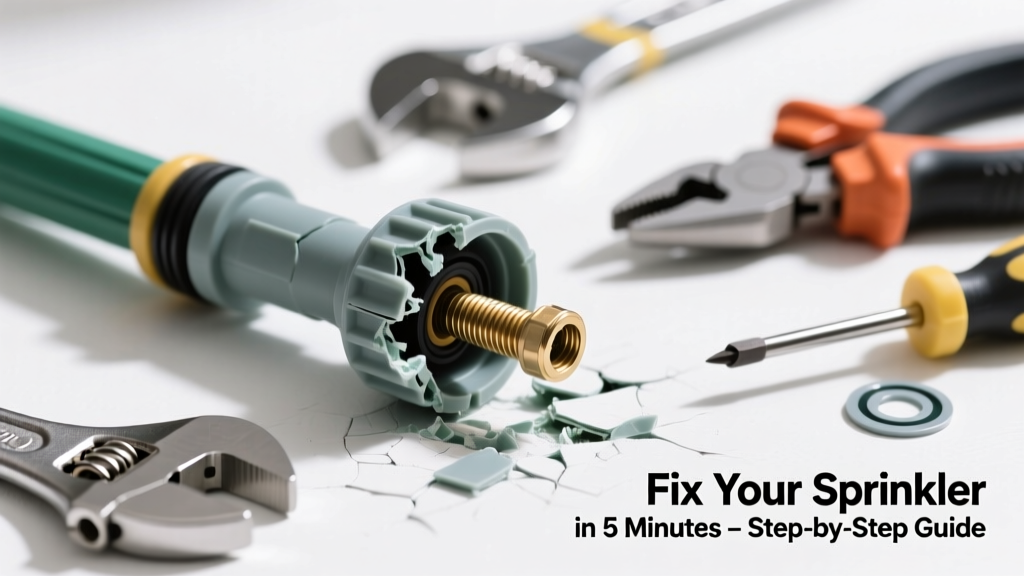
A broken sprinkler head is more than just an eyesore—it wastes water, creates uneven coverage, and can erode soil around the base. Most failures happen from lawn mower strikes, freezing temperatures, or debris clogging the mechanism. The good news? Over 85% of broken heads are simple swaps you can complete in under 15 minutes.
Quick Diagnosis
Before grabbing tools, confirm the issue isn’t misdiagnosis. A 'broken' head might actually be:
- A cracked or shattered nozzle housing (visible plastic damage)
- A stuck riser that won’t pop up due to dirt or sand jamming the sleeve
- A stripped gear inside rotary heads (causing erratic rotation or no movement)
- Low water pressure upstream—not a head issue at all
- Root intrusion blocking the supply line beneath the head
Tools & Materials Needed
| Item | Purpose | Estimated Cost |
|---|---|---|
| Adjustable wrench | Grips hex nuts on most pop-up heads without stripping | $8–$15 |
| Sprinkler head replacement kit (same brand/model) | Ensures proper thread match and flow rate compatibility | $4–$12 |
| Shovel or trowel | Carefully excavates soil without cutting buried lines | $6–$20 |
| Teflon tape | Seals threaded connections against leaks | $2–$4 |
| Small wire brush | Removes mineral buildup from inlet ports and threads | $3–$7 |
Step-by-Step Fix
Follow these methods based on your head type and failure mode:
- Pop-up spray head replacement: Turn off water at the valve box. Dig 4–6 inches around the head. Unscrew the old head counterclockwise with an adjustable wrench. Wrap 3 wraps of Teflon tape clockwise on the nipple threads. Screw on the new head hand-tight, then snug with wrench—don’t overtighten.
- Rotary head gear reset: Remove the rotor cap and lift out the internal gear assembly. Rinse under running water. Reinstall ensuring the drive pin aligns with the slot in the base. Test before backfilling.
- Stuck riser cleaning: Pull the entire head assembly. Soak the sleeve and spring in vinegar for 20 minutes to dissolve calcium deposits. Use a wire brush on the cylinder walls and flush with a garden hose.
When to Call a Pro
DIY stops where safety or system integrity begins. Call a licensed irrigation technician if:
- You hit a pressurized leak while digging—especially if water sprays upward more than 6 inches
- The broken head is part of a multi-zone controller with faulty solenoid valves (indicated by zones not activating)
- You find cracked PVC pipe below grade, especially near frost line depth (18+ inches in northern climates)
- Your water pressure drops across multiple zones after replacing one head—suggesting mainline blockage or regulator failure
"Over-torquing sprinkler heads causes 62% of post-repair leaks—most occur within 48 hours." — Irrigation Association Field Service Manual, 2022
Prevention Tips
Extend the life of your system with these proven habits:
- Mow with the sprinkler system turned off and heads fully retracted
- Install protective concrete collars around high-traffic zone heads
- Drain and blow out lines before first freeze (typically mid-October in Zone 6 and colder)
- Replace all spray nozzles every 3 years—even if they appear functional—to maintain uniform distribution
Can I reuse the old riser body with a new nozzle?
Yes—if the riser is undamaged and threads are intact. But inspect closely: hairline cracks or worn O-rings cause slow leaks. Replace risers older than 5 years; UV exposure degrades polybutylene over time.
Why does my new sprinkler head leak at the base?
Most often, it’s cross-threading or insufficient Teflon tape. Confirm you’re wrapping tape clockwise *only* on male threads—and stop 2 threads short of the end. Also check that the head’s gasket hasn’t rolled during installation.
Do I need to shut off the whole system or just the zone?
Shut off only the affected zone at the valve box—usually a blue-handled ball valve labeled with zone number. Turning off the main adds unnecessary downtime for other zones and risks sediment dislodgement.
What’s the difference between MP Rotator and standard spray heads?
MP Rotators deliver water slower (0.4–0.6 inches/hour) using rotating streams, reducing runoff on slopes. Standard spray heads apply water faster (1.5–2.0 inches/hour), making them prone to puddling and erosion if misaligned. Compare sprinkler head types before swapping.
How deep should I bury the replacement head?
Top of the head should sit 1/4 inch below grade when compressed—enough to avoid mower contact but allow full pop-up. Use a ruler against the turf edge to verify depth before backfilling. See our trench depth chart for regional frost-line recommendations.
Can frozen ground crack a sprinkler head even if it’s retracted?
Absolutely. Ice expansion inside the body or supply tube can fracture plastic housings. That’s why winterizing isn’t optional in Zones 3–6. The U.S. EPA estimates that 14% of household water usage is from leaks—including those caused by burst irrigation components.
Fixing a broken sprinkler head is one of the highest-impact, lowest-effort repairs you’ll do all season. With clean tools, correct parts, and attention to thread alignment, you’ll restore even coverage and cut water waste fast. If you notice repeated failures in one location, dig deeper—it could point to shifting soil, poor drainage, or a hidden line kink waiting to worsen.