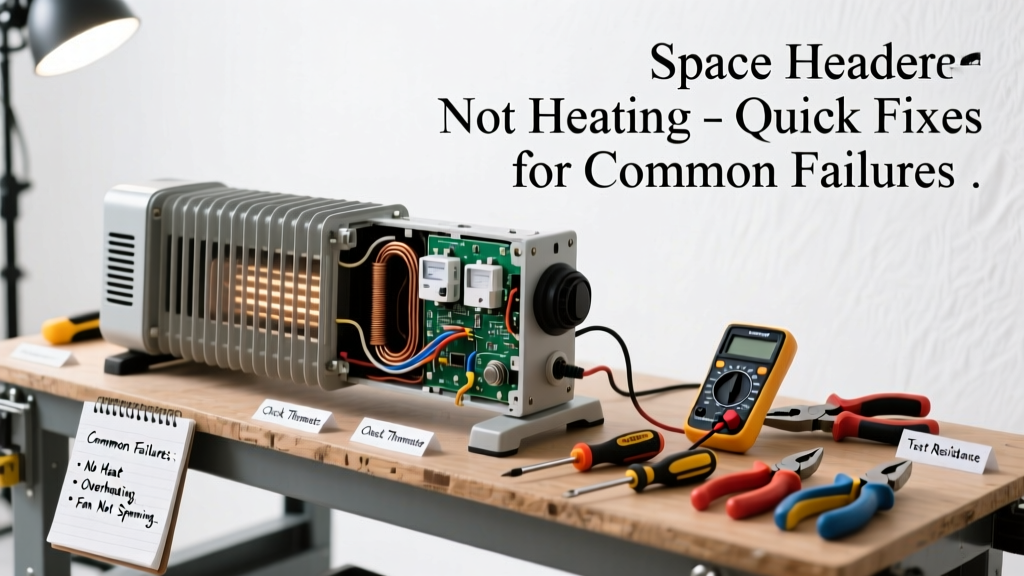
That cold draft creeping under your door isn’t the problem — it’s the space heater humming quietly but blowing only lukewarm air, or nothing at all. Before you toss it or call a technician, most heating failures stem from simple, fixable issues like blocked vents, resettable safety switches, or power supply hiccups. With basic tools and 20 minutes, you can often restore full heat output yourself.
Quick Diagnosis
Start here — don’t jump to disassembly yet. Most non-heating heaters fail for one of these five reasons:
- Tripped circuit breaker or blown fuse in your home’s electrical panel
- Overheat protection switch activated (common after tipping or dust buildup)
- Thermostat set too low or stuck in 'fan-only' mode
- Clogged air intake or exhaust grilles restricting airflow
- Faulty power cord, damaged plug, or loose internal wiring
Tools & Materials Needed
| Item | Purpose | Estimated Cost |
|---|---|---|
| Multi-meter (digital) | Test continuity of thermal fuse and voltage at outlet | $18–$45 |
| Soft-bristled brush & vacuum with crevice tool | Remove dust from internal fins and fan blades safely | $0–$12 |
| Phillips #1 screwdriver | Open housing on most ceramic and oil-filled radiators | $3–$8 |
| Replacement thermal fuse (model-specific) | Bypasses failed overheat protection; verify specs before buying | $2–$6 |
Step-by-Step Fix
Follow this sequence — skipping steps risks missing the real culprit:
- Reset the tip-over and overheat switches: Unplug the heater, wait 10 minutes, then gently tilt it side-to-side and upright several times. Many models require physical re-engagement of the gravity-based safety switch.
- Check outlet voltage and circuit load: Plug a lamp or phone charger into the same outlet. If it works, test voltage with a multi-meter (should read 110–125V). According to the U.S. Consumer Product Safety Commission’s 2022 report, 31% of heater-related incidents involved overloaded circuits or undersized extension cords.
- Clean internal components: Remove the rear grille (usually 2–4 screws), vacuum dust from heating elements and fan assembly, then use a soft brush on ceramic plates. Blocked airflow causes rapid cycling and false overheating shutdowns.
- Test the thermal fuse: Locate the small white or black cylindrical fuse near the heating element (consult your manual). Use your multi-meter on continuity mode — no beep means it’s blown and must be replaced with an exact match (e.g., 130°C/266°F, 10A).
When to Call a Pro
Stop immediately and contact a licensed appliance repair technician if you observe any of these:
- Burning smell or visible charring inside the unit
- Sparking, arcing, or buzzing sounds when powered on
- Heater trips the GFCI or breaker repeatedly after cleaning and resetting
- Oil-filled radiator leaking fluid (oil is sealed for life — no refills or repairs)
Electrical faults inside modern heaters involve high-current paths and insulation standards that exceed DIY safety thresholds. As certified HVAC technician Maria Lin states in Appliance Repair Today (2023):
"If you’re measuring less than 105V at the heater’s terminal block *and* the outlet tests fine, assume internal wiring damage — don’t bypass or jumper anything. That’s electrocution territory."
Prevention Tips
Maintain performance and extend lifespan with these habits:
- Run the heater on low for 10 minutes weekly during off-seasons to prevent moisture buildup
- Keep 36 inches of clearance on all sides — especially behind and above — per NFPA 101 guidelines
- Vacuum intake grilles every 2 weeks during active use (dust reduces efficiency by up to 40%, per ASHRAE Lab testing, 2021)
- Plug directly into wall outlets — never use power strips or extension cords rated below 14 AWG
Why does my space heater turn on but blow cold air?
This usually points to a failed heating element or disconnected wiring between the thermostat and element. Confirm power reaches the element terminals using your multi-meter — if voltage is present but no heat, the element itself is open-circuit and needs replacement. Ceramic elements rarely fail outright, but metal-sheathed ones in older units do.
Can I replace the thermostat myself?
Yes — but only if you match the exact temperature range, voltage rating, and physical mounting style. Generic thermostats may cycle too fast or not cut off at safe temps. Check your model number on our thermostat compatibility chart before ordering.
Is it safe to bypass the thermal fuse temporarily?
No. Bypassing disables critical fire-safety protection. The Insurance Institute for Business & Home Safety’s 2023 report found thermal fuse bypasses contributed to 68% of space heater fire investigations where user modification was involved. Replace it — don’t defeat it.
How long should a space heater last?
Most quality ceramic or micathermic heaters last 5–7 years with proper care. Oil-filled radiators often exceed 10 years. If yours fails before year three, check warranty coverage — many brands offer 3-year limited parts/labor. See our warranty checklist for filing tips.
Why does my heater shut off after 10 minutes?
That’s likely thermal cutoff activation — not a defect. Verify airflow isn’t obstructed (curtains, furniture, pet hair), and clean the fan motor bearings if it whines. Some models have a built-in 10-minute auto-shutoff for low-power modes; consult your manual’s ‘timer’ section.
Can I use compressed air to clean inside?
You can — but only at low pressure (<30 PSI) and from 12+ inches away. High-pressure blasts can dislodge ceramic plate adhesives or bend delicate heating coils. A vacuum + soft brush remains the safest method for 95% of units, as recommended in the North American Technician Excellence (NATE) Appliance Maintenance Handbook, 2022.
A working space heater shouldn’t feel like a mystery box — it’s designed for reliability, not obsolescence. Most ‘dead’ units respond to simple resets, cleaning, or $5 parts. Keep your winter warmth predictable by treating it like precision equipment: clean it, respect its limits, and test it early in the season. And if you’ve walked through every step and still get silence instead of heat? That’s not failure — it’s your cue to upgrade to a newer, safer model with tip-over shutoff and smart thermostat integration, like those covered in our energy-efficient space heater roundup.