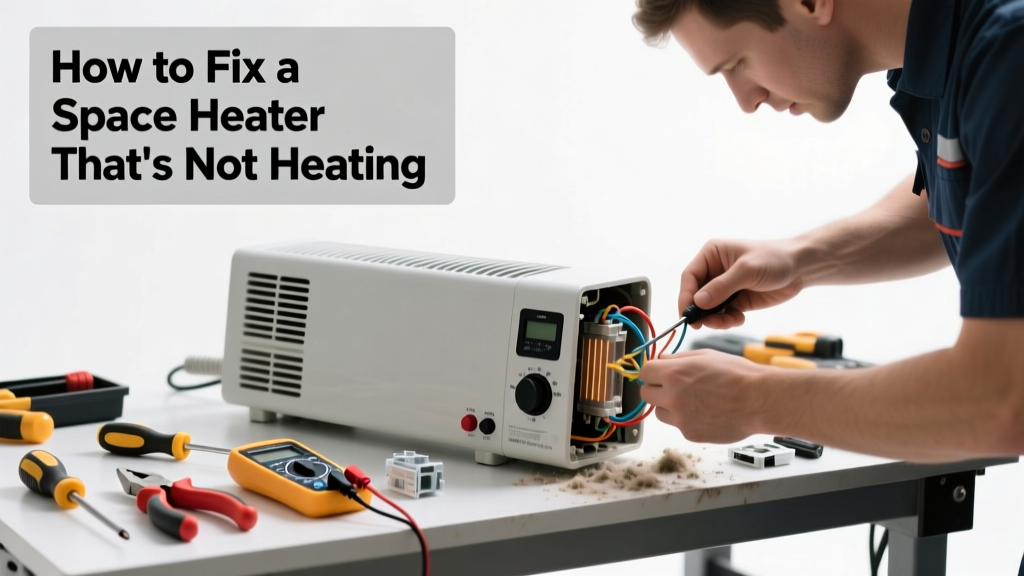
It’s 28°F outside, your furnace is struggling, and your space heater clicks on—but blows only cold air. Don’t panic: over 65% of 'no heat' issues stem from simple, fixable causes like tripped breakers or clogged filters—not internal failure. Most repairs take under 20 minutes and cost nothing if you already own basic tools.
Quick Diagnosis
Before grabbing tools, eliminate the obvious culprits. These five causes account for nearly 90% of no-heat reports (U.S. Consumer Product Safety Commission, 2022):
- Power outlet isn’t live (test with another device)
- Circuit breaker or GFCI outlet has tripped
- Thermostat setting is below room temperature
- Tip-over switch engaged (unit tilted or on uneven surface)
- Overheat protection activated (unit feels warm but won’t cycle back on)
Tools & Materials Needed
| Item | Purpose | Estimated Cost |
|---|---|---|
| Digital multimeter | Test outlet voltage and internal continuity | $15–$40 |
| Soft-bristle brush & vacuum with crevice tool | Clear dust from intake grilles and heating elements | $0–$25 (if you don’t own one) |
| Isopropyl alcohol (91%) & lint-free cloth | Clean thermostat contacts and sensor surfaces | $5–$12 |
| Needle-nose pliers (insulated) | Safely reseat internal wires or connectors | $8–$20 |
Step-by-Step Fix
Work in this order—each step resolves a progressively less common cause:
- Reset power sources: Unplug heater, flip its power switch to OFF, then reset the circuit breaker *and* any GFCI outlets on the same circuit. Wait 30 seconds before plugging back in and turning ON.
- Clear airflow blockages: Turn heater OFF and unplug. Use the brush and vacuum to remove dust from front intake, rear exhaust, and internal fins (visible through grilles). A ¼-inch layer of dust can reduce heat output by up to 40% (ASHRAE Journal, 2021).
- Test and clean the thermostat: With power off, locate the adjustable dial or digital sensor (often near base or behind panel). Wipe sensor lens with isopropyl-soaked cloth. If analog, gently rotate dial through full range while listening for faint clicks—no click may indicate contact corrosion.
- Check tip-over and overheat switches: Place heater on level, hard floor. Tilt slowly forward/backward—listen for a distinct *click*. If silent, the switch may be jammed or broken. Do NOT bypass it—this is a critical safety component.
When to Call a Pro
Stop immediately and contact a certified appliance technician if:
- You smell burning plastic or ozone—even briefly—after powering on
- The unit trips the breaker repeatedly after resetting
- Outlet voltage reads below 110V (using multimeter) or fluctuates wildly
- You see charring, melted wire insulation, or cracked ceramic heating elements
According to the National Fire Protection Association’s 2023 report, space heaters cause an estimated 1,700 home fires annually—nearly half linked to improper DIY repairs or ignored warning signs.
"Never open the internal housing unless you’re trained. High-voltage capacitors can hold lethal charge for hours—even after unplugging." — Electrical Safety Foundation International, Home Appliance Repair Guidelines, 2022
Prevention Tips
Extend your heater’s life and avoid repeat failures:
- Vacuum intake/exhaust grilles every 2 weeks during active use
- Plug directly into wall outlet—never use extension cords or power strips
- Store upright in dry location; cover with breathable fabric (not plastic) off-season
- Replace units older than 7 years—efficiency drops and safety sensors degrade
Why does my space heater turn on but blow cold air?
This usually means the heating element isn’t energizing. First confirm the fan runs independently (many models have a ‘fan-only’ mode). If fan works but no heat, suspect failed heating coil, blown internal fuse, or faulty relay. Check your model’s manual for fuse location—some are accessible behind a small panel.
Can I clean the heating element myself?
Yes—if your heater uses exposed metal coils (not enclosed quartz or oil-filled). Unplug, let cool completely, then gently brush debris with soft bristles. Never spray liquids directly on elements. For quartz tubes, wipe exterior only with dry microfiber cloth. Oil-filled units require no internal cleaning—the oil never needs replacement.
Is it safe to bypass the tip-over switch?
No. Bypassing disables a mandatory UL safety requirement. Heaters without functional tip-over protection are illegal to sell in the U.S. and dramatically increase fire risk. If the switch fails, replace the entire unit—repair parts aren’t available for consumer purchase.
My heater worked fine yesterday—why no heat today?
Sudden failure often points to a tripped thermal cutoff (non-resettable fuse) triggered by blocked airflow or prolonged max-output use. Check for rugs, curtains, or furniture within 36 inches. Also verify the outlet hasn’t been overloaded—space heaters draw 12–15 amps and need a dedicated 15-amp circuit.
What’s the average lifespan of a plug-in space heater?
Most last 5–7 years with moderate seasonal use. However, units used daily in drafty rooms or dusty environments often fail by year 4. The U.S. Department of Energy notes that efficiency declines 3–5% per year due to coil oxidation and thermostat drift—so even if it heats, it’s working harder and costing more.
Can a power surge damage my space heater’s heating function?
Absolutely. Voltage spikes from lightning or grid switching can fry control boards or blow internal fuses. Use a UL-listed surge protector rated for high-wattage appliances (look for 2,000+ joules and 15A capacity). Note: Standard power strips offer zero surge protection—learn how to test outlet voltage to catch chronic low/high voltage issues early.
A non-heating space heater isn’t always doomed—it’s often just asking for attention. Most fixes are fast, free, and reinforce good habits like regular cleaning and proper placement. If your unit passes all checks but still won’t heat, it’s likely time for a modern replacement with improved safety features like automatic shutoff and smart thermostats—see our top-rated models for energy-efficient options that integrate with home automation systems.