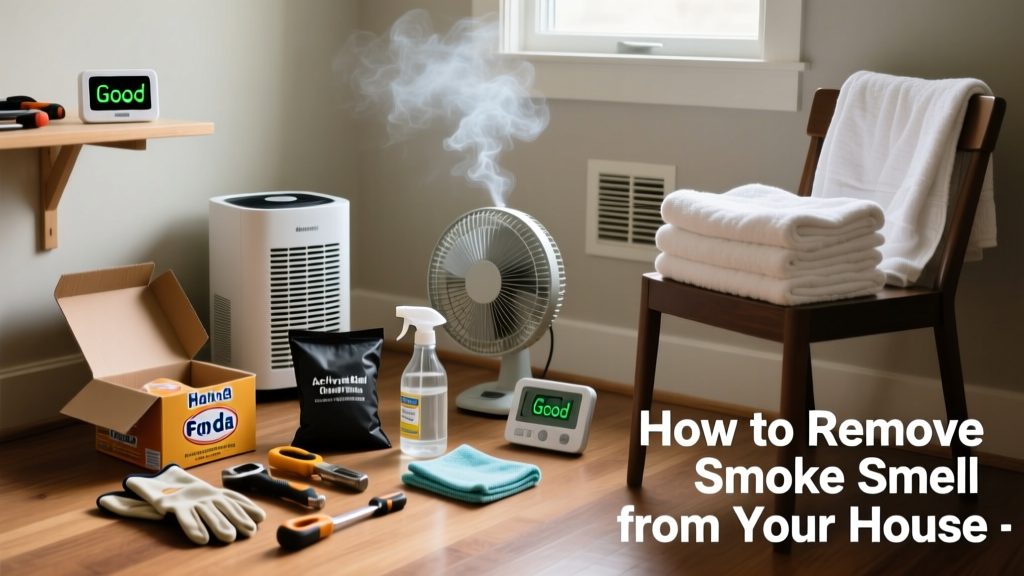
That acrid, clinging smoke odor—whether from burnt toast, a candle mishap, or worse—doesn’t just fade on its own. It embeds in fabrics, drywall, HVAC ducts, and even wood framing, turning your home into a persistent olfactory trap. Ignoring it risks long-term health irritation and reduced property value.
Quick Diagnosis
Before grabbing supplies, identify the source and severity:
- Cigarette or vape residue on walls, ceilings, and upholstery
- Grease-laden cooking smoke trapped in range hood filters and ductwork
- Smoke infiltration after a nearby fire—even without visible damage
- Electrical burning smell (immediate hazard—evacuate and call 911)
- Mold growth triggered by moisture from firefighting efforts
Tools & Materials Needed
| Item | Purpose | Estimated Cost |
|---|---|---|
| Ozone generator (rental) | Oxidizes volatile organic compounds causing odor at molecular level | $40–$75/day |
| HEPA air purifier with activated carbon filter | Captures fine soot particles and absorbs gaseous pollutants | $120–$350 |
| Trisodium phosphate (TSP) substitute | Deep-cleans nicotine film from walls and trim without hazardous phosphates | $8–$15 |
| Odor-neutralizing enzyme cleaner | Breaks down organic odor sources in carpets and upholstery | $12–$24 |
| N95 respirators & nitrile gloves | Protects lungs and skin during cleaning of soot-contaminated surfaces | $10–$20 |
Step-by-Step Fix
Start with containment and surface cleaning before tackling airborne and embedded odor:
- Ventilate aggressively: Open all windows and doors; run box fans outward for 48+ hours—but only if outdoor air quality is safe (check local AQI).
- Wash all textiles: Launder curtains, bedding, and washable rugs using ½ cup white vinegar + detergent; dry outdoors if possible. Upholstery requires professional steam cleaning or enzyme spray (e.g., Nature’s Miracle).
- Scrub hard surfaces: Mix 1 part TSP substitute with 3 parts warm water. Wipe walls, ceilings, cabinets, and light fixtures—rinse with damp cloth. Never mix with bleach.
- Treat HVAC system: Replace furnace and AC filters (MERV 13 or higher), then vacuum accessible duct registers with HEPA-filter vacuum. Consider duct cleaning if smoke exposure lasted >2 hours.
- Use ozone cautiously: Run ozone generator only in unoccupied, sealed rooms for 2–4 hours. Wait 2+ hours before re-entry. According to the U.S. EPA’s 2022 Indoor Air Quality Guide, ozone generators can irritate airways and damage rubber or electronics if misused.
When to Call a Pro
DIY stops where safety, structural integrity, or regulatory compliance begin:
- Smoke exposure from an actual structure fire—even a small kitchen fire that triggered alarms
- Soot or discoloration on insulation, attic sheathing, or behind baseboards
- Electrical outlets, switches, or breaker panels emitting a burnt plastic smell
- Insurance claim involvement: restoration contractors document damage for claims and follow IICRC S500 standards
- Odor returning within 72 hours of cleaning—indicating deep-seated contamination in wall cavities or ductwork
Prevention Tips
Stop smoke smells before they settle:
- Install dual-sensor smoke/CO alarms on every floor—and test monthly (smoke detector maintenance guide)
- Run your range hood at highest setting for 10 minutes after frying or grilling
- Designate outdoor areas for smoking and use ashtrays with tight lids
- Replace HVAC filters every 60 days in homes with frequent cooking or smoking activity
- Seal drywall seams and nail holes with oil-based primer (e.g., Kilz Original) before painting over smoke-damaged walls
Can I use bleach on smoke-stained walls?
No. Bleach reacts with nicotine residue to form yellowish, permanent stains and releases toxic chloramine gas when mixed with ammonia-based cleaners. Use pH-neutral TSP substitutes instead. As certified IICRC instructor Maria Chen notes in her 2023 Fire & Smoke Restoration Handbook: “Bleach masks odor but never removes the tar-like film—it just makes it harder to prime and paint later.”
Will an air purifier alone get rid of smoke smell?
Only temporarily. A HEPA + carbon unit reduces airborne particles and some VOCs, but won’t eliminate odor embedded in drywall paper, carpet padding, or furniture foam. It’s a support tool—not a standalone solution. For best results, pair with surface cleaning and ventilation.
How long does smoke smell last after a fire?
Without intervention, heavy smoke odor can persist for months. Light cooking smoke may fade in 3–5 days with airflow. But according to the Insurance Institute for Business & Home Safety’s 2023 report, 68% of homeowners who delayed professional cleaning beyond 72 hours reported recurring odor for over 6 weeks.
Does vinegar really neutralize smoke odor?
Vinegar helps with mild, surface-level odors (like from burnt food) due to its acetic acid breaking down basic odor molecules—but it lacks the oxidative power to neutralize complex polycyclic aromatic hydrocarbons in tobacco or fire smoke. Use it for stovetop cleanup, not whole-house remediation.
Can I paint over smoke-damaged walls?
Only after thorough cleaning and sealing. Unsealed nicotine residue will bleed through latex paint in days. Apply two coats of oil-based stain-blocking primer (e.g., Zinsser Cover Stain), then finish with zero-VOC paint. Skipping prep leads to costly rework—drywall repair after fire often starts here.
Is ozone safe for pets and plants?
No. Ozone damages lung tissue in animals and dehydrates plant tissues. Remove pets, birds, reptiles, and houseplants before operation. Wait at least 2 hours—and ideally 4—after shutdown before re-entering. The American Lung Association warns that ozone exposure above 0.05 ppm poses respiratory risk, especially for asthmatics.
Smoke smell isn’t just unpleasant—it’s a sign of chemical residue that can trigger allergies, worsen asthma, and corrode electronics over time. Tackle it methodically: ventilate first, clean thoroughly, seal intelligently, and don’t hesitate to bring in certified pros when walls, ducts, or wiring are involved. A fresh-smelling home starts with honest assessment—not just masking the problem.