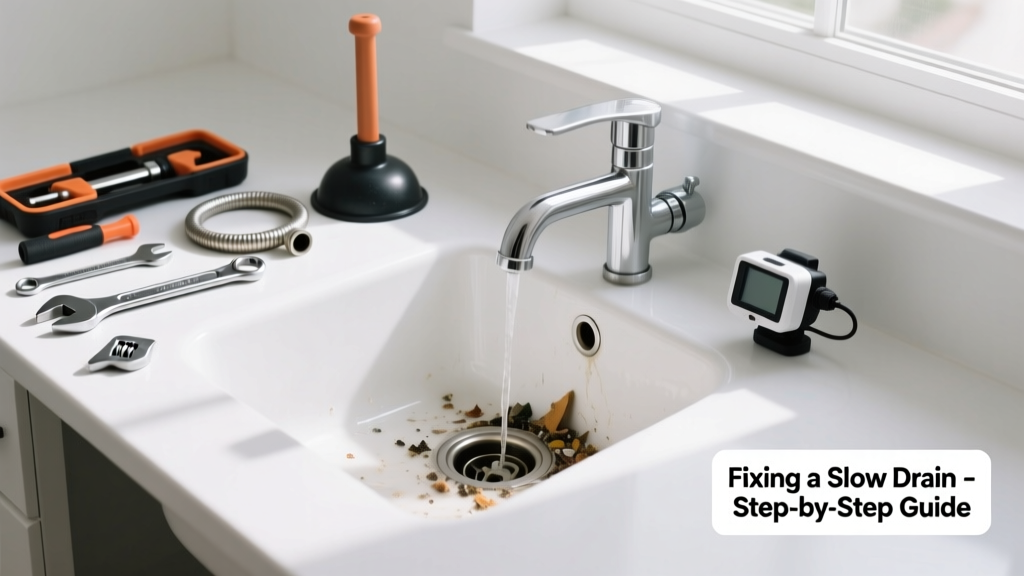
That gurgle-and-drip rhythm in your kitchen or bathroom sink isn’t just annoying—it’s a warning. A slow drain often means trouble brewing deeper in your pipes, and ignoring it can lead to full clogs, overflow, or even pipe corrosion over time.
Quick Diagnosis
Before grabbing tools, narrow down the culprit. Most slow drains stem from one (or more) of these common causes:
- Accumulated hair, soap scum, and grease near the trap or pop-up assembly
- Mineral buildup in older galvanized or brass pipes
- A partial blockage further down the line—often at a junction or vent stack
- A blocked or improperly sloped drain line (especially in older homes with cast iron)
- Failed or collapsed section of underground drainpipe (rare but serious)
Tools & Materials Needed
| Item | Purpose | Estimated Cost |
|---|---|---|
| Plunger (cup-style) | Creates pressure to dislodge shallow clogs | $5–$12 |
| Zip-it tool or drain snake (15–25 ft) | Retrieves hair and debris from P-trap and beyond | $3–$18 |
| White vinegar + baking soda | Natural reaction helps break down organic gunk | $2–$4 |
| Wrench or pliers | To loosen slip-nut on P-trap for cleaning | $8–$25 |
| Rubber gloves & bucket | Protects hands and catches wastewater during trap removal | $3–$10 |
Step-by-Step Fix
Try these methods in order—start simple and escalate only if needed:
- Boiling water flush (kitchen only): Pour 2–3 kettles of boiling water down the drain—effective for grease-based slowdowns. Skip this for PVC pipes older than 10 years or if you suspect plastic pipe damage.
- Vinegar + baking soda fizz: Pour ½ cup baking soda, wait 30 seconds, then add ½ cup white vinegar. Cover the drain for 10 minutes, then flush with hot (not boiling) water. Repeat twice weekly for maintenance.
- Plunge with seal: Block overflow holes with wet rags, fill sink with 2–3 inches of water, and plunge vigorously for 20–30 seconds. Use firm, vertical strokes—not side-to-side rocking.
- Remove and clean the P-trap: Place bucket under trap, loosen slip-nuts with pliers, remove trap, and clear debris with a bottle brush or old toothbrush. Reassemble with fresh plumber’s tape on threaded joints.
- Snake past the trap: Feed a hand-crank drain snake past the trap into the wall pipe. Rotate while advancing—stop when resistance hits, then twist and retract to hook and pull out gunk.
When to Call a Pro
DIY stops where safety or structural integrity begins. Call a licensed plumber if:
- You’ve tried all five methods above and flow hasn’t improved after 48 hours
- Multiple drains (e.g., tub, toilet, and sink) are backing up simultaneously—this signals a main sewer line issue
- You smell sewage gas (rotten eggs) near floor drains or basement walls
- Water is pooling around floor drains or backing up through the cleanout access point outside
- Your home has cast iron or clay tile pipes installed before 1975—corrosion or root intrusion may require camera inspection
According to the Insurance Institute for Business & Home Safety's 2023 report, 68% of sewer line failures begin as slow-drain symptoms ignored for over three months.
Prevention Tips
Consistent care beats crisis repair every time. These habits extend drain life by years:
- Install mesh strainers in every sink and shower—and clean them weekly
- Rinse kitchen sinks with hot (not boiling) water after each use, especially after greasy dishes
- Once monthly, pour ¼ cup baking soda followed by ¼ cup vinegar, then flush with hot water after 10 minutes
- Avoid pouring coffee grounds, eggshells, or starchy pasta water down any drain
- In bathrooms, wipe excess hair from the drain cover before showering—not after
Can I use bleach on a slow drain?
No. Bleach doesn’t dissolve hair or grease—it corrodes metal pipes over time and reacts dangerously with ammonia or vinegar if used in sequence. The U.S. EPA estimates that 14% of household water usage is from leaks caused by chemical damage to seals and joints.
Will a plunger work on a double-basin sink?
Yes—but only if you seal the second basin. Plug it with a wet rag or stopper, then plunge the active side. Without sealing, air escapes and pressure won’t build. For stubborn cases, try replacing worn faucet washers, which sometimes mimic slow-drain symptoms due to internal valve issues.
Why does my drain smell even though water flows?
A foul odor usually means bacteria feeding on trapped organic matter in the P-trap or overflow channel. It’s not always a clog—just stagnant water gone sour. Pouring ½ cup hydrogen peroxide down the drain weekly kills odor-causing microbes without damaging pipes.
Can tree roots cause a slow drain?
Absolutely. Roots seek moisture and can infiltrate tiny cracks in underground clay or cast iron lines—even 100 feet from your home. If slow drainage coincides with seasonal dry spells or nearby mature trees, schedule a sewer line camera inspection. Root intrusion accounts for nearly 30% of sewer backups in homes built before 1990 (National Association of Home Builders, 2022).
Is a drum auger better than a hand snake?
For recurring slow drains in main lines or tubs with deep traps, yes. A 25-ft drum auger reaches farther and handles thicker obstructions like cloth or hardened sludge. But for routine sink clogs, a $10 hand snake is faster, cleaner, and easier to store.
What’s the difference between a slow drain and a stopped drain?
A slow drain still moves water—just sluggishly—meaning the obstruction is partial and likely within reach of DIY tools. A stopped drain has zero flow, indicating either a complete blockage (often deeper) or a venting issue preventing air displacement. Don’t force plunging or chemicals on a fully stopped drain—diagnose first.
A slow drain isn’t just an inconvenience—it’s your plumbing system’s early-warning system. Tackle it promptly with the right tools and timing, and you’ll dodge bigger headaches like overflowed toilets or corroded pipes. Keep a zip-it tool under every sink, and treat your drains like appliances: clean, inspect, and maintain—not ignore until they scream.