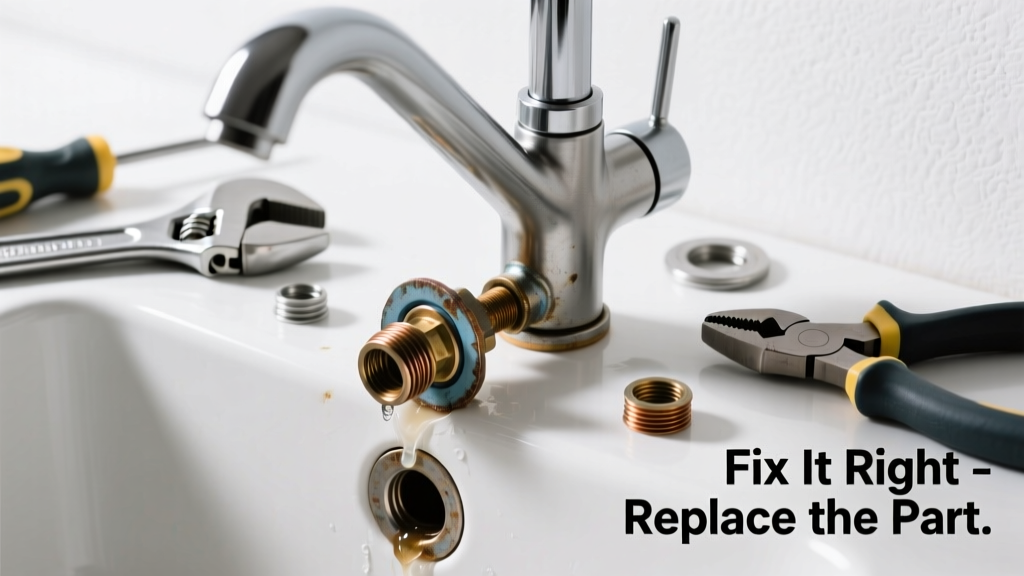
If your kitchen or bathroom drain gurgles, pools water, or takes forever to clear—even after plunging—it’s likely not a clog but a failing component. A worn pop-up assembly, corroded pivot rod, or cracked tailpiece won’t respond to chemical cleaners or snakes. Replacing the right part fixes it permanently—and costs under $25 if you do it yourself.
Quick Diagnosis
Before grabbing tools, rule out simple causes. A slow drain isn’t always about replacement—it could be debris, buildup, or venting issues. But if water backs up *only* when the stopper is engaged—or you hear clunking when moving the lever—the problem is almost certainly mechanical.
- Pop-up stopper doesn’t lift or seal properly (bent linkage or worn rubber seal)
- Drain body shows visible corrosion or hairline cracks near the overflow opening
- Pivot rod slips out of the clevis strap repeatedly
- Tailpiece leaks at the slip-joint nut, even when tightened
- Overflow plate wobbles or no longer holds position
Tools & Materials Needed
| Item | Purpose | Estimated Cost |
|---|---|---|
| Adjustable wrench | Tightens slip-joint nuts without stripping brass or PVC | $12–$22 |
| Needle-nose pliers | Reaches into tight spaces to reattach pivot rods and clevis straps | $8–$15 |
| Replacement pop-up assembly (brass or stainless) | Matches sink configuration (standard, offset, or rear-overflow) | $14–$29 |
| Plumber’s grease | Lubricates pivot rod and stopper shaft to prevent future seizing | $4–$7 |
| Flashlight & rag | Inspects hard-to-see joints and catches drips during disassembly | $0–$3 |
Step-by-Step Fix
Most slow drains stem from one of three replaceable parts. Start with the simplest—and most common—failure point first.
- Replace the pop-up stopper assembly: Shut off water, place bucket under P-trap, loosen slip-joint nuts, remove tailpiece and pop-up body. Match old assembly’s dimensions (measure from flange to pivot rod hole) before buying. Install new unit with fresh plumber’s grease on all moving parts.
- Swap the pivot rod and clevis strap: If the rod is bent or corroded, unscrew the mounting nut under the sink, slide out the old rod, and thread in a new one. Adjust clevis strap so the stopper lifts fully but seals tightly—usually 2–3 threads showing past the strap.
- Install a new tailpiece and flange: If the drain body itself is cracked or stripped, remove the entire assembly. Use a basin wrench to loosen the locknut holding the flange. Replace both flange and tailpiece as a matched set—especially if your sink has a non-standard thickness (e.g., 1.5" granite).
When to Call a Pro
DIY stops where safety or code compliance begins. Don’t attempt these scenarios alone:
- You detect sewer gas odor (rotten egg smell) coming from the drain—this signals a broken trap seal or vent issue
- The drain connects to a cast-iron branch line older than 1970; cutting or rethreading may require specialty tools
- Your home uses lead or galvanized steel supply lines—disturbing them risks contamination or pipe collapse
- You’ve replaced the pop-up twice in six months—suggests an underlying alignment or venting flaw only a licensed plumber can diagnose
"Over 62% of repeat slow-drain complaints stem from incorrect pop-up assembly geometry—not clogs," says plumbing engineer Lena Torres in the American Society of Plumbing Engineers Journal (2022).
Prevention Tips
Extending the life of your drain hardware is easier than you think—especially once you know what accelerates wear:
- Rinse hot water down the drain weekly to dissolve soap scum before it hardens on pivot rods
- Avoid harsh chemical drain openers—they degrade rubber seals and corrode brass linkages over time
- Wipe the stopper and flange with vinegar every 3 months to remove mineral deposits that cause sticking
- Never force the lift rod—if resistance occurs, disassemble and inspect instead of cranking harder
Can I use bleach on this?
No. Bleach reacts with metal components, accelerating corrosion on pivot rods and clevis straps. It also degrades rubber stopper seals faster than normal use. Stick to white vinegar or baking soda-and-water flushes for routine maintenance.
Do I need to replace the whole drain if the flange is stained?
Staining alone—like light rust or mineral rings—is cosmetic and removable with a non-abrasive cleaner like Bar Keepers Friend. Replace the flange only if it’s cracked, warped, or no longer creates a watertight seal against the sink surface.
Why does my new pop-up still leak at the flange?
Most often, it’s improper compression of the rubber gasket. Tighten the locknut under the sink *just until resistance is firm*, then give it a quarter-turn more. Over-tightening flattens the gasket and creates gaps. Also check that the flange sits flush—granite or thick composite sinks sometimes require an extended-length flange kit.
Is a plastic pop-up assembly okay for a kitchen sink?
Not recommended. Kitchen drains handle hotter water, heavier debris, and more frequent use. Plastic units fatigue faster and warp under heat. Choose solid-brass or stainless-steel assemblies—they last 3–5× longer and resist corrosion from food acids and dish soap.
How do I know which pop-up size fits my sink?
Measure two things: (1) distance from sink surface to bottom of drain opening (standard is 2.5"–3.5"); (2) location of overflow hole relative to drain center (centered, offset left/right, or rear-mounted). Match both specs—many brands list compatibility charts on their packaging or kitchen sink drain types page.
Can I reuse the old slip-joint washers?
No. Rubber and fiber washers compress permanently after first use. Reusing them causes leaks at the tailpiece or P-trap connection. Always install new washers—most replacement kits include them, or buy a universal plumber’s washer kit for under $6.
A properly replaced pop-up or tailpiece should restore full flow in under 45 minutes—and keep working for years if maintained. You’ll notice the difference immediately: no more waiting for water to vanish, no more sticky levers, and no more guessing whether it’s ‘just a clog’ or something deeper. That quiet, confident gurgle as water disappears? That’s the sound of a job done right.