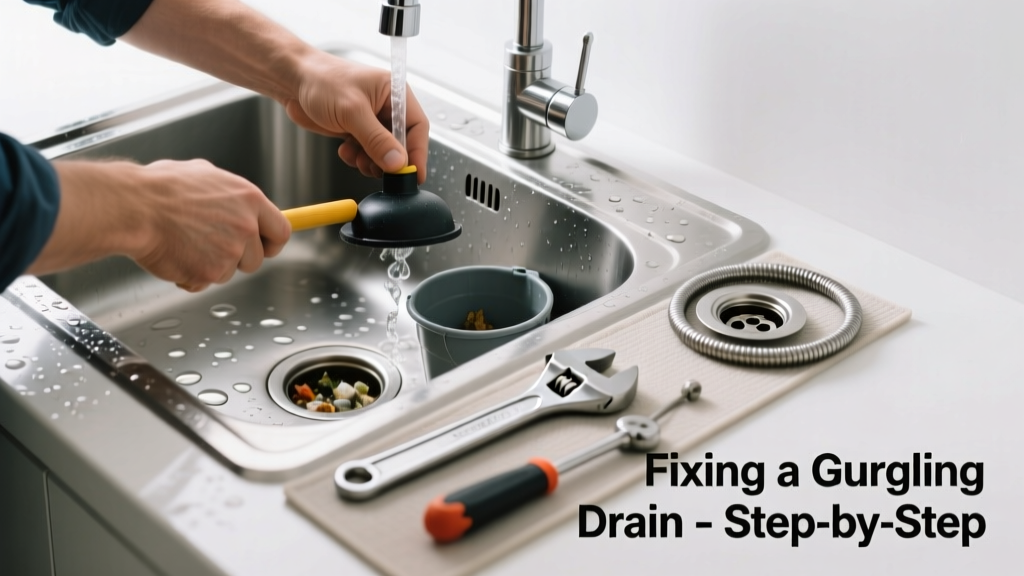
That gurgle when you flush the toilet, the low rumble as your sink drains, or the metallic rattle from your bathroom tub — these aren’t just annoying. They’re warning signs your drain vent is blocked, your P-trap is compromised, or sewer gases are escaping. Ignoring them can lead to water backup, mold growth, or even toxic gas exposure.
Quick Diagnosis
Before grabbing tools, identify what the noise *means*:
- Gurgling or bubbling — usually indicates a blocked vent pipe or shared drain line airlock
- Rattling or clanking — often loose pipe hangers, worn washers, or failing trap seals
- Hissing or whistling — suggests partial blockage creating vacuum pressure changes
- Thumping or knocking — commonly water hammer in supply lines, but can mimic drain issues if misdiagnosed
Tools & Materials Needed
| Item | Purpose | Estimated Cost |
|---|---|---|
| Plumber’s snake (25-ft hand auger) | Cleans hair and soap scum past the trap without damaging pipes | $12–$25 |
| Wet/dry vacuum (with hose adapter) | Creates strong suction to dislodge vent obstructions | $40–$80 |
| Adjustable wrench & channel locks | Tightens loose slip-joint nuts and secures pipe hangers | $15–$35 |
| White vinegar + baking soda | Natural enzymatic action breaks down organic buildup safely | $3–$6 |
| Roof access ladder (if checking vent) | Required to inspect and clear roof vent stacks safely | $80–$150 (rental) |
Step-by-Step Fix
Try these methods in order — most issues resolve at Step 1 or 2:
- Clear the P-trap: Place a bucket under the sink, loosen the slip-joint nuts, remove the trap, and clean out debris with a bottle brush and hot water. Reassemble tightly — over-tightening cracks PVC.
- Snake the drain line: Feed a hand auger 12–18 inches past the trap into the wall pipe. Rotate clockwise while pushing gently; retract slowly to catch hair and sludge. Flush with near-boiling water afterward.
- Test and clear the vent stack: From the roof, insert a garden hose into the vent opening and run cold water for 30 seconds. If water backs up or doesn’t flow freely, use a sewer auger (or hire help) — nests, ice, or bird debris often block rooftop vents.
- Check for loose hangers or supports: In basements or crawlspaces, inspect exposed drain pipes for sagging or clanging metal straps. Tighten or replace corroded hangers every 4–6 feet per IPC code standards.
When to Call a Pro
Stop and call a licensed plumber if:
- You hear gurgling from multiple fixtures simultaneously — this points to main sewer line blockage or collapsed pipe
- The noise worsens after DIY attempts, especially with foul odors or sewage backup
- You suspect tree roots in cast iron or clay pipes (common in homes built before 1980)
- You need to access a vent through a finished ceiling or attic with no safe entry point
According to the Insurance Institute for Business & Home Safety's 2023 report, 68% of sewer backups linked to vent failures occur during winter months due to frost closure — a condition best diagnosed with camera inspection.
Prevention Tips
Maintain smooth drainage year-round with these habits:
- Run hot water for 30 seconds after each sink use to melt grease residue
- Once monthly, pour ½ cup baking soda followed by ½ cup white vinegar down drains; wait 15 minutes, then flush with boiling water
- Install mesh strainers in all sinks and tubs — clean them weekly to prevent hair and food buildup
- Inspect roof vent caps annually for rust, warping, or animal nesting (squirrels love PVC vents)
Can I use bleach on this?
No. Bleach reacts with organic buildup to create toxic chlorine gas, especially in confined drain lines. It also degrades rubber gaskets and PVC glue joints over time. Stick to enzymatic cleaners like Green Gobbler for safe, long-term maintenance.
Why does only one sink gurgle when the dishwasher runs?
This signals a shared drain line with inadequate venting between appliances. Dishwashers discharge rapidly, creating negative pressure that pulls air — and water — from the sink’s P-trap. Install an air admittance valve (AAV) under the sink cabinet per local code, or upgrade to a dedicated vent line.
Will a plunger fix gurgling?
Only temporarily — and only if the issue is a shallow clog near the fixture. A plunger can’t reach vent pipes or main line obstructions. Overuse may damage older traps or push debris deeper. Use it as a first test, not a solution.
Is the noise coming from the wall or the pipe?
Place your ear against the wall near the drain — if sound is loudest there, it’s likely vent-related or a loose pipe inside framing. If it’s loudest directly at the drain or trap, focus on fixture-level fixes first. A stethoscope-style listening tool helps isolate the source.
How do I know if my vent pipe is frozen?
In sub-zero weather, look for frost crystals around the roof vent cap or condensation dripping inside attic vents. You may also notice sluggish drainage across multiple floors. Never pour antifreeze or salt — use a hair dryer on low heat from the roof access point, or call a pro for steam cleaning.
What’s the difference between gurgling and bubbling?
Gurgling is rhythmic, low-frequency, and tied to water movement — typically a vent or airlock issue. Bubbling is higher-pitched, intermittent, and often accompanied by visible air bubbles rising in standing water — a sign of sewer gas infiltration or failed trap seal. Both require attention, but bubbling poses greater health risk.
A noisy drain isn’t just background noise — it’s your plumbing system speaking up. Addressing it early prevents bigger headaches: backed-up toilets, warped subfloors, or even elevated indoor methane levels. Keep your traps sealed, vents clear, and pipes supported, and you’ll rarely hear that unsettling gurgle again. For persistent issues, check our guide on sewer line camera inspection or P-trap replacement for deeper fixes.