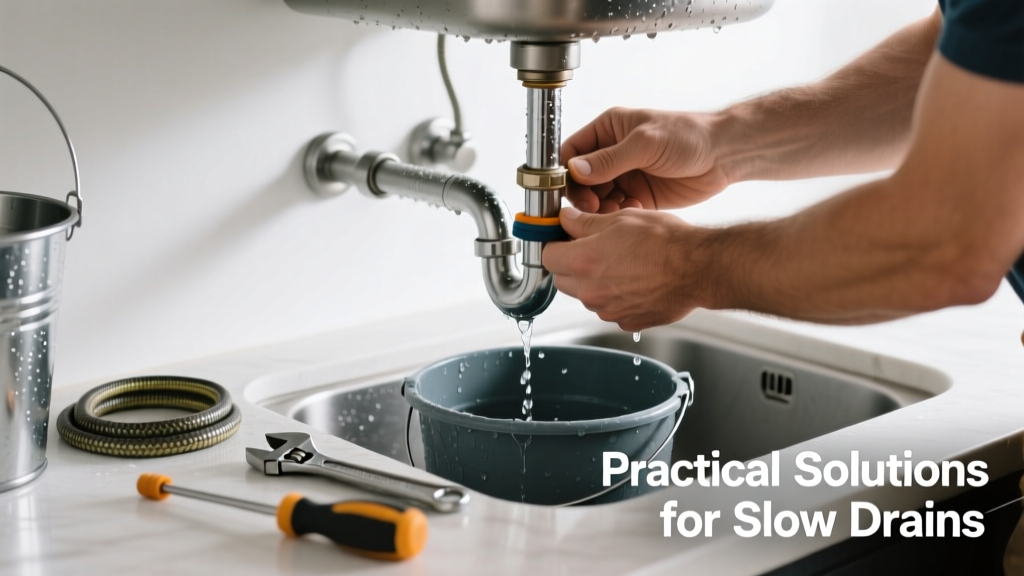
That gurgle-and-drip sound when you run the kitchen sink? It’s not just annoying—it’s a warning. A slow kitchen drain often means grease, food particles, or soap scum building up in the P-trap or further down the branch line. Left unaddressed, it can lead to backups, foul odors, or even water damage under your cabinets.
Quick Diagnosis
Before grabbing tools, identify the likely culprit. Most kitchen slow drains stem from one (or more) of these:
- Fat, oil, and grease (FOG) congealing in the P-trap or horizontal pipe
- Ground coffee, rice, pasta, or starchy food debris forming a sludge layer
- A clog at the garbage disposal inlet or impeller plate
- Mineral buildup from hard water in older galvanized or brass pipes
- Tree roots or collapsed pipe—less common, but possible in homes over 30 years old with clay or cast-iron lines
Tools & Materials Needed
| Item | Purpose | Estimated Cost |
|---|---|---|
| Plunger (cup-style, not flange) | Creates suction/seal on flat sink opening; best first attempt | $8–$15 |
| Zip-it drain cleaning tool | Retrieves hair and fibrous debris caught near the stopper assembly | $3–$6 |
| Plumber’s snake (15–25 ft, hand-crank) | Reaches past the P-trap into the wall stub-out (up to 20" deep) | $12–$28 |
| White vinegar + baking soda | Natural reaction loosens organic film; safe for septic systems | $4–$7 total |
| Wet/dry vacuum (with hose adapter) | Generates stronger suction than plunging—especially effective on partial clogs | $40–$90 (rental available) |
Step-by-Step Fix
Try these methods in order—most issues resolve at Step 1 or 2. Skip ahead only if the previous step fails.
- Boiling water + dish soap flush: Pour ½ cup liquid dish soap down the drain, wait 5 minutes, then slowly pour 4–6 cups of boiling water. Repeat twice. Works best on fresh grease films—not hardened clogs.
- Vinegar + baking soda reaction: Pour ½ cup baking soda, followed by ½ cup white vinegar. Cover the drain with a plug or damp rag for 10 minutes. Flush with 4 cups near-boiling water. According to the U.S. EPA estimates that 14% of household water usage is from leaks—and slow drains waste nearly 1 gallon per minute during rinsing cycles.
- Plunge with seal: Plug overflow holes with wet rags. Fill sink with 3–4 inches of water. Seal plunger firmly and pump vigorously for 20 seconds. Repeat 2–3 times. If water recedes quickly after plunging, the clog was shallow.
- Remove and clean the P-trap: Place bucket under trap. Loosen slip-nut connections with adjustable wrench. Empty contents into bucket, scrub interior with bottle brush and vinegar solution. Reassemble tightly—but don’t overtighten (hand-tight + ¼ turn).
- Snake past the trap: Feed auger cable into drain until resistance is met. Rotate handle clockwise while gently pushing. When you feel the clog ‘grab,’ crank 5–6 full turns, then retract slowly. Pull out debris and rinse cable before reinserting.
When to Call a Pro
Stop DIY efforts and call a licensed plumber if:
- Water backs up into the dishwasher or adjacent sink when you run the faucet
- You smell raw sewage—not just mildew or rot—coming from the drain or floor vent
- Multiple fixtures (kitchen, bathroom, laundry) drain slowly at the same time
- You’ve snaked 25+ feet with no resistance or debris retrieval (suggests deeper blockage or pipe collapse)
- Your home has polybutylene or older galvanized piping (corrosion risk increases with aggressive chemical use)
According to the Insurance Institute for Business & Home Safety's 2023 report, 62% of sewer line failures in single-family homes begin as recurring slow drains ignored for over 3 months.
Prevention Tips
Prevent recurrence with habits backed by plumbing code standards:
- Rinse dishes with hot (not boiling) water before loading the dishwasher—never pour grease down the drain, even with hot water
- Install a fine-mesh sink strainer and clean it daily—catches 90% of food solids before they enter pipes
- Run cold water for 15 seconds after using the garbage disposal to solidify and flush grease
- Monthly maintenance: ¼ cup baking soda + ¼ cup vinegar, followed by hot water flush (avoid monthly chemical drain cleaners—they corrode pipes over time)
- If you have a septic system, avoid enzyme-based 'cleaners'—they disrupt bacterial balance; stick to mechanical removal only
Can I use bleach on this?
No. Bleach doesn’t dissolve grease, hair, or food—only kills surface bacteria. It reacts dangerously with ammonia (e.g., urine residue in shared drains) or acid-based cleaners, releasing toxic chlorine gas. It also degrades rubber gaskets in P-traps and garbage disposals over time. Stick to mechanical or natural chemical methods instead.
Will a plunger damage my garbage disposal?
Only if used incorrectly. Never plunge with the disposal switch ON. Ensure the unit is off and unplugged. Use moderate force—excessive plunging pressure can loosen mounting bolts or crack the sink flange. If the disposal hums but doesn’t spin, the issue is electrical or jammed impellers—not the drain.
Why does my drain smell like rotten eggs?
Sulfur odor usually signals hydrogen sulfide gas from decaying organic matter trapped in the P-trap or overflow channel. It’s rarely sewer gas (which smells like sewage), but still warrants cleaning. Try pouring ½ cup hydrogen peroxide down the drain, wait 10 minutes, then flush with hot water. If odor persists beyond 48 hours, inspect the trap for cracks or loose connections.
Can I use a drain snake on a disposal-equipped sink?
Yes—but insert the cable only through the disposal’s drain outlet (not the top mouth), and never crank while the unit is powered. Remove the disposal’s drain collar first if accessible. Avoid forcing the cable past the baffle plate inside the disposal body—it’s designed to prevent objects from entering the grinding chamber.
How do I know if it’s the dishwasher connection causing the slowdown?
Run the dishwasher alone—if water backs up into the sink, the problem is likely the shared air gap or dishwasher drain hose kink. Check the hose for sharp bends or pinches behind the unit. Also inspect the air gap cap for mineral deposits; soak it in vinegar for 30 minutes if clogged. A failed check valve in the dishwasher pump can also allow backflow.
Is a slow drain covered by homeowners insurance?
Typically no—standard policies exclude wear-and-tear, maintenance issues, or gradual clogs. However, if the slow drain leads to sudden water damage (e.g., pipe burst due to pressure backup), that resulting damage may be covered. Document all DIY attempts and keep receipts for any professional service—you’ll need them for claims involving secondary damage.
A slow kitchen drain isn’t just an inconvenience—it’s your plumbing system’s early warning system. Address it promptly with the right tools and technique, and you’ll extend the life of your pipes, avoid costly emergency calls, and keep your kitchen running smoothly. For persistent issues, pair your efforts with regular garbage disposal maintenance and consider upgrading to a stainless steel basket strainer for better long-term protection. And if your home has older pipes, review our guide on signs of sewer line problems before the next rainy season.