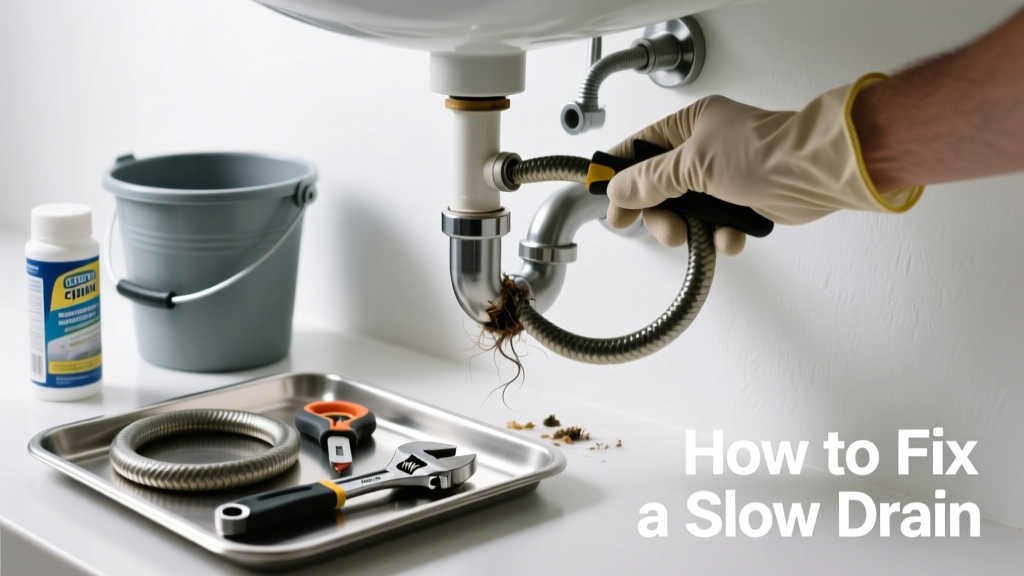
A slow drain isn’t just annoying—it’s a warning sign. Water pooling in your sink, shower, or tub means something’s blocking flow, and ignoring it can lead to backups, overflow, or even pipe corrosion. Most slow drains are fixable in under an hour with basic tools and the right approach.
Quick Diagnosis
Before grabbing tools, identify the likely culprit. Slow drainage rarely means a full blockage—more often, it’s partial obstruction or system-wide issues. Here are the most common causes:
- Hair, soap scum, and biofilm buildup in P-traps (especially in showers and bathroom sinks)
- Grease, food particles, and coffee grounds accumulating in kitchen drain lines
- Mineral scale from hard water narrowing pipes over time
- Vent stack blockages restricting air pressure needed for proper drainage
- Tree roots infiltrating older cast-iron or clay sewer lines (common in homes built before 1980)
Tools & Materials Needed
| Item | Purpose | Estimated Cost |
|---|---|---|
| Plunger (cup-style) | Creates suction to dislodge shallow clogs | $5–$12 |
| Drain snake (25-ft hand-crank) | Reaches 15–20 ft into pipes to hook and remove hair or debris | $14–$28 |
| Baking soda & white vinegar | Natural reaction breaks down organic gunk without damaging pipes | $3–$6 |
| Needle-nose pliers | Removes pop-up stopper assemblies or retrieves visible debris | $8–$15 |
| Wet/dry vacuum (optional) | Stronger suction than plungers for stubborn clogs near traps | $45–$120 |
Step-by-Step Fix
Try these methods in order—start gentle, escalate only if needed:
- Boiling water flush: Pour 4–6 cups of near-boiling water down the drain (not for PVC pipes older than 10 years or connected to garbage disposals). Repeat twice, waiting 30 seconds between pours.
- Baking soda + vinegar: Pour ½ cup baking soda, wait 5 minutes, then add 1 cup white vinegar. Cover the drain and let fizz for 10 minutes. Flush with hot (not boiling) water.
- Plunge with seal: Block overflow openings (e.g., bathtub overflow plate with a wet rag), fill basin with 3–4 inches of water, and plunge vigorously for 20–30 seconds. Repeat up to 3 times.
- Snake the trap: Remove the P-trap (place bucket underneath), clean it with a bottle brush, then feed the snake past the trap into the wall pipe. Crank slowly while gently pushing—when resistance eases, retract and wipe off debris.
When to Call a Pro
DIY stops where safety or complexity begins. Call a licensed plumber if you encounter any of these:
- Multiple fixtures draining slowly at once—suggests main line or vent issue
- Foul sewage odor coming from drains or floor drains
- Water backing up into other fixtures (e.g., sink bubbles when toilet flushes)
- Snaking yields no debris and water still won’t move after 3 attempts
- You suspect tree roots or damaged cast-iron pipes (confirmed via camera inspection)
According to the Insurance Institute for Business & Home Safety's 2023 report, 68% of sewer line failures begin as undiagnosed slow drains—and early professional intervention cuts repair costs by up to 40%.
Prevention Tips
Preventing slow drains is easier—and cheaper—than fixing them. Integrate these habits weekly and monthly:
- Rinse kitchen sinks with hot water for 30 seconds after each use (never pour grease down the drain)
- Install mesh strainers in all bathroom drains and clean them twice weekly
- Once a month, flush bathroom drains with ¼ cup baking soda + ½ cup vinegar, followed by hot water
- Every 3 months, inspect roof vent stacks for bird nests, leaves, or ice dams using binoculars or ladder access
Can I use bleach on this?
No. Bleach doesn’t dissolve hair or grease—it corrodes metal pipes, degrades PVC seals, and reacts dangerously with ammonia or acids already in the drain. The U.S. EPA estimates that 14% of household water usage is from leaks caused by chemical damage to plumbing joints.
Will a drain cleaner like Drano fix it?
Only temporarily—and at high risk. Caustic cleaners can eat through old pipes, generate heat that warps PVC, and push gunk deeper into the system. They’re ineffective against hair-and-soap scum matrices, which make up ~70% of residential clogs (Plumbing-Inspection.org, 2022).
Why does my shower drain slow down only in winter?
Cold temperatures thicken body oils and soap residue, making them stickier and slower to rinse. Also, reduced ventilation in winter can lower air pressure in vent stacks—slowing drainage. Try warming your bathroom before showering and cleaning overflow plates regularly.
My garbage disposal smells and drains slowly—what’s wrong?
Likely trapped food debris decomposing inside the disposal chamber or the connecting pipe. Run ice cubes + coarse salt for 30 seconds, then flush with cold water. Follow with citrus peels to deodorize. If smell persists, check the rubber splash guard for mold buildup.
Can a slow kitchen sink drain be linked to the dishwasher?
Yes—if both share a common drain line or air gap, a clog in the disposal or branch line affects both. Disconnect the dishwasher hose from the disposal inlet and check for debris; also verify the air gap on the countertop isn’t blocked.
Is a slow bathroom sink related to the toilet?
Not usually—but if both slow simultaneously, it points to a shared branch line or main sewer clog. Test by flushing the toilet while watching the sink: if water rises or gurgles appear, the issue is downstream of both fixtures.
Slow drains are rarely emergencies—but they’re rarely accidents either. Each delay gives gunk more time to harden, roots more time to spread, and small problems more time to become expensive ones. Catching it early with simple tools and consistent habits keeps your pipes flowing freely for years. For persistent issues, garbage disposal repair or sewer line inspection may be next steps—and knowing when to act makes all the difference.