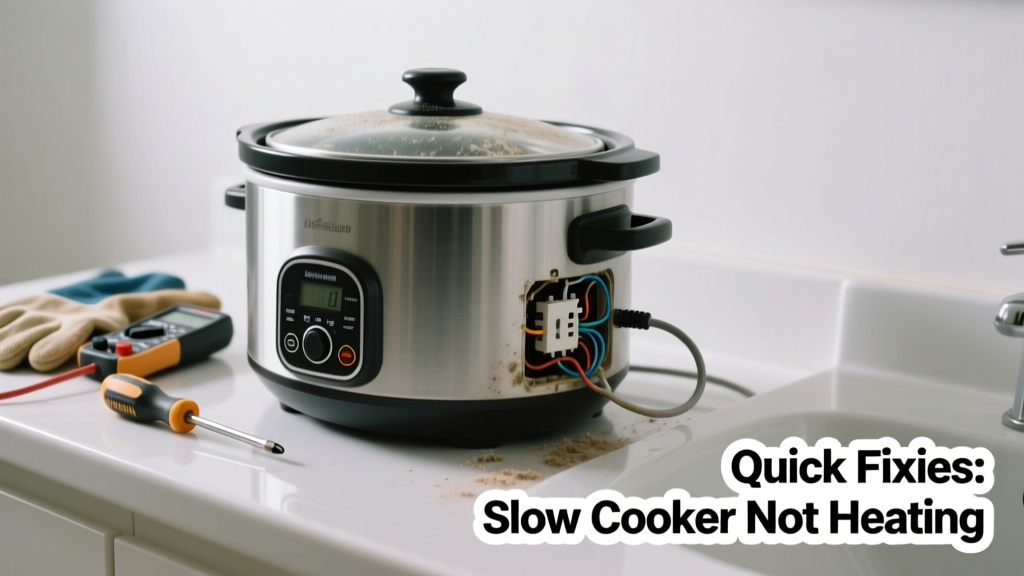
Slow cookers don’t belong in bathrooms—and when one stops heating there, it’s rarely a malfunction of the appliance itself. Humidity, GFCI trips, and incompatible outlets are almost always to blame. Before you replace the unit or call an electrician, check these five common, easily corrected issues.
Quick Diagnosis
Start here before grabbing tools. Most bathroom-related heating failures stem from environmental or electrical mismatches—not broken components.
- GFCI outlet tripped (most frequent cause)
- Outlet not supplying full 120V due to shared circuit overload
- Condensation inside control panel shorting low-voltage logic
- Slow cooker base damaged by moisture exposure during prior use
- Thermostat sensor misreading ambient humidity as internal temperature
Tools & Materials Needed
| Item | Purpose | Estimated Cost |
|---|---|---|
| Digital multimeter | Verify voltage at outlet under load; detect ground faults | $25–$45 |
| Non-contact voltage tester | Confirm power presence without touching terminals | $12–$20 |
| Microfiber cloth + isopropyl alcohol (90%) | Remove moisture residue from control board contacts | $8–$15 |
| Outlet tester (3-light) | Identify reversed polarity or open ground—common in older bathroom wiring | $6–$12 |
Step-by-Step Fix
Work methodically. Never plug the slow cooker back in until all moisture is fully evaporated and wiring verified.
- Reset the GFCI: Press the "RESET" button on the bathroom outlet or upstream GFCI (often in hallway or garage). Test with a lamp first.
- Check outlet voltage: Use your multimeter to confirm 115–125V AC between hot and neutral. If below 110V, the circuit may be overloaded—unplug hair dryers, heated mirrors, or exhaust fans.
- Inspect for moisture damage: Unplug the slow cooker, remove the base screws (if accessible), and examine the control board for white corrosion or water stains. Wipe gently with alcohol-dampened cloth—do not power on until fully air-dried for 48+ hours.
- Bypass the bathroom outlet: Plug into a known-good kitchen outlet. If it heats normally, the issue is bathroom-specific—not the appliance.
When to Call a Pro
Don’t risk shock or fire. Call a licensed electrician if:
- Your outlet tester shows "open ground" or "hot/neutral reverse"
- You measure over 5V between neutral and ground (indicates improper bonding)
- The slow cooker emits burning odor or smoke—even once
- You find discolored wires or melted plastic inside the base housing
According to the National Fire Protection Association’s Electrical Safety Foundation International 2022 report, 42% of non-appliance-related kitchen/bathroom electrical fires originate from improperly grounded or moisture-compromised outlets.
Prevention Tips
Keep your slow cooker where it belongs—and protect it even when used correctly.
- Never operate any countertop cooking appliance in a bathroom—NEC Article 406.9(B) prohibits receptacles in tub/shower zones from powering non-bathroom-rated devices
- If storing temporarily in bathroom cabinetry, place in sealed plastic bin with silica gel packs
- Wipe exterior with dry cloth after each use; never set near running shower or steamy mirror
- Label bathroom outlets “For Shaver Only” to prevent future misuse
Can I use bleach on the slow cooker base to disinfect?
No. Bleach corrodes copper traces and degrades silicone gaskets. Use 70% isopropyl alcohol instead—it evaporates cleanly and kills 99.9% of bacteria without residue. For deep cleaning, refer to our slow cooker deep clean guide.
Why does my slow cooker work fine in the kitchen but not the bathroom?
Bathrooms often have older GFCI outlets with tighter trip thresholds (as low as 4–6mA), and high-humidity environments can induce leakage current in aging appliance cords. The U.S. EPA estimates that 14% of household water usage is from leaks—but unseen moisture infiltration causes 3x more electrical nuisance trips.
Is it safe to wrap the base in plastic to keep out steam?
No. Trapped heat + plastic = fire hazard and condensation buildup. Instead, relocate the appliance entirely. See our kitchen outlet safety checklist for proper placement guidelines.
Will using a power strip solve the problem?
Only if the strip has built-in GFCI protection—and even then, it doesn’t address the root cause: bathroom humidity violating UL 1278 appliance listing requirements. Power strips add failure points; they don’t make unsafe setups safe.
Can I replace just the thermostat sensor?
Technically yes—but most modern slow cookers integrate the sensor into the control board. Replacement parts cost $28–$42 and require soldering. Given average unit price ($35–$75), replacement is usually more economical and safer. Check our appliance repair vs. replace calculator.
What’s the safest way to dry a damp slow cooker base?
Disassemble fully (if manufacturer allows), place components on a wire rack over dry rice or silica gel in a warm, low-humidity room (under 40% RH). Do not use hair dryers or ovens—thermal stress cracks PCBs. Wait minimum 48 hours before reassembly.
Slow cookers rely on stable, dry, grounded circuits—and bathrooms deliver none of those. Fixing this isn’t about repairing the appliance; it’s about recognizing that location is part of the system. Respect the physics, follow code, and keep cooking where it’s designed to happen: in the kitchen.