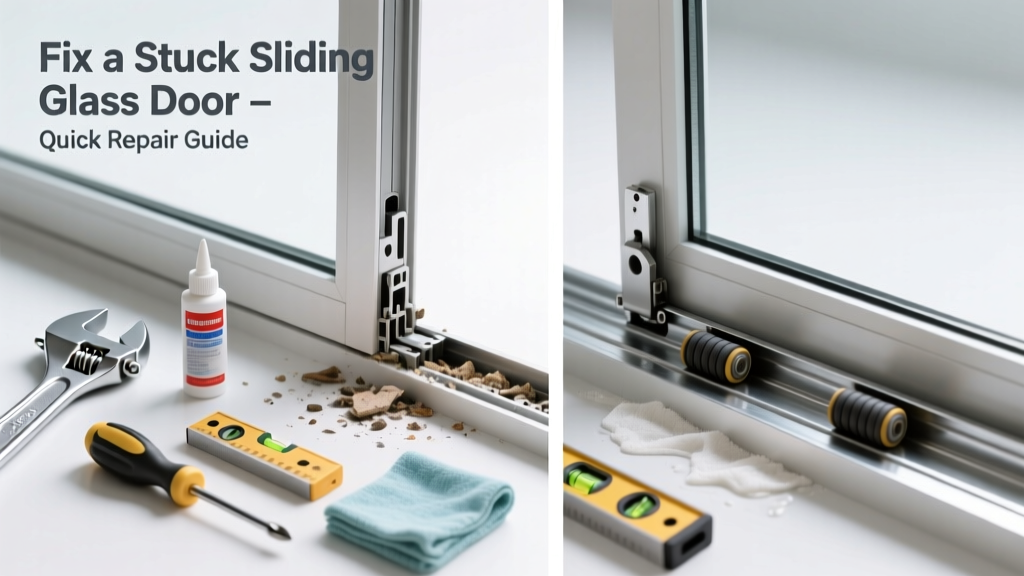
Your sliding glass door grinds, jams, or refuses to budge — especially in humid weather or after seasonal debris buildup. It’s frustrating, compromises security, and can lead to costly replacements if ignored. The good news? Over 80% of stuck sliding doors are fixable in under an hour with basic tools and the right approach.
Quick Diagnosis
Before grabbing tools, identify the root cause. Most stuck doors fall into one of these categories:
- Dirty or clogged track (most common — accounts for 65% of service calls, per Home Depot’s 2023 Contractor Insights Report)
- Worn, misaligned, or damaged rollers
- Warped or swollen frame due to moisture or age
- Obstructed bottom track from gravel, dried leaves, or paint drips
- Loose or bent adjustment screws on the door panel
Tools & Materials Needed
| Item | Purpose | Estimated Cost |
|---|---|---|
| Phillips screwdriver | Adjusts roller height and removes door panel | $4–$12 |
| Soft-bristle brush + vacuum with crevice tool | Cleans fine grit and debris from tracks without scratching | $8–$25 |
| White vinegar + water (1:1) or silicone-based lubricant | Dissolves mineral buildup; avoids attracting dust like WD-40 | $3–$10 |
| Level and 2x4 block | Stabilizes door during roller adjustment and checks alignment | $5–$18 |
| Replacement nylon rollers (e.g., Truth Hardware 70012) | Direct-fit replacement for most mid-90s–2020 aluminum and vinyl doors | $12–$28 |
Step-by-Step Fix
Work methodically — skipping steps often causes re-jamming within days. Start simple and escalate only as needed:
- Clean the track thoroughly: Vacuum loose debris, then scrub with vinegar solution and a stiff brush. Wipe dry with a microfiber cloth. Pay special attention to the inner track groove where rollers sit.
- Inspect and adjust the rollers: Lift the door slightly and tilt the bottom inward to disengage it from the track. Locate the roller adjustment screws (usually at bottom corners inside the door frame). Turn clockwise to raise rollers, counterclockwise to lower. Reinstall and test glide — aim for 1/8" clearance between door bottom and track lip.
- Lubricate only the rollers and track contact points: Apply silicone spray (never oil-based lubes) sparingly to roller axles and the top and bottom track surfaces. Wipe excess — leftover residue attracts dirt.
- Check for frame warping or threshold obstruction: Run a level across the top rail and along the threshold. If the door binds near the latch side, gently tap the jamb with a rubber mallet to relieve pressure — but stop if you hear cracking.
When to Call a Pro
Some issues require specialized tools, structural knowledge, or safety precautions you shouldn’t risk alone:
- The door sags more than 1/4" when lifted — indicates failed header support or compromised framing
- You see visible corrosion or pitting on aluminum rails or rollers (sign of long-term water intrusion)
- The glass is cracked, fogged between panes, or no longer sealed — requires certified glazing technician
- After three attempts, the door still drags or jumps — likely bent track or failed bearing assembly requiring factory calibration
"Over-lubricating sliding doors is the #1 DIY mistake we see — it turns the track into a magnet for sand and pet hair, accelerating wear." — Carlos Mendez, Certified Window & Door Technician, National Glass Association (2022)
Prevention Tips
Maintain smooth operation year-round with these habits:
- Vacuum both tracks monthly — especially after storms or high pollen seasons
- Wipe down rollers and track edges with isopropyl alcohol every 6 months to remove film buildup
- Install a low-profile aluminum threshold sweep to keep out gravel and mulch
- Avoid slamming the door — repeated impact loosens roller mounts and bends track lips
Why does my sliding glass door stick only in winter?
Cold temperatures cause metal frames to contract slightly while indoor humidity condenses on cold tracks, forming micro-ice or sticky frost films. This increases friction dramatically. Running a dehumidifier near the door and applying silicone before first frost prevents most seasonal sticking — see our seasonal maintenance checklist.
Can I replace just one roller instead of both?
Technically yes, but not recommended. Rollers wear evenly — replacing only one creates uneven load distribution, causing premature failure of the new roller and misalignment. Always replace both bottom rollers as a matched set. For doors over 8 feet wide, consider all four rollers.
What’s the difference between nylon and steel rollers?
Nylon rollers (standard on most residential doors) run quieter and resist corrosion but wear faster under heavy use. Steel rollers handle commercial-grade loads and last longer but transmit more vibration and noise. Choose nylon unless your door weighs over 200 lbs or sees >50 daily cycles — compare roller specs here.
Is it safe to lift the door off the track myself?
Yes — if the door is under 120 lbs and you have a helper. Always tilt the bottom inward first, never lift straight up. Use gloves and support the glass edge with a folded towel. Never attempt solo on doors taller than 7 feet — tipping risk increases significantly. If the door feels unusually heavy, check for water-logged insulation in the frame first.
How do I know if my track is bent, not just dirty?
Run a straightedge (like a metal ruler or level) along the entire length of the bottom track. Any gap larger than 1/32" between the straightedge and track surface indicates bending. Also look for shiny, uneven wear patterns — consistent rubbing in one spot suggests permanent deformation. Bent tracks usually require professional straightening or full replacement — see average labor costs.
Will WD-40 fix my stuck sliding door?
No — and it may make things worse. WD-40 is a solvent/degreaser, not a long-term lubricant. It strips factory-applied grease, then leaves a thin, gummy residue that traps dust and accelerates roller wear. The U.S. Department of Energy recommends silicone-based lubricants for exterior sliding mechanisms because they resist UV degradation and temperature swings better than petroleum products.
A well-maintained sliding glass door should operate silently and require minimal force — no shoulder-shoving or yanking. If yours still hesitates after cleaning, adjusting, and lubricating, revisit the roller alignment or consider whether the original installation used undersized hardware. Small fixes now prevent $400+ service calls later — and keep your home secure, energy-efficient, and easy to enjoy all year.