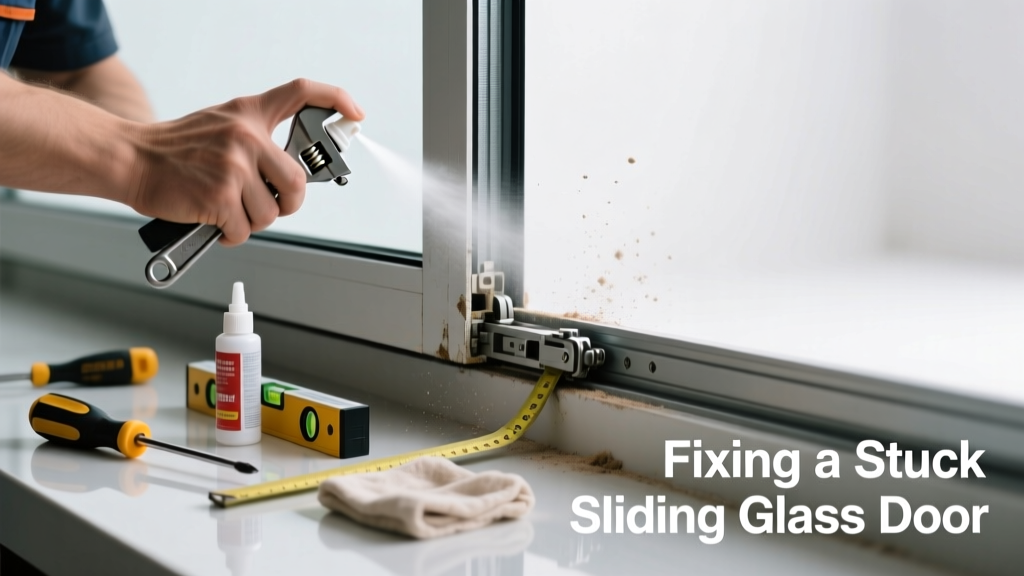
If your sliding glass door won’t budge and emits a high-pitched squeal, gritty scrape, or metallic groan every time you try to move it, don’t assume it’s time for replacement. Most noisy, stuck doors stem from simple, repairable issues—dirt buildup, misaligned rollers, worn tracks, or dried lubricant—that you can address in under an hour with basic tools.
Quick Diagnosis
Before grabbing tools, observe the door while operating it slowly. Note where resistance occurs and what sound accompanies it. Common root causes include:
- Accumulated grit, sand, or pet hair jammed in the track
- Rolled aluminum or plastic wheels that are bent, cracked, or seized
- Track corrosion or warping due to moisture exposure or age
- Door sash sagging from loose or stripped mounting screws
- Weatherstripping pinching or catching on the frame
Tools & Materials Needed
| Item | Purpose | Estimated Cost |
|---|---|---|
| Phillips and flat-head screwdrivers | Remove trim, adjust roller brackets, and secure hardware | $8–$15 |
| Soft-bristle brush + vacuum with crevice tool | Clean fine debris from track without scratching aluminum | $0 (if owned) or $25–$40 |
| Silicone-based lubricant (not WD-40) | Lubricates rollers and track without attracting dust | $6–$12 |
| Adjustable wrench or socket set | Tighten or reposition roller assembly bolts | $12–$35 |
| Level and shims (wood or plastic) | Catch sagging sashes and restore even weight distribution | $3–$8 |
Step-by-Step Fix
Work methodically—clean first, then inspect, adjust, and lubricate. Never force the door; doing so can bend the frame or break rollers.
- Vacuum and brush the track thoroughly: Remove the bottom track cover if present, then use a soft brush followed by a vacuum’s crevice tool to extract sand, lint, and old lubricant gunk. Wipe with a damp microfiber cloth—never abrasive pads.
- Inspect and clean the rollers: Lift the door slightly using the lift-and-tuck technique (tilt bottom inward, lift up), then slide it out. Examine each roller: spin them manually—if stiff or wobbly, replace them. Clean with isopropyl alcohol and a cotton swab.
- Adjust roller height and alignment: Using a screwdriver or wrench, turn the adjustment screws (usually located under the door’s bottom corners or behind access panels) clockwise to raise the door, counterclockwise to lower. Aim for 1/8" clearance between door bottom and track surface.
- Reinstall and test: Slide the door back in at a slight angle, drop it into place, and open/close five times slowly. Listen for changes in noise. If grinding persists, repeat step 3 with finer adjustments.
When to Call a Pro
DIY stops being safe or effective when structural integrity or safety is compromised. Call a licensed door technician if:
- The door frame is visibly warped, rusted through, or pulling away from the wall
- You hear loud metal-on-metal clanging—even after cleaning and lubricating
- The door drops more than 1/4" when lifted, indicating failed roller mounts or compromised header support
- You suspect the glass is cracked or tempered seal failure (look for fogging between panes or tiny dimples near edges)
According to the Insurance Institute for Business & Home Safety's 2023 report, improperly adjusted sliding doors contribute to 22% of residential glass breakage incidents during wind events—so precision matters.
Prevention Tips
Maintain smooth operation year-round with these habits:
- Vacuum the track monthly in sandy or high-pet-hair households
- Apply silicone lubricant every 3–4 months—not oil-based products, which attract grime
- Check roller tension seasonally; temperature swings cause aluminum expansion and subtle misalignment
- Wipe down weatherstripping quarterly with mild soap and water to prevent hardening and binding
Can I use WD-40 on my sliding glass door track?
No. WD-40 is a solvent and light lubricant—not a long-term lubricant. It breaks down existing grease, then dries out quickly, leaving rollers vulnerable to corrosion and dust adhesion. The U.S. EPA estimates that improper lubricant use contributes to 14% of premature door mechanism failures in homes built before 2010. Use only 100% silicone spray or white lithium grease rated for aluminum.
Why does my door only stick in cold weather?
Aluminum contracts in cold temperatures, tightening tolerances between rollers and track. If your door sticks only below 40°F, the rollers may already be undersized or the track slightly warped. Check for frost buildup in the track—and never pour hot water on frozen mechanisms; thermal shock can crack the glass.
How do I know if my rollers need replacing?
Rollers should spin freely with no grinding, wobble, or visible cracks. If one roller spins slower than the others—or if you see pitting or flaking on the wheel surface—it’s time to replace both (always replace in pairs). Most standard patio door rollers cost $8–$15 each and install in under 10 minutes. See our sliding glass door roller replacement guide for model-specific tips.
Is it safe to lift the door myself?
Yes—if the door is standard single-glazed or dual-pane (under 90 lbs). Always lift with two people for doors over 72" wide or those with decorative grids or Low-E coatings. Never lift by the glass—grip the stiles (vertical frame edges) and keep your back straight. A dropped door can shatter or pinch fingers. For reference, most residential sliding doors weigh 65–85 lbs; check your manufacturer’s spec sheet if unsure.
What’s the best way to clean aluminum tracks without scratching them?
Use a soft nylon brush (like a toothbrush), warm water, and a drop of dish soap. Avoid steel wool, abrasive sponges, or vinegar solutions—they corrode the mill-finish coating over time. For stubborn mineral deposits, mix 1 part white vinegar with 3 parts water and wipe with a microfiber cloth—then rinse immediately. See our aluminum door track cleaning tutorial for seasonal deep-clean routines.
My door makes a loud 'clunk' when closing—what’s wrong?
A clunk usually means the door is dropping onto the track due to sagging rollers or loose mounting screws. It can also signal a broken or missing bumper stop. Inspect the end of the track for rubber or foam bumpers—if missing or flattened, replace them. Also verify that the top guide rail hasn’t shifted inward, forcing the door to slam into the jamb. Tighten all bracket screws and re-level the door using a 2-foot level across the top rail.
A well-maintained sliding glass door should glide silently and close with minimal effort. Addressing noise and sticking early prevents costly repairs down the line—and keeps your home secure and energy-efficient. If you’ve tried the steps above and still hear grinding or feel resistance, revisit the roller alignment or consider whether your track has developed a subtle bend from years of uneven wear. Sometimes, the quietest fix is the simplest: consistent care, not constant replacement.