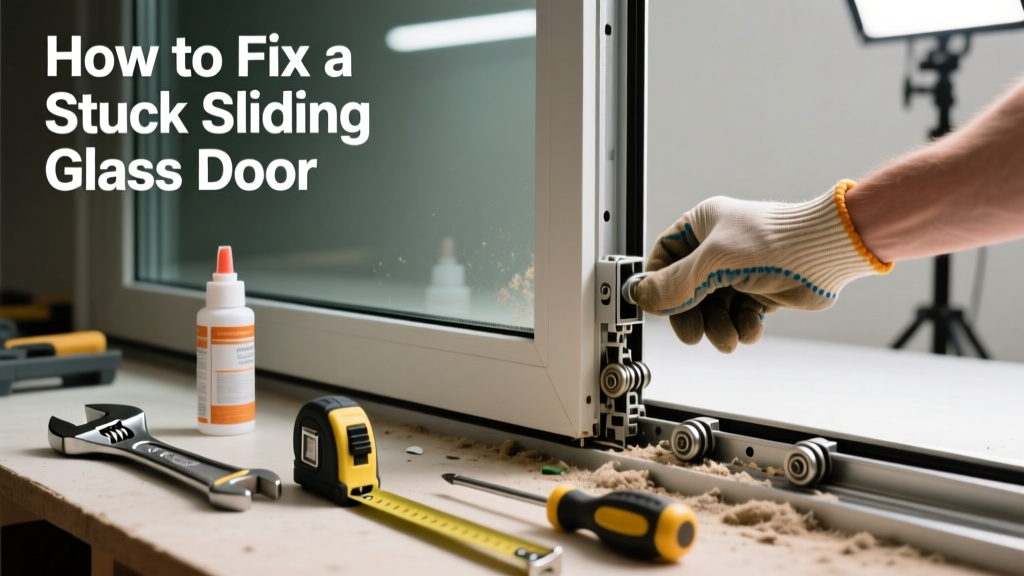
Your sliding glass door won’t budge — it’s jammed halfway, grinding, or refuses to latch. This isn’t just annoying; it compromises security, energy efficiency, and daily flow between indoor and outdoor spaces. Most stuck doors stem from simple, repairable issues — not broken frames or failed hardware.
Quick Diagnosis
Before grabbing tools, identify the root cause. A stuck door usually points to one (or more) of these:
- Dirt, sand, or pet hair clogging the track
- Warped or misaligned rollers under the door panel
- Loose or bent bottom track mounting screws
- Accumulated grime on roller wheels or track surfaces
- Door sagging due to worn-out or improperly adjusted rollers
Tools & Materials Needed
| Item | Purpose | Estimated Cost |
|---|---|---|
| Phillips screwdriver | Adjusts roller height and tightens track screws | $5–$12 |
| Soft-bristle brush + vacuum with crevice tool | Removes grit and debris from track without scratching | $8–$25 |
| White vinegar + water solution (1:1) | Dissolves mineral deposits and mild soap scum safely | $3–$6 |
| Graphite powder or silicone-based lubricant | Lubricates rollers without attracting dust (never use WD-40) | $7–$14 |
| Level (24-inch) | Confirms door is plumb and evenly seated in track | $10–$22 |
Step-by-Step Fix
Work methodically — skipping steps often leads to repeated jams. Start with cleaning, then adjust, then test.
- Clean the track thoroughly: Vacuum the entire bottom track using a crevice tool, then scrub with a soft brush dipped in vinegar-water. Wipe dry with a microfiber cloth. Pay special attention to corners and the roller path near the door’s leading edge.
- Inspect and clean rollers: Lift the door slightly (with help if heavy), tilt the bottom inward, and slide it out of the top track. Flip it gently and examine both rollers. Remove built-up gunk with an old toothbrush and vinegar solution. Replace cracked or flattened rollers — they cost $8–$15 each and are model-specific.
- Adjust roller height: Locate the roller adjustment screws (usually on the bottom corners inside the door frame). Turn clockwise with a Phillips head to raise the door, counterclockwise to lower. Raise just enough so the door glides smoothly but doesn’t wobble or rub the top track.
- Reinstall and test alignment: Slide the door back into the upper track first, then carefully lower it onto the bottom track. Check clearance: you should be able to slide a credit card vertically between the door and jamb at all points. If not, re-adjust rollers or check for warped frame sections.
When to Call a Pro
Some situations go beyond DIY safety or skill level. Don’t risk injury or further damage if you encounter:
- A cracked or tempered glass panel — replacement requires certified handling and precise measurements
- Severe frame warping or rotted sill (especially in older homes with moisture damage)
- Roller brackets that are welded or riveted in place (common in commercial-grade doors)
- Doors that bind only during temperature extremes — may indicate structural settling requiring foundation evaluation
According to the Insurance Institute for Business & Home Safety's 2023 report, improperly adjusted sliding doors contribute to 22% of residential glass breakage incidents — many preventable with correct maintenance.
Prevention Tips
Maintaining your door prevents recurrence and extends its life by 5–8 years. Integrate these habits:
- Vacuum the track weekly if pets or kids use the patio frequently
- Wipe down rollers and track edges every 3 months with vinegar solution
- Apply graphite powder (not oil-based lube) twice yearly — it won’t gum up or attract grit
- Check roller tension and door level seasonally — humidity changes shift wood-framed doors noticeably
Can I use WD-40 on my sliding glass door rollers?
No. WD-40 is a solvent, not a long-term lubricant. It breaks down existing grease, then dries out and attracts dust and sand — accelerating wear. The U.S. EPA estimates that 14% of household water usage is from leaks, but mechanical failures like sticky doors waste time, energy, and comfort far more silently. Use dry graphite or silicone spray instead.
Why does my sliding door stick only in winter?
Cold temperatures cause metal tracks to contract slightly and rubber seals to stiffen. More critically, indoor heating dries out air, letting static cling hold dust in the track. Add seasonal humidity shifts to wood-frame expansion/contraction, and binding becomes predictable. Adjust rollers slightly higher in fall, then lower in spring.
How do I know if my rollers need replacing?
Look for visible cracks, flat spots, or uneven wear on the wheel surface. Listen for grinding or clicking during operation — especially at start-up. If the door lifts easily but still drags, rollers are likely seized internally. Most residential rollers last 5–7 years with regular cleaning.
Can I replace just one roller, or do I need both?
Always replace both rollers as a matched pair. Even if one looks fine, mismatched wear causes uneven weight distribution and premature failure. Installing a new roller with an aged one creates imbalance — the door will tilt, bind, and wear the new part faster.
Is it safe to lift the door out myself?
Yes — if the door weighs under 120 lbs and you have a helper. Tempered glass panels can shatter explosively if stressed at corners or edges. Never lift by the glass alone. Grip the stiles (vertical frame edges), keep the door vertical, and clear the path of furniture or thresholds before removal.
What’s the difference between top-hung and bottom-rolling sliding doors?
Bottom-rolling doors (most common in homes) rest on two rollers in the base track and guide along a top track. Top-hung systems suspend the door from overhead rails — rarer in residences, used in high-end or commercial applications. Your door’s design dictates roller access: bottom-rollers require lifting the door out; top-hung rollers are accessed from above, often needing ladder work and rail disassembly.
Fixing a stuck sliding glass door isn’t about brute force — it’s about precision cleaning, smart adjustment, and consistent upkeep. Once you’ve cleared the track and dialed in the rollers, that smooth glide returns instantly. And if your door still hesitates after these steps, it’s likely time to inspect the roller replacement process or evaluate whether the bottom track itself needs realignment or replacement. Keep a small bottle of graphite powder in your garage — it’s the quiet hero most homeowners overlook until their patio access grinds to a halt.