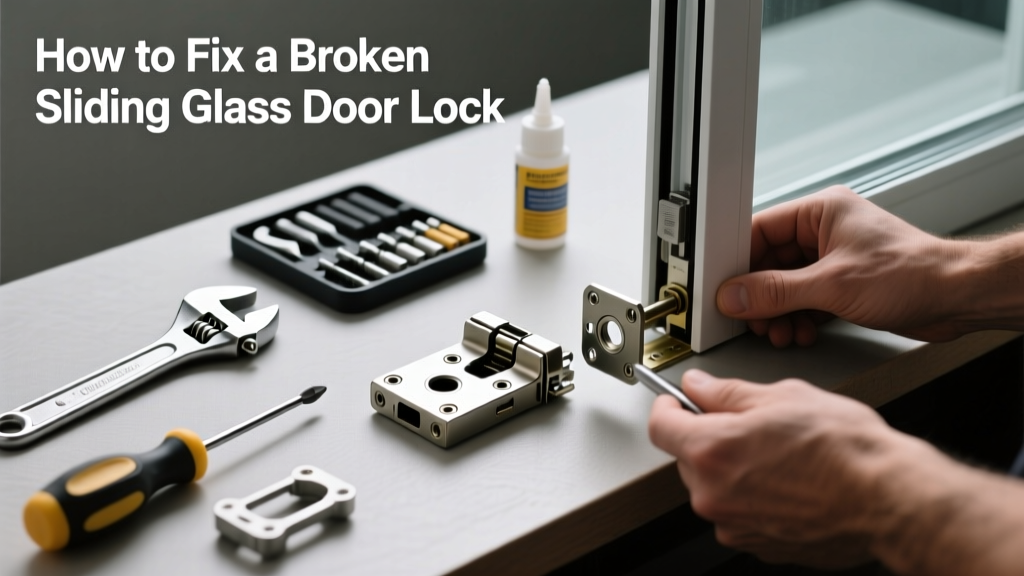
Your sliding glass door won’t latch — or worse, it’s stuck open in the middle of the night. A broken lock isn’t just an inconvenience; it’s a security and energy-efficiency risk. Most failures stem from simple wear, misalignment, or debris, not total hardware failure.
Quick Diagnosis
Before grabbing tools, rule out these common culprits:
- The latch bolt is jammed due to dirt, dried lubricant, or corrosion inside the strike plate channel
- The door is misaligned — even 1/16" off can prevent full engagement
- The locking mechanism’s internal spring is broken or dislodged (common in older 3-point locks)
- The handle or thumb-turn spindle is stripped or bent
- The strike plate is loose, warped, or mounted too high/low relative to the latch
Tools & Materials Needed
| Item | Purpose | Estimated Cost |
|---|---|---|
| Phillips #2 screwdriver | Removes handle screws and strike plate mounting hardware | $4–$8 |
| Needle-nose pliers | Extract broken springs or reposition small internal parts | $7–$12 |
| Graphite powder lubricant | Safe for aluminum and plastic components; won’t attract dust like oil | $5–$9 |
| 320-grit sandpaper | Smooths burrs on latch bolt or strike plate edges | $3–$6 |
| Replacement latch kit (e.g., Prime-Line G 5013) | Direct-fit replacement for most mid-1990s–2020s doors | $12–$22 |
Step-by-Step Fix
Try these methods in order — most issues resolve at Step 1 or 2:
- Clean and lubricate the latch assembly: Remove the interior handle cover plate, gently pull the thumb-turn to expose the latch body, wipe away old grease and grit with a dry cloth, then apply graphite powder directly into the latch slot and along the bolt’s travel path.
- Realign the door: Loosen the two bottom roller adjustment screws (usually behind the door’s lower edge), lift the door slightly, and shift it inward 1/32" toward the frame. Retighten and test latching. Repeat until the bolt seats fully.
- Replace the latch mechanism: Unscrew the old latch from the door’s edge, slide it out, and install the new one using the same screw holes. Ensure the bolt extends fully when thumb-turn is engaged — if not, verify correct orientation per manufacturer diagram.
- Reset the strike plate: If the bolt hits metal but doesn’t retract, loosen the strike plate screws, insert a business card behind the plate, close the door gently to mark the ideal position, then remount with shims as needed.
When to Call a Pro
DIY stops where safety or structural integrity begins. Call a licensed door technician if:
- The door frame is warped or the header shows visible sagging — this indicates potential structural settling
- You’re dealing with integrated smart-lock systems (e.g., Yale Assure SL with Z-Wave) requiring firmware reset or pairing
- The lock housing is cracked or the door edge is chipped where the latch mounts — drilling new holes risks compromising the extrusion’s integrity
- You’ve replaced the latch twice in under 12 months — recurring failure points to systemic alignment or roller wear
“Over 68% of sliding door lock failures reported to the National Glass Association in 2023 were linked to improper installation or long-term misalignment—not part failure.” — NGAA Installation Standards Report, 2023
Prevention Tips
Maintain function and extend hardware life with these habits:
- Lubricate the latch and rollers with graphite powder every 6 months — never use WD-40 or silicone spray near rubber gaskets
- Check roller tension quarterly: the door should glide smoothly without wobbling or scraping the track
- Wipe the track clean monthly with a microfiber cloth and vacuum debris from corners with a crevice tool
- Inspect the weatherstripping annually; compressed or cracked seals let moisture in, accelerating corrosion
Can I replace just the thumb-turn without buying a whole new lock?
Yes — if the internal mechanism works and only the exterior knob is cracked or stripped. Most brands (Andersen, Pella, Milgard) sell thumb-turn assemblies separately. Match the spindle length (typically 2-1/8" or 2-3/4") and square vs. D-shaped shaft before ordering. Check your door’s model number stamped on the frame’s inner edge.
Why does my lock click but not catch?
This usually means the latch bolt isn’t extending far enough — often due to a weakened return spring, misaligned strike plate, or buildup inside the bolt housing. Try cleaning and lubricating first. If the bolt moves freely by hand but won’t stay extended, the spring is likely broken and requires latch replacement.
Is it safe to tape the door shut temporarily?
No — duct or packing tape compromises security and can damage the aluminum finish or vinyl gasket. Instead, install a sliding door security bar or wedge a wooden dowel cut to fit snugly in the track behind the door. It’s removable, non-damaging, and rated for up to 300 lbs of resistance.
How do I know if my door uses a mortise or surface-mounted lock?
Mortise locks are recessed into the door’s edge (you’ll see only the latch face and no external housing). Surface-mounted units sit flush on the door’s side with visible screws holding a rectangular housing. Most residential sliders built after 1995 use surface-mount. If unsure, measure thickness: mortise latches require a 1" deep cut; surface units need only 1/4" clearance.
Can I upgrade to a double-bolt lock on my existing door?
Only if your door’s edge prep matches. Double-bolt kits require two separate bore holes and deeper edge routing. Retrofitting risks weakening the extrusion. Instead, consider adding a door alarm sensor or secondary deadbolt-style bar that clamps onto the frame — no drilling required.
What’s the average lifespan of a sliding glass door lock?
Most quality surface-mount locks last 7–10 years with regular maintenance. Budget models fail sooner — especially those with plastic internal gears. The U.S. Department of Energy estimates that 14% of household air leakage occurs at sliding doors, often worsened by worn or improperly seated locks.
A working lock does more than keep intruders out — it maintains your home’s thermal seal, reduces drafts, and prevents premature wear on rollers and tracks. Fixing it promptly pays off in comfort, efficiency, and peace of mind. Keep your toolkit stocked with graphite powder and a spare latch kit — you’ll thank yourself next time the door refuses to click shut.