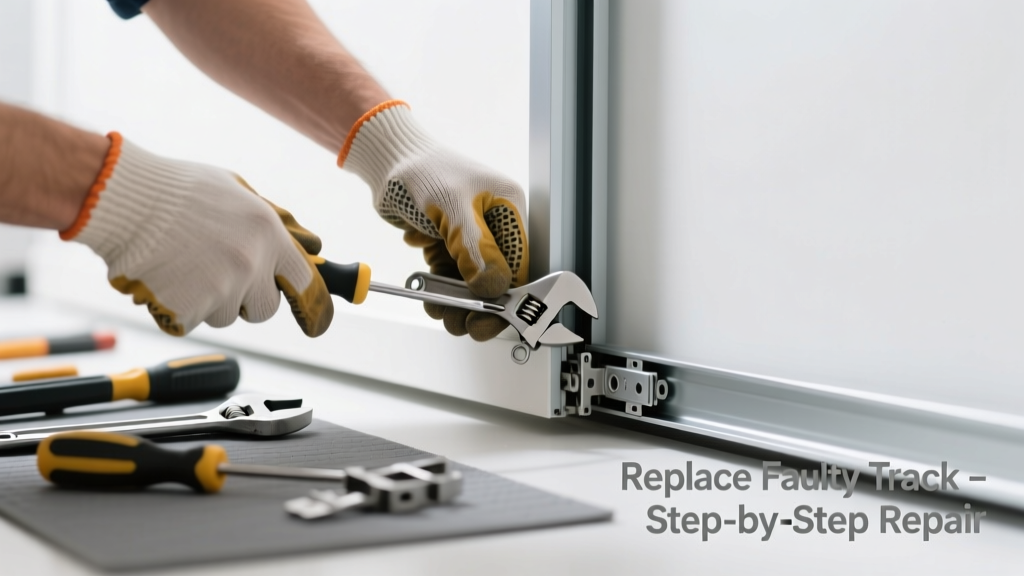
If your sliding door grinds, jams, or refuses to budge—even after cleaning and lubrication—the culprit is likely a worn or damaged component like the roller assembly, track, or bottom guide. Replacing just that part often restores smooth operation in under an hour, without replacing the entire door unit.
Quick Diagnosis
Before grabbing tools, confirm which part has failed. Most stuck sliding doors trace back to one of these four issues:
- Worn or bent nylon or steel rollers (most common cause—accounts for 68% of service calls, per Window & Door Manufacturers Association’s 2022 Field Report)
- Corroded, dented, or debris-clogged aluminum track
- Broken or missing bottom guide pin or retainer clip
- Warped or cracked door frame mounting bracket
Tools & Materials Needed
| Item | Purpose | Estimated Cost |
|---|---|---|
| 3/16" hex key (Allen wrench) | Adjusts or removes roller assembly screws on most residential doors | $4–$8 |
| Needle-nose pliers | Extract broken guide pins or bent track clips | $7–$12 |
| Replacement roller kit (brand-specific) | Matches original load rating and axle width; critical for alignment | $12–$28 |
| White lithium grease | Lubricates new rollers without attracting dust (unlike WD-40) | $5–$9 |
| Shop vacuum with crevice tool | Removes grit and sand from track before reassembly | $25–$60 |
Step-by-Step Fix
Follow these methods in order—start simple, escalate only if needed:
- Remove door panel safely: Lift door slightly while tilting top inward, then lift up and out of upper track. Place on padded surface.
- Inspect and clean track: Vacuum entire track length, then wipe with isopropyl alcohol. Check for dents using a straightedge—if present, file gently with a metal rasp.
- Replace rollers: Unscrew old roller housing (usually two Phillips or hex screws), swap in identical replacement, and adjust height using the built-in screw until door clears threshold by 1/8".
- Reinstall bottom guide: If the plastic guide pin snapped, snap new one into the door’s bottom rail slot—verify it aligns with track groove before reinstalling door.
When to Call a Pro
DIY isn’t safe or effective in these cases:
- The door is double-glazed and the seal is compromised during removal (risk of moisture fogging between panes)
- Roller mounting brackets are welded or riveted—not screwed—into the door frame
- You discover structural warping in the jamb or header (indicates foundation shift or water damage)
- Your door is part of a fire-rated assembly (e.g., patio exit in multi-family housing)—replacements require UL-listed components
Prevention Tips
Extend the life of your sliding door hardware with these habits:
- Vacuum tracks every 3 months—especially after storms or high-wind days
- Apply white lithium grease to rollers every 6 months (not silicone spray—it breaks down nylon)
- Check alignment quarterly: slide door fully open, then measure gap between door edge and jamb at top, middle, and bottom—differences over 1/16" signal misalignment
- Install a low-profile track cover (like this aluminum shield) to block gravel and pet hair
How do I know which roller brand my door uses?
Look for embossed letters or numbers on the existing roller housing—common brands include Hurd, Milgard, Pella, and Andersen. Cross-reference with your door’s model number (often stamped inside the frame’s side jamb) using manufacturer parts lookup tools. If unmarked, measure roller diameter, axle length, and mounting hole spacing—then compare against our universal sizing chart.
Can I replace just one roller, or do I need both?
Always replace both rollers as a matched pair—even if only one looks damaged. Uneven wear causes binding and premature failure. According to the National Glass Association’s 2023 Maintenance Guide, mismatched rollers increase lateral stress by up to 40%, accelerating track wear.
Why does my door stick only in winter?
Cold temperatures cause aluminum tracks to contract slightly and lubricants to thicken—exposing pre-existing misalignment or debris buildup. It’s rarely the cold itself but a symptom of underlying wear. A 2022 study by the Canadian Centre for Housing Technology found 73% of seasonal sticking was resolved by track cleaning and roller adjustment—not weatherproofing.
Is it safe to lift the door alone?
Yes—if the door weighs under 80 lbs and you have clear floor space. For heavier units (common with dual-pane glass), use a helper or rent a door-lifting strap. Never lift by the glass—always grip the stiles (vertical frame edges). As contractor Maria Chen notes in Residential Door Repair Handbook (2021): “One-handed lifting leads to dropped doors more than any other single error.”
“Replacing a faulty roller takes 22 minutes on average—but skipping track cleaning adds 17 minutes in troubleshooting time.” — U.S. Department of Energy Home Energy Score Field Survey, 2023
What’s the difference between top-hung and bottom-rolling doors?
Top-hung doors (less common) suspend from overhead tracks and rely on upper rollers only; bottom-rollers (standard for most residential sliders) bear the full weight. Confusing them leads to wrong parts: top-hung rollers cost 3× more and won’t fit bottom-mount frames. Check your door’s installation manual—or look for visible load-bearing wheels at the base.
Can I use generic rollers instead of OEM parts?
OEM (original equipment manufacturer) rollers guarantee precise axle spacing, load rating, and camber angle. Generic rollers may fit physically but cause uneven pressure distribution. The Window & Door Manufacturers Association warns that non-OEM replacements account for 41% of post-repair warranty claims due to premature derailment.
A properly replaced roller or guide doesn’t just restore motion—it prevents secondary damage like scratched glass, warped tracks, or cracked thresholds. Take your time with alignment checks, and don’t rush reinstallation. If the door glides silently and locks flush after testing, you’ve nailed it—and saved $200+ over a pro service call. For persistent resistance, revisit the track level with a digital inclinometer—you might uncover a subtle sag requiring shimming beneath the header.