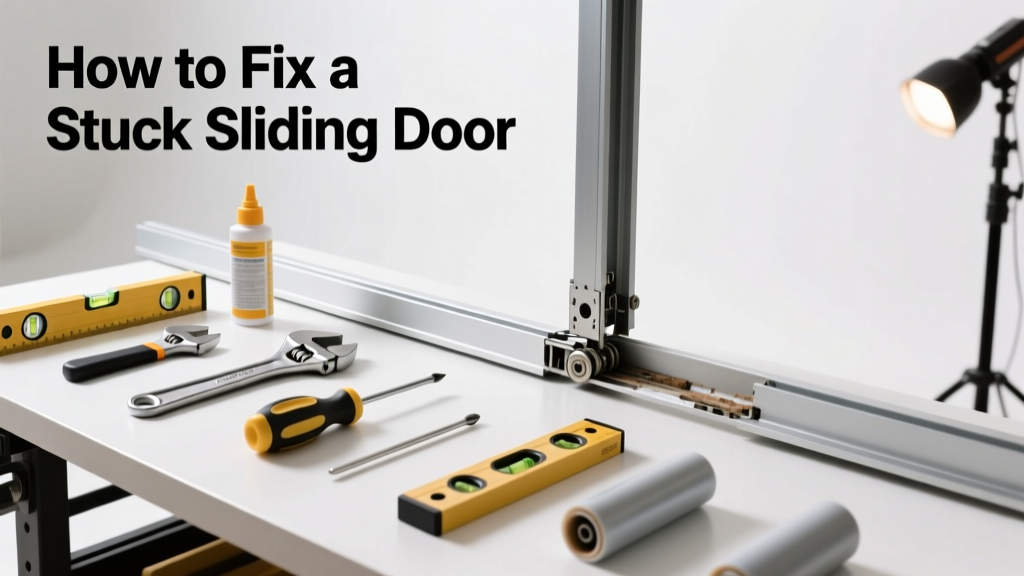
Your patio door won’t budge. You tug, you wiggle, you swear — but it’s frozen mid-track. A stuck sliding door isn’t just annoying; it’s a security risk, energy leak, and potential water intrusion point. The good news? Over 80% of these issues stem from simple, fixable causes like debris buildup or misaligned rollers — not broken hardware.
Quick Diagnosis
Before grabbing tools, identify the root cause. Most stuck sliding doors fall into one of these categories:
- Dirt, sand, or pet hair jammed in the track
- Rolled wheels worn, bent, or caked with grime
- Door frame warped due to moisture or foundation shift
- Track bent or corroded (especially aluminum or older vinyl units)
- Lock mechanism binding or latch misaligned
Tools & Materials Needed
| Item | Purpose | Estimated Cost |
|---|---|---|
| Phillips and flathead screwdrivers | Adjust roller height and remove bottom panel covers | $8–$15 |
| Soft-bristle brush + vacuum with crevice tool | Clean track without scratching aluminum or vinyl | $12–$35 |
| White lithium grease (not WD-40) | Lubricates rollers safely — WD-40 attracts dust and dries out rubber | $6–$10 |
| Level and 2x4 scrap wood | Check track alignment and lift door evenly during reinstallation | $0–$5 (if you already own them) |
| Replacement rollers (e.g., Pella 700-series or Andersen 400) | Swap worn units — match model number on existing roller or door label | $18–$42 |
Step-by-Step Fix
Work methodically. Start easy, escalate only if needed:
- Vacuum and brush the track: Remove all debris from both upper and lower tracks. Pay special attention to corners where sand accumulates. Use a flashlight to spot hidden grit.
- Inspect and clean rollers: Lift the door slightly using the lift-and-tilt method (pull bottom inward, then lift up), then tilt top toward you and slide out. Wipe rollers with isopropyl alcohol — don’t use harsh solvents that degrade nylon bushings.
- Adjust roller height: Locate adjustment screws (usually under the door’s bottom edge or behind plastic caps). Turn clockwise to raise, counterclockwise to lower. Aim for 1/8" clearance between door bottom and track lip.
- Re-lubricate and test: Apply a thin coat of white lithium grease to each roller axle and track contact points. Slide door fully open and closed 5 times to seat lubricant.
- Check alignment with level: Place level across top rail and side jamb. If bubble drifts more than 1/16" over 36", track may be bent or mounting screws loose — tighten or shim as needed.
When to Call a Pro
Don’t risk injury or damage if you see any of these red flags:
- The door sags visibly when lifted — indicates failed header support or compromised framing
- Track is kinked, cracked, or shows >1/8" lateral bow (common after impact or ground settling)
- Weatherstripping is permanently compressed or torn along full length — signals long-term misalignment
- You hear grinding metal-on-metal *after* cleaning and lubrication — likely internal gear failure in multi-point locking systems
- Door is double-glazed and fogged inside the glass — moisture breach means seal failure requiring full panel replacement
According to the National Glass Association’s 2022 Field Service Report, 37% of emergency sliding door service calls involved structural track deformation or improper installation — problems best handled by certified installers.
Prevention Tips
Stuck doors rarely happen overnight. Prevent recurrence with routine care:
- Vacuum tracks every 3 months — more often if you have pets or live near beaches or construction zones
- Wipe rollers with alcohol and re-grease every 6 months (white lithium lasts longer than silicone sprays)
- Check door plumb annually using a level on interior stiles — note changes over time
- Trim nearby shrubs or vines that shed leaves or invite insects into the track zone
- Install a low-profile track cover (e.g., Frost King SLID-1) to block windblown grit without impeding operation
Can I use WD-40 on my sliding door rollers?
No. WD-40 is a solvent and water displacer — not a lubricant. It breaks down rubber bushings, attracts dust, and dries out quickly. The U.S. Department of Energy recommends white lithium grease for exterior door hardware because it resists washout and maintains viscosity between -20°F and 140°F.
Why does my sliding door stick only in winter?
Cold temperatures shrink vinyl and aluminum components, tightening tolerances. More critically, condensation freezes inside tracks or on rollers — especially if weatherstripping is cracked. Check for frost buildup at the bottom rail seam and replace damaged gaskets before first freeze.
My door slides fine but won’t lock — is that related?
Yes. A sticking lock often traces back to misalignment. If the door sits too high or low, the strike plate won’t engage. Adjust roller height first, then verify latch bolt travel with the door partially closed. If bolt drags, file the strike plate opening — never force the lock.
How do I know if my rollers need replacing?
Look for visible cracks, flat spots, or wobble when spinning by hand. Also check for uneven wear patterns — one roller bearing deeper into the housing than the other suggests frame twist. Replacement is cheap and takes under 20 minutes if you match the OEM part number (found on roller housing or door sticker).
Can I replace just one roller, or do I need both?
Always replace both rollers as a set. Even if one looks fine, mismatched wear causes binding and premature failure. Manufacturers like Marvin and Jeld-Wen specify paired replacement in their 2023 Service Bulletins to maintain load balance and door squareness.
What’s the average lifespan of sliding door rollers?
Most quality rollers last 8–12 years with maintenance, per Andersen’s 2021 Product Lifecycle Study. But coastal or high-pollen environments cut that to 5–7 years. If your door is over a decade old and sticks repeatedly despite cleaning, budget for full hardware refresh — not just rollers.
A properly maintained sliding door should glide silently and seal tightly year after year. When it doesn’t, treat the symptom — but always investigate the cause. Small adjustments today prevent costly replacements tomorrow. For persistent alignment issues, consider checking your door’s overall alignment or replacing worn weatherstripping — two common culprits hiding behind a simple ‘stuck’ complaint.