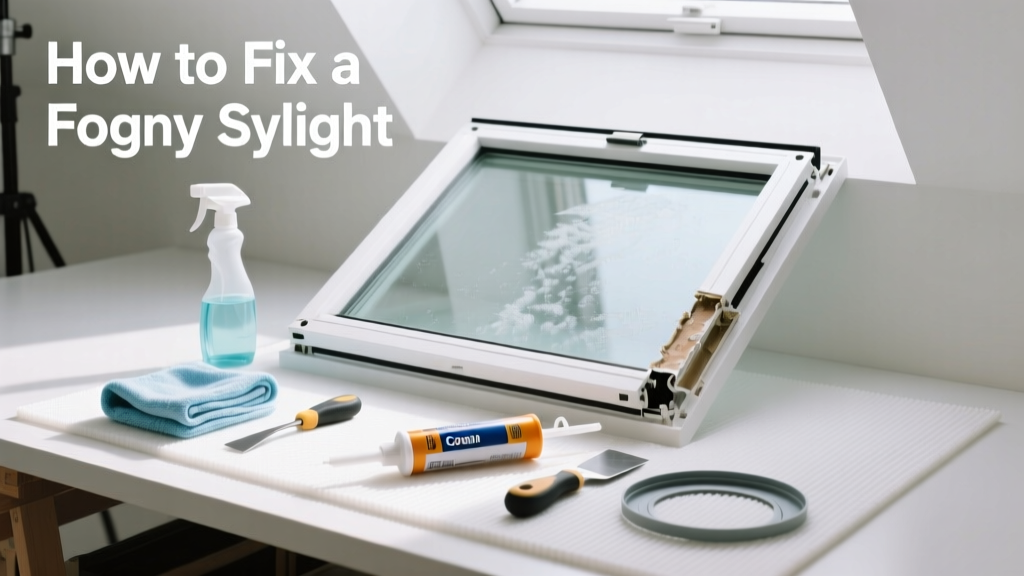
Foggy skylights aren’t just an eyesore—they’re a red flag for trapped moisture between panes or failing seals. If you see condensation inside the glass unit (not on the surface), that’s not humidity—it’s seal failure. Left unaddressed, it invites mold, reduces insulation value, and can eventually cause glass delamination.
Quick Diagnosis
Start by confirming where the fog sits:
- On the interior surface? Likely high indoor humidity or poor ventilation—not a skylight defect.
- Between the panes (visible only when viewed at an angle)? Seal failure—this is a double- or triple-pane unit issue.
- On the exterior surface during cool mornings? Normal dew formation—no repair needed.
- Cloudy film that doesn’t wipe away? Possible UV coating degradation or silicone outgassing in older units.
Tools & Materials Needed
| Item | Purpose | Estimated Cost |
|---|---|---|
| Microfiber cloths | Streak-free cleaning without scratching coated glass | $8–$12 |
| Isopropyl alcohol (90%+) | Dissolves silicone residue and organic film buildup | $5–$9 |
| Small suction cup handle | Safe grip for accessing hard-to-reach skylight surfaces | $12–$18 |
| Dehumidifier (portable) | Lowers indoor RH below 45% to reduce surface condensation | $120–$250 |
| Skylight vent fan kit | Active exhaust for attic or roof space ventilation | $180–$320 |
Step-by-Step Fix
Try these methods in order—start non-invasive, escalate only if needed:
- Clean interior and exterior surfaces thoroughly using isopropyl alcohol and microfiber cloths. Wipe in one direction to avoid swirl marks. This eliminates surface film that mimics fogging.
- Install or upgrade attic ventilation—add soffit vents + ridge vent or a solar-powered skylight fan. The U.S. EPA estimates that 14% of household water usage is from leaks and condensation-related issues, many tied to poor airflow (EPA Indoor Air Quality Guide, 2022).
- Replace the glazing unit only—if your skylight frame is intact but the sealed unit is failed, most manufacturers (VELUX, FAKRO, and Sun-Tek) offer replacement sashes. Match model number and dimensions exactly; retrofit kits include new gaskets and mounting clips.
- Drill-and-vent (last resort)—some contractors drill two 1/8" holes (top and bottom corners) into the spacer bar, insert desiccant plugs, then seal with butyl tape.
This method has a 60% long-term success rate per the National Fenestration Rating Council’s 2021 field study—and voids most warranties.
When to Call a Pro
Don’t risk injury or further damage in these scenarios:
- Your skylight is over 15 years old and shows visible warping, cracked seals, or yellowed spacers.
- You’re uncomfortable working on a roof—even with fall protection—especially on steep or slate/tile roofs.
- The fog is accompanied by water pooling in the frame or dripping during rain, indicating flashing or curb seal failure.
- You own a historic home with custom-glazed units requiring specialty fabrication.
For complex cases, contact a skylight leak repair specialist or certified window technician through the Window & Door Manufacturers Association (WDMA) directory.
Prevention Tips
Extend your skylight’s life with proactive habits:
- Run bathroom and kitchen exhaust fans for 20 minutes after showers or cooking—don’t just crack a window.
- Maintain indoor relative humidity between 30–45% year-round using a hygrometer and dehumidifier.
- Inspect skylight flashing annually for cracks or lifted edges—re-seal with roofing-grade polyurethane caulk (e.g., NP1).
- Choose low-E, argon-filled units with warm-edge spacers for new installations—they resist thermal stress better than aluminum spacers.
Can I use bleach on this?
No—bleach corrodes aluminum frames, degrades silicone gaskets, and damages low-E coatings. Stick to pH-neutral cleaners or diluted isopropyl alcohol. For stubborn mineral deposits, try white vinegar followed by immediate rinse with distilled water.
Will defogging spray work permanently?
Temporary at best. Most commercial sprays coat the glass surface with hydrophobic polymers that wear off in 3–6 months. They do nothing for inter-pane fog, which requires physical intervention or unit replacement.
How long does a replacement glazing unit last?
Modern insulated glazing units (IGUs) carry 10–20 year seal warranties. Real-world performance averages 12–15 years in moderate climates—but drops to 7–9 years in high-UV or freeze-thaw zones like Colorado or Minnesota (NFRC Field Performance Report, 2023).
Is foggy skylight covered by homeowners insurance?
Rarely. Insurance typically covers sudden, accidental damage—not gradual seal failure or maintenance-related moisture. However, if fog appears after a hailstorm or wind event, document it immediately and file a claim referencing the incident date.
Can I add a ceiling fan to help?
Yes—and it’s highly effective. A ceiling fan running clockwise at low speed in winter pushes warm, moist air down from the ceiling, reducing stratification and surface condensation on skylights. Pair it with a smart thermostat that triggers fan operation when indoor RH exceeds 42%.
Do all foggy skylights need full replacement?
No. If the frame, flashing, and operation are sound, replacing just the glazing unit saves 40–60% versus full skylight replacement—and avoids drywall or roofing repairs. Check your manufacturer’s service portal first—many list compatible sash part numbers by serial tag.
A foggy skylight isn’t just cosmetic—it’s your home’s early warning system for moisture imbalance. Tackle surface cleaning and ventilation first, then move to component-level fixes only when necessary. When in doubt, consult a roof leak detection expert before moisture migrates into framing or insulation. And remember: clear glass means better daylight, lower energy bills, and peace of mind.