That gurgle followed by a stagnant pool of soapy water in your sink isn’t just annoying—it’s a red flag. Most slow or non-draining sinks stem from simple, fixable causes you can tackle in under an hour. Skip the plumber’s bill unless it’s truly necessary.
Quick Diagnosis
Before grabbing tools, rule out the obvious:
- Is the stopper mechanism jammed or misaligned?
- Does water back up only in one sink—or both kitchen and bathroom sinks simultaneously?
- Is there a foul odor? That often points to a dry P-trap or sewer gas leak.
- Do other fixtures drain slowly? That suggests a main line or vent issue—not just your sink.
Tools & Materials Needed
| Item | Purpose | Estimated Cost |
|---|---|---|
| Plunger (cup-style) | Creates pressure to dislodge shallow clogs in drains or traps | $5–$12 |
| Zip-it drain cleaning tool | Retrieves hair and debris from pop-up assemblies and shallow pipes | $3–$8 |
| Adjustable wrench | Loosens slip-nut connections on P-traps without stripping threads | $10–$25 |
| Baking soda & white vinegar | Natural reaction helps break down organic buildup; safe for pipes | $2–$6 |
| Wet/dry vacuum (optional) | Generates strong suction for stubborn clogs beyond reach of plungers | $40–$120 |
Step-by-Step Fix
Work from easiest to most involved method—most clogs resolve before step 3.
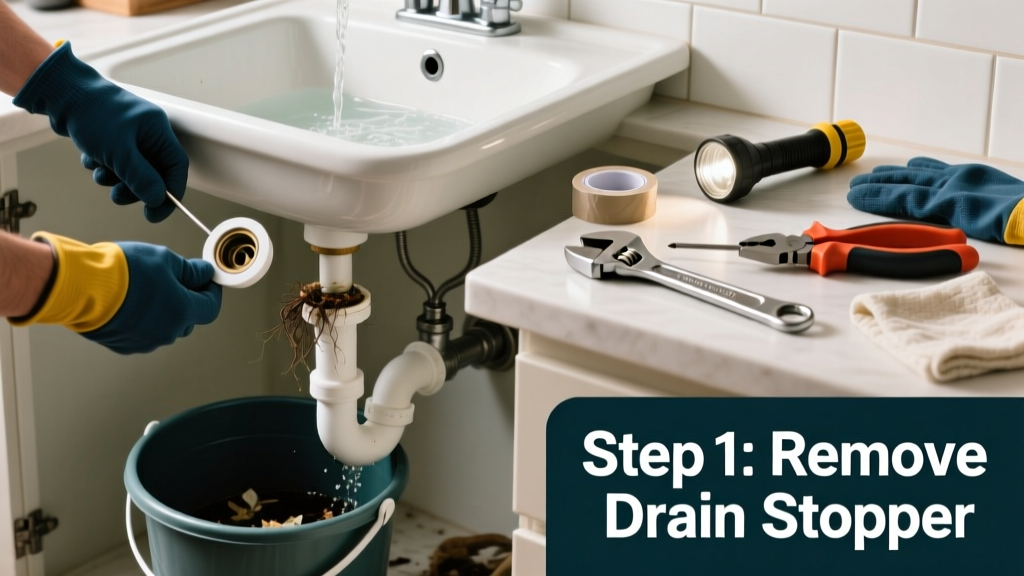
- Clear the stopper assembly: Remove the pop-up lever and pivot rod. Pull out the stopper and clean hair and gunk off its underside and the drain flange. Reassemble and test.
- Plunge with confidence: Seal overflow holes with wet rags. Fill sink with 2–3 inches of water. Use firm, rhythmic plunges for 20–30 seconds. Repeat if needed.
- Remove and clean the P-trap: Place a bucket beneath the trap. Loosen slip nuts with an adjustable wrench. Empty contents into bucket, scrub interior with bottle brush and vinegar, then reattach tightly.
- Snake past the trap: Feed a 20-ft hand auger past the trap elbow into the wall pipe. Rotate while advancing until resistance is met—then crank and retract to pull out debris.
When to Call a Pro
DIY stops where safety or code compliance begins. Call a licensed plumber if:
- Water backs up into multiple fixtures (e.g., tub drains when you run the sink)—this signals a main sewer line blockage.
- You smell raw sewage near floor drains or walls—possible cracked pipe or failed vent stack.
- You’ve snaked 25+ feet with no resistance or debris retrieved—could indicate collapsed pipe or root intrusion.
- Your home has older cast-iron or galvanized steel pipes showing rust or corrosion at joints.
According to the Insurance Institute for Business & Home Safety's 2023 report, 68% of emergency plumbing calls related to slow drains involved undiagnosed venting issues or main line obstructions—both outside typical DIY scope.
Prevention Tips
Consistent maintenance beats crisis repair every time:
- Rinse drains weekly with boiling water (except PVC pipes—use hot tap water instead).
- Install mesh strainers and empty them after each use—especially in bathroom sinks.
- Once monthly, pour ½ cup baking soda + ½ cup white vinegar down the drain, wait 15 minutes, then flush with hot water.
- Avoid pouring grease, coffee grounds, or eggshells down any kitchen sink—even with a disposal.
Can I use bleach on this?
No. Bleach doesn’t dissolve hair or food clogs—and corrodes metal pipes over time. It also reacts dangerously with ammonia or vinegar if used in succession. Stick to mechanical removal or enzyme-based cleaners like Bio-Clean.
Why does my sink gurgle when the washing machine runs?
Gurgling indicates negative air pressure in the drain system—usually due to a blocked or undersized vent pipe. When the washer rapidly empties, it creates suction that pulls air (and water) from your sink’s trap. Check roof vent for bird nests or ice; if clear, consult a pro about vent sizing per IPC 2021 standards.
Will a chemical drain cleaner fix this?
Not reliably—and it’s risky. Caustic formulas like sodium hydroxide can damage PVC seals and generate heat that warps pipes. The U.S. EPA estimates that 14% of household water usage is from leaks caused by repeated chemical use degrading pipe integrity. Try a drain snake first.
What if water backs up into the dishwasher?
This almost always means the garbage disposal or sink drain line is fully blocked upstream of the dishwasher’s high-loop connection. Turn off power to the disposal, inspect and clear the disposal’s impeller, then check the shared drain hose behind the unit for kinks or debris.
How do I know if it’s a vent problem vs. a clog?
If multiple fixtures drain slowly *only* when another is used—and no standing water remains after use—it’s likely vent-related. A true clog leaves residual water and requires plunging/snaking to clear. You can temporarily test by removing the roof vent cap and pouring water down it—if it flows freely, the vent is clear.
Can a clogged garbage disposal cause my sink not to drain?
Absolutely. If your kitchen sink shares a drain with a disposal, a jammed or clogged disposal acts as a solid plug. Always run the disposal with cold water before and after use—and never grind fibrous foods like celery or potato peels.
Fixing a sink that won’t drain is less about magic solutions and more about knowing where—and how deep—the problem lies. Most homeowners resolve 80% of cases with just a plunger and a wrench. Keep your P-trap clean, your vents clear, and your strainers emptied daily—and you’ll spend far less time staring at stagnant water and more time enjoying a smoothly running kitchen or bathroom. For persistent issues, don’t hesitate to reach out to a local plumber certified by the PHCC or RPA.