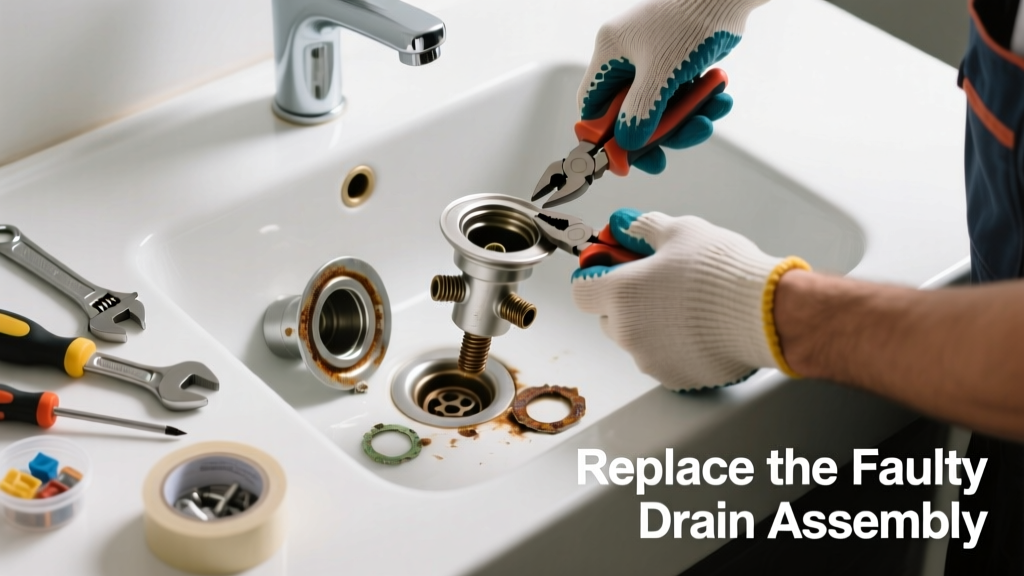
Your sink won’t drain, but the clog isn’t in the P-trap—and plunging does nothing. That’s a telltale sign the problem is deeper: a worn pop-up assembly, cracked tailpiece, or corroded lift rod. These parts degrade silently over years of use, especially in older homes with galvanized or low-grade brass components.
Quick Diagnosis
Before grabbing tools, rule out obvious issues:
- Check if water backs up only when the stopper is closed (points to pop-up mechanism failure)
- Look for visible corrosion or cracks at the drain flange or tailpiece beneath the sink
- Test the lift rod: if it moves freely but the stopper doesn’t respond, the pivot nut or clevis strap has failed
- Listen for gurgling or slow drainage *only* in one sink—suggests internal drain body damage, not main line blockage
Tools & Materials Needed
| Item | Purpose | Estimated Cost |
|---|---|---|
| Adjustable wrench | Tightens/loosens slip-nut connections on tailpiece and P-trap | $12–$25 |
| Needle-nose pliers | Reaching and repositioning pivot rod and clevis strap in tight cabinet space | $8–$18 |
| New drain assembly kit (stainless steel) | Includes flange, stopper, lift rod, pivot rod, and rubber gaskets—replaces all wear-prone parts | $22–$45 |
| Plumber’s putty or silicone sealant | Creates watertight seal between sink flange and countertop surface | $3–$7 |
| Flashlight & shop towel | Illuminates dark cabinet space; absorbs drips during disassembly | $0–$5 |
Step-by-Step Fix
Most sink drainage failures stem from three replaceable components. Try these methods in order:
- Replace the pop-up stopper and pivot assembly: Shut off water, place bucket under trap, loosen slip nuts, remove tailpiece, then unscrew pivot nut under sink. Slide out old pivot rod and clevis strap. Install new stainless-steel kit using fresh plumber’s putty on flange threads.
- Swap the drain flange if corroded: If the metal around the sink opening is pitted or leaking, remove old flange by twisting counterclockwise while pressing upward. Clean residue, apply putty, press new flange in firmly, and tighten mounting nut from below.
- Upgrade the entire tailpiece and extension tube: If plastic tailpieces are brittle or cracked, replace with solid brass or PVC versions (1.25" diameter). Ensure proper slope—1/4" per foot toward P-trap—to prevent future pooling.
When to Call a Pro
DIY stops where safety or code compliance begins:
- Drain pipe is soldered copper (not threaded or compression) and shows pinhole leaks
- Leak persists after full replacement—and you spot moisture staining drywall behind the cabinet
- Your home was built before 1978 and you discover lead-soldered joints or asbestos-wrapped pipes
- The sink shares a drain line with a dishwasher or garbage disposal and both are backing up simultaneously
According to the Insurance Institute for Business & Home Safety's 2023 report, 68% of DIY plumbing repairs that led to water damage involved improper torque on compression fittings or reused gaskets.
Prevention Tips
Extend the life of your new parts with routine care:
- Rinse grease and food scraps down the disposal—not the sink strainer—before running hot water for 30 seconds
- Once monthly, pour ½ cup baking soda + ½ cup vinegar down the drain, wait 15 minutes, then flush with boiling water
- Inspect pivot rod tension every 6 months: if stopper lifts sluggishly, tighten clevis strap screw ¼ turn
- Avoid chemical drain cleaners—they corrode metal linkages and degrade rubber gaskets faster than mineral buildup
Can I reuse my old lift rod with a new drain kit?
No. Lift rods warp and bend over time, especially aluminum ones. Even if they look straight, microscopic fatigue reduces their ability to transfer motion reliably. Always install the rod included in your new kit—it’s calibrated to match the pivot arm geometry and spring tension.
How do I know if my sink flange is stainless steel or cheap chrome-plated brass?
Use a magnet. Stainless steel (304 grade) is non-magnetic; if a fridge magnet sticks strongly, it’s plated brass or zinc alloy—prone to green corrosion within 3–5 years. Check for stamped “304” or “18/8” on the underside of the flange.
My bathroom sink stopper won’t stay open—what’s broken?
The clevis strap is likely stretched or the pivot ball joint is worn. This is common in double-lever mechanisms where repeated lifting stresses the nylon bushing. Replace the entire pivot assembly—not just the strap—as mismatched parts cause binding and premature failure.
Do I need to caulk around the new drain flange on a granite countertop?
Yes—but use 100% silicone (not plumber’s putty) for stone surfaces. Putty can stain porous materials like granite or marble. Apply a thin, continuous bead beneath the flange rim, then wipe excess immediately with a damp rag before tightening the locknut.
What’s the average lifespan of a quality pop-up assembly?
Stainless steel or solid brass assemblies last 8–12 years with moderate use, according to the American Society of Home Inspectors’ 2022 Plumbing Component Lifespan Guide. Plastic kits rarely exceed 4 years—even with light usage—due to UV degradation in cabinet lighting and thermal cycling.
Can a damaged overflow plate cause slow drainage?
Absolutely. If the overflow opening inside the sink bowl is blocked with soap scum or hair, air can’t escape during draining, creating a vacuum that slows flow. Remove the overflow cover plate (usually held by one screw), clean the channel with a bottle brush, and check that the connecting tube to the drain body isn’t kinked or detached.
A properly replaced drain assembly should restore full flow in under 45 minutes—and pay for itself in avoided service calls. Keep spare gaskets and a small tube of silicone in your utility drawer; most failures happen without warning, usually right before guests arrive. For related fixes, see our how to fix a leaky faucet cartridge and garbage disposal not draining guide.