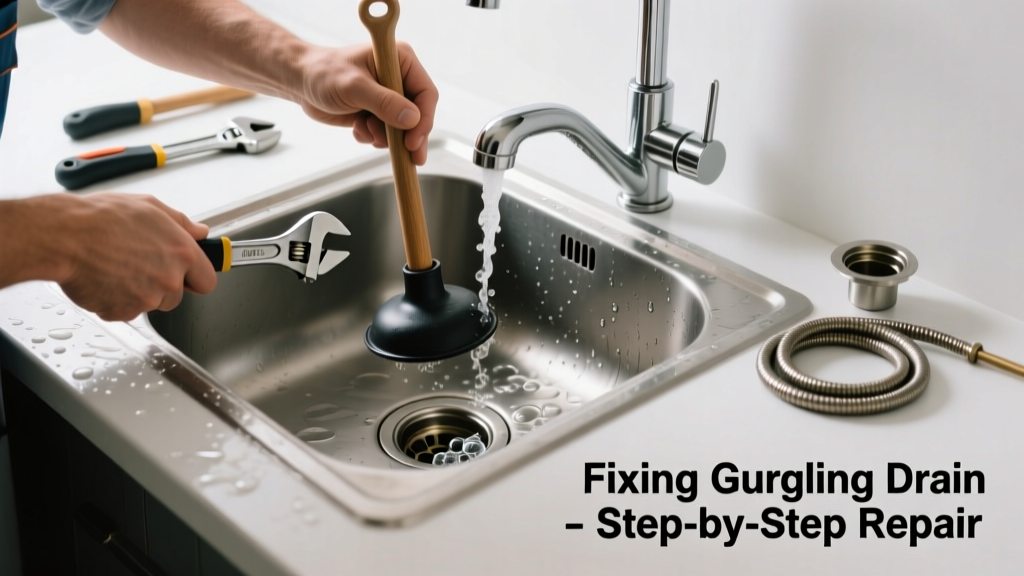
If your sink isn’t draining and is making odd noises—like gurgling, squealing, or rhythmic bubbling—it’s not just annoying; it’s a red flag. These sounds often point to trapped air, partial blockages, or venting issues in your plumbing system. Ignoring them can lead to slow drainage worsening into full stoppages or even sewer gas leaks.
Quick Diagnosis
Start by identifying the sound and timing:
- Gurgling or bubbling when water drains: usually a blocked or disconnected vent pipe
- Squealing or whistling during faucet use: often caused by worn-out aerator or faulty cartridge
- Thumping or knocking after shutting off water: likely water hammer due to loose pipes or failed air chambers
- Rattling under the sink when running water: loose supply lines or mounting hardware
- Drain odor + noise: organic buildup in P-trap or branch drain line
Tools & Materials Needed
| Item | Purpose | Estimated Cost |
|---|---|---|
| Plumber’s snake (1/4" hand auger) | Cleans hair and soap scum from trap and tailpiece | $12–$25 |
| Wet/dry vacuum (with hose adapter) | Creates strong suction to dislodge partial clogs and test vent flow | $40–$80 |
| Adjustable wrench | Tightens loose supply lines and P-trap connections | $15–$30 |
| White vinegar + baking soda | Natural enzymatic cleaner for organic buildup in traps | $5–$8 |
| Flashlight + mirror | Inspects vent stack access points and pipe joints behind walls | $10–$20 |
Step-by-Step Fix
- Clear the P-trap: Place a bucket under the sink, loosen slip nuts with an adjustable wrench, remove the trap, and clean out debris with a bottle brush. Reassemble tightly but avoid over-torquing.
- Test the vent stack: Climb onto your roof (safely) and inspect the vent pipe opening for bird nests, leaves, or ice. Use a garden hose to flush it—water should drain freely. If it backs up, snaking the vent from the roof may be needed.
- Check for water hammer: Turn off the main water supply, open all faucets to drain pressure, then close them. Turn water back on slowly. If knocking persists, install water hammer arrestors ($12–$22 each) near noisy fixtures.
- Replace the aerator or cartridge: Unscrew the faucet head, inspect the aerator for mineral deposits, soak in vinegar for 30 minutes, and reassemble. For squealing, replace the ceramic cartridge per manufacturer specs—Moen and Delta cartridges cost $8–$18.
When to Call a Pro
DIY stops where safety or code compliance begins. Call a licensed plumber if:
- You suspect a collapsed or tree-root-infiltrated branch drain line (confirmed via camera inspection)
- The gurgling happens across multiple fixtures simultaneously—indicating main stack or sewer line issues
- You detect sewage odors near floor drains or basement sump pits
- You’re uncomfortable accessing roof vents or working with pressurized water lines
According to the Insurance Institute for Business & Home Safety's 2023 report, 68% of homeowners who delayed addressing vent-related drainage noise later faced costly sewer backups or mold remediation.
Prevention Tips
- Run hot water for 30 seconds after each use to flush grease and soap residue
- Install mesh strainers and clean them weekly
- Flush drains monthly with ½ cup baking soda + ½ cup white vinegar, followed by boiling water after 10 minutes
- Inspect roof vent caps annually for cracks or animal entry points
- Anchor exposed supply lines every 32 inches to prevent vibration-induced rattling
Can I use bleach on this?
No. Bleach reacts with organic debris to produce toxic chlorine gas and corrodes metal pipes over time. It also fails to break down hair or grease—the two most common causes of noisy slow drains. Stick to enzymatic cleaners like Green Gobbler or mechanical removal instead.
Why does only one sink gurgle while others work fine?
That sink likely has its own dedicated vent line—or shares one with fewer fixtures—making it more sensitive to partial blockages. A single clogged vent tee or frost-blocked cap can isolate the issue. Check the nearest vent stack first, not the main stack.
Will a plunger fix gurgling?
Only temporarily—if the gurgle stems from a shallow clog in the trap or tailpiece. A plunger creates pressure, not suction, so it rarely clears vent obstructions. For true vent issues, you need airflow restoration—not forceful pushing.
Is the noise coming from the wall or under the sink?
Listen closely with a stethoscope or rolled-up paper towel pressed to pipes. Gurgling from the wall suggests vent or branch line trouble; rattling or squealing from under the sink points to loose hardware, worn washers, or failing cartridges. Faucet rebuild kits solve 70% of localized squeals.
How long should I wait before calling a plumber?
If gurgling persists for more than 48 hours after cleaning the trap and checking the vent—or worsens when other fixtures are used—call a pro. Delaying beyond 72 hours increases risk of sewer gas infiltration, especially in homes built before 2000 without modern venting standards.
Can a garbage disposal cause this noise?
Absolutely. A jammed or misaligned disposal impeller can create grinding or humming that echoes through pipes. Turn off power at the breaker, use an Allen wrench in the bottom reset port to manually rotate the blades, and check for foreign objects with a flashlight. Never use hands or utensils inside the unit.
Fixing a noisy, slow-draining sink isn’t about brute force—it’s about listening to what the pipes are telling you. Most gurgles, squeals, and rattles have clear mechanical causes that respond well to targeted fixes. Keep your tools handy, stay observant, and remember: a quiet drain is a healthy drain. For persistent issues, consult our guide on sewer line inspection costs before assuming the worst.