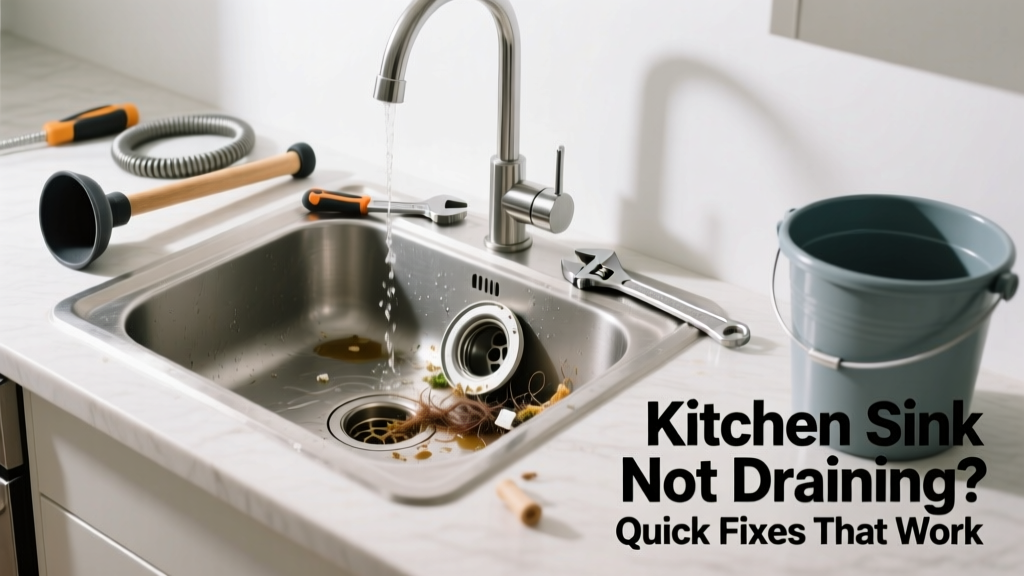
Your kitchen sink gurgles, holds water, or drains slower than molasses in January — and dinner prep grinds to a halt. This isn’t just inconvenient; standing water breeds bacteria and can damage cabinetry over time. The good news? Most kitchen sink drainage issues stem from simple, localized clogs you can clear in under 30 minutes.
Quick Diagnosis
Before grabbing tools, rule out the obvious:
- Is the garbage disposal jammed or turned off? (Check for humming noise or reset button on bottom)
- Are both sides of a double-basin sink backing up? That points to a clog past the P-trap — likely in the branch line or main stack.
- Does water drain slowly only when the dishwasher runs? That suggests a shared drain vent issue or blocked air gap.
- Is there a foul odor with slow drainage? Organic buildup in the P-trap or disposal is probable.
- Did the problem start after pouring grease, coffee grounds, or starchy water down the drain? That’s your culprit — 68% of kitchen clogs are caused by grease and food solids, per the Plumbing-Heating-Cooling Contractors Association’s 2022 field survey.
Tools & Materials Needed
| Item | Purpose | Estimated Cost |
|---|---|---|
| Plunger (cup-style, not flange) | Creates suction/seal on flat sink surface; essential for initial pressure test | $5–$12 |
| Zip-it drain cleaning tool | Flexible plastic hook pulls hair and gunk from shallow pipes — works best in pop-up assemblies | $3–$8 |
| Needle-nose pliers | Removes pop-up stopper mechanism or loosens slip-nut connections | $7–$15 |
| Bucket and shop towel | Catches water during P-trap removal; prevents floor damage and slip hazards | $10–$25 |
| White vinegar + baking soda | Natural reaction breaks down organic film; safer than caustic drain cleaners | $4–$6 |
Step-by-Step Fix
Try these methods in order — most issues resolve at Step 1 or 2:
- Plunge with seal: Plug the overflow hole with a wet rag, fill sink with 3–4 inches of water, and plunge vigorously for 20 seconds. Repeat 2–3 times. If water drops suddenly, flush with hot water.
- Remove and clean the pop-up stopper: Use needle-nose pliers to detach the pivot rod under the sink, then lift out the stopper. Soak it in vinegar, scrub with an old toothbrush, and rinse.
- Clear the P-trap: Place bucket beneath trap, loosen slip-nuts with pliers (wrap nuts with cloth to avoid scratches), remove trap, and empty debris into trash. Rinse trap and reassemble tightly.
- Snake past the trap: Feed a 20-ft hand-crank auger past the P-trap into the wall pipe. Turn clockwise while advancing 2–3 inches at a time until resistance eases. Pull out hair/grease coil, then flush with near-boiling water.
When to Call a Pro
Stop DIY if you encounter any of these:
- Water backs up into the dishwasher or adjacent sink — indicates a blockage in the main branch line or sewer lateral.
- You smell raw sewage (rotten egg odor) — could mean a broken vent pipe or cracked sewer line; exposure risks include hydrogen sulfide gas.
- Drain remains slow after clearing P-trap and snaking 15+ feet — may require camera inspection or hydro-jetting.
- You own a home with cast-iron or galvanized steel pipes built before 1970 — corrosion or collapsed sections need professional assessment.
"Over 40% of emergency plumbing calls for slow kitchen drains involve corroded or improperly pitched branch lines — not simple clogs," says Master Plumber Lena Torres in The National Association of Home Builders’ 2023 Residential Repair Trends Report.
Prevention Tips
Keep your kitchen drain flowing freely year-round:
- Rinse dishes with hot (not boiling) water before loading — cold water solidifies grease in pipes.
- Run the garbage disposal for 15–20 seconds with cold water after each use to flush particles.
- Pour ½ cup baking soda followed by ½ cup white vinegar down the drain monthly, then flush with hot water after 10 minutes.
- Install a fine-mesh strainer — replace or clean it daily to catch rice, pasta, and coffee grounds.
Can I use bleach on this?
No. Bleach doesn’t dissolve grease or food clogs and can react dangerously with other cleaners (like ammonia from urine or vinegar), releasing toxic chlorine gas. It also degrades rubber gaskets and PVC seals over time.
Why does my sink gurgle when the washing machine drains?
Gurgling signals a shared vent or partial blockage in the main stack. When the washer dumps 15–20 gallons quickly, air gets pulled through your sink’s trap — confirming inadequate venting or a downstream restriction.
Will boiling water fix a grease clog?
Only if the grease is very recent and hasn’t cooled and adhered to pipe walls. Once congealed, boiling water often pushes grease further down, where it re-solidifies. Better to use vinegar/baking soda first, then follow with hot (not boiling) tap water.
How tight should P-trap slip-nuts be?
Tighten by hand until snug, then give a quarter-turn with pliers — overtightening cracks PVC or strips threads. Test with water: no drips after 5 minutes means it’s secure.
What if the clog is in the garbage disposal?
Turn off power at the breaker. Shine a flashlight inside — look for visible debris. Use tongs (never fingers) to remove objects. If blades are jammed, insert an Allen wrench into the bottom hex socket and rotate back-and-forth to free them. Reset the disposal button before testing.
Can a collapsed pipe cause slow drainage without leaks?
Yes — especially in older homes with clay or cast-iron lines. A partial collapse restricts flow but may not leak until pressure builds. Signs include recurring clogs in multiple fixtures and gurgling in distant drains. Requires video inspection.
A slow-draining kitchen sink is rarely a sign of impending disaster — but ignoring it invites bigger problems like warped subfloors or mold behind cabinets. Tackle the clog tonight using one of the methods above, and pair it with a weekly strainer clean and monthly vinegar flush. For deeper issues, trust your instincts: if water rises instead of recedes, or smells like sewage, pause and call a licensed plumber. You’ll save time, money, and stress — and keep your kitchen running smoothly. For related fixes, see our guides on garbage disposal not working and leaky faucet repair.