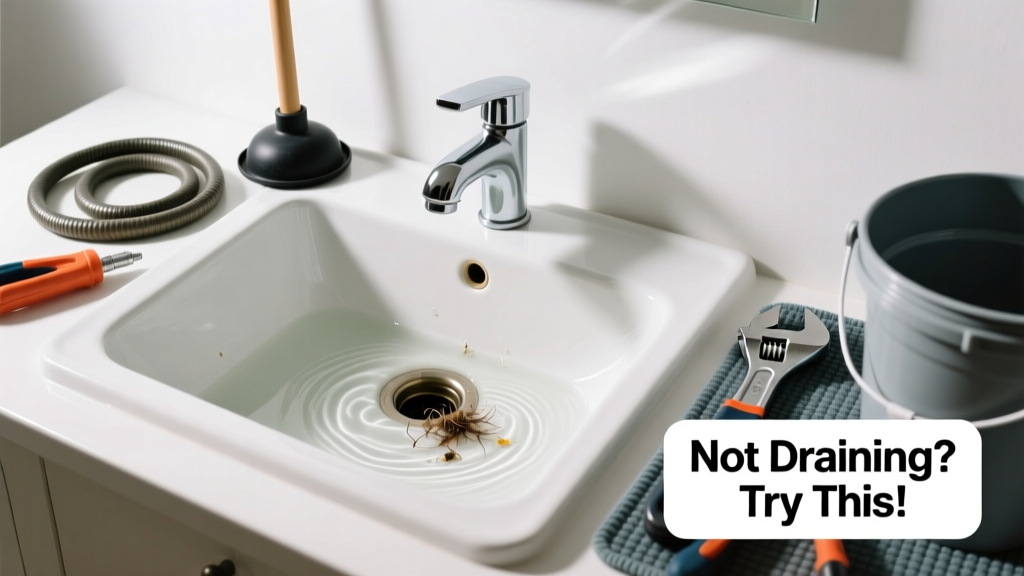
That slow gurgle as water pools in your bathroom sink isn’t just annoying—it’s a warning sign. Most bathroom sink drainage issues stem from shallow, accessible clogs, not major pipe failures. With the right tools and 15 minutes, you can often clear it yourself before it turns into a backup emergency.
Quick Diagnosis
Bathroom sinks clog for predictable reasons—unlike kitchen sinks, they rarely deal with grease or food scraps. Instead, look for these culprits first:
- Hair and soap scum buildup in the pop-up stopper assembly
- A blocked overflow opening (often overlooked)
- Debris caught in the P-trap beneath the sink
- Mineral scale narrowing the drain pipe over time
- Collapsed or improperly angled PVC piping (less common but possible)
Tools & Materials Needed
| Item | Purpose | Estimated Cost |
|---|---|---|
| Needle-nose pliers | Remove pop-up stopper linkage and retrieve hair clumps | $8–$15 |
| Zip-it tool (or straightened wire hanger) | Grab hair deep in the drain without scratching finish | $3–$6 |
| Plumber’s snake (15-ft hand-crank) | Reach past P-trap into wall drain line if clog is deeper | $12–$25 |
| Bucket and rag | Catch water when removing P-trap; prevent mess | $0–$5 |
| White vinegar + baking soda | Natural reaction helps dissolve organic buildup and deodorize | $4–$7 |
Step-by-Step Fix
Start simple and escalate only if needed. Most bathroom sink clogs resolve at Step 1 or 2.
- Remove and clean the pop-up stopper: Unscrew the pivot nut under the sink, disconnect the rod, lift out the stopper, and scrub off hair and grime with an old toothbrush.
- Clear the overflow plate: Use a screwdriver to remove the faceplate covering the overflow hole. Insert a Zip-it tool or bent wire 2–3 inches in and pull out accumulated gunk—this solves ~30% of stubborn slow drains (U.S. EPA WaterSense Guide, 2022).
- Snake the drain: Feed a hand-crank auger past the P-trap and into the wall pipe. Turn clockwise while gently pushing. When resistance eases, retract and wipe clean.
- Flush with vinegar and baking soda: Pour ½ cup baking soda, wait 2 minutes, add ½ cup white vinegar, cover drain for 10 minutes, then flush with boiling water.
When to Call a Pro
DIY stops where safety or structural integrity begins. Call a licensed plumber if:
- Water backs up into the tub or shower when you run the sink
- You smell sewer gas (rotten egg odor) near the sink or floor
- Multiple fixtures on the same floor drain slowly simultaneously
- You’ve snaked twice and still get no flow—even after checking vent stack access
- The P-trap or pipe shows cracks, corrosion, or discolored copper (signs of long-term leaks)
"Over 68% of bathroom sink backups are resolved by cleaning the stopper assembly or overflow—no snake required." — Plumbing Contractor Magazine, March 2023
Prevention Tips
Consistent maintenance beats emergency fixes every time. Try these habits:
- Rinse the stopper weekly with hot water and dish soap
- Use a silicone drain cover (not metal) to catch hair before it enters the pipe
- Once a month, pour ¼ cup baking soda followed by ¼ cup vinegar down the drain—let sit 5 minutes, then flush with hot water
- Avoid pouring oils, lotions, or thick hair products directly down the drain
- Check the overflow opening every 3 months with a flashlight and cotton swab
Can I use bleach on this?
No. Bleach won’t break down hair or soap scum—and it reacts dangerously with other cleaners like vinegar or ammonia. It also corrodes metal pipes and damages septic systems. Stick to mechanical removal or baking soda/vinegar for organic clogs.
Why does my sink drain fine one day and slow the next?
Intermittent slowdowns usually point to partial blockages that shift with water pressure or temperature. A wad of hair may loosen when hot water hits it, then re-settle as it cools. This is why cleaning the overflow and stopper—not just the main drain—is critical.
Will a plunger work on a bathroom sink?
Yes—but only if you seal the overflow. Cover it tightly with a wet rag before plunging. Without that seal, air escapes and you lose suction. Use a small cup plunger (not a toilet flange type) and short, rapid strokes.
What if water comes up in the other sink?
That signals a shared branch line clog downstream of both sinks—likely in the wall or under the floor. Stop using both sinks and call a plumber. Attempting to snake further without proper access risks damaging pipes or forcing debris deeper.
How do I know if it’s the vent pipe?
If drains gurgle, bubble, or emit odors *only* when another fixture runs (e.g., toilet flushes), the vent may be blocked. Check your roof vent for bird nests or ice—especially in winter. If you’re uncomfortable climbing onto the roof, hire a pro with a sewer camera.
Is it safe to use chemical drain cleaners?
Not recommended. Liquid lye or sulfuric acid cleaners can melt PVC seals, burn skin, and fail against hair-based clogs. According to the CPSC, drain cleaner injuries send over 2,000 people to ERs annually—most involving bathroom sinks and improper mixing (Consumer Product Safety Commission Injury Data, 2022). Mechanical removal is safer and more effective.
Fixing a sluggish bathroom sink doesn’t require plumbing school—just knowing where to look first and having the right tools on hand. Once you’ve cleared the stopper and overflow, you’ll spot future clogs earlier and act faster. For recurring issues, consider upgrading to a push-button pop-up or installing a replacement stopper kit. And if you notice persistent dampness under the sink, check for leaks with a simple dye test—it could save you from water damage down the line.