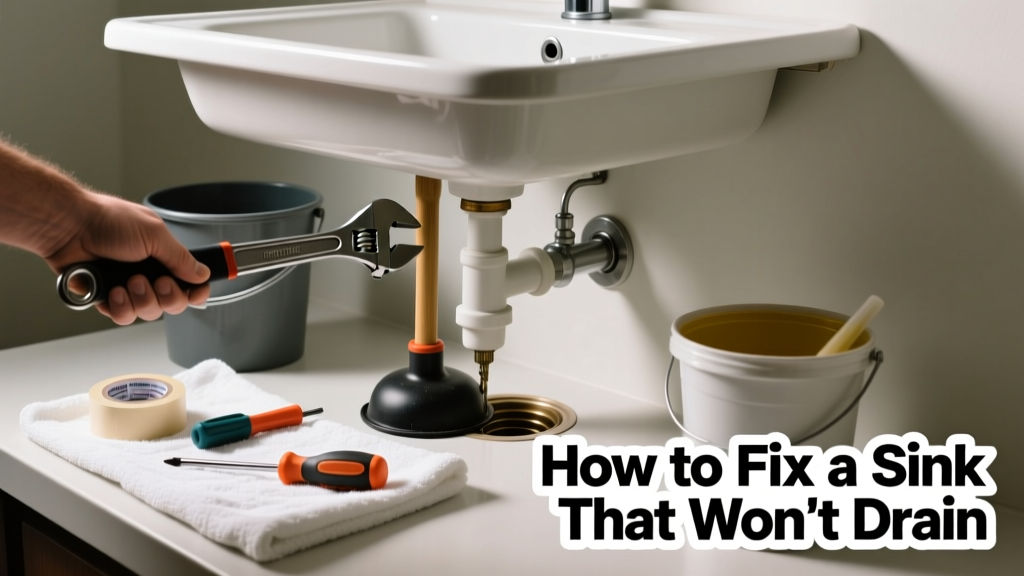
A slow or completely clogged kitchen or bathroom sink is more than just annoying—it’s a red flag that something’s blocking your drain line, and ignoring it can lead to overflow, foul odors, or even pipe corrosion. Most clogs happen within the first 18 inches of the trap or pop-up assembly, meaning you can often clear them in under 30 minutes with basic tools. Don’t reach for harsh chemical drain cleaners yet—many damage pipes and rarely fix the root cause.
Quick Diagnosis
Before grabbing tools, identify where the problem lies. Start by checking these common culprits:
- Food scraps, grease, or coffee grounds (kitchen sinks)
- Hair and soap scum buildup (bathroom sinks)
- A misaligned or corroded pop-up stopper mechanism
- A clog deeper in the P-trap or horizontal branch line
- Shared drain issues—if multiple fixtures back up simultaneously, the clog may be in the main stack or vent line
Tools & Materials Needed
| Item | Purpose | Estimated Cost |
|---|---|---|
| Plunger (cup-style) | Creates suction to dislodge shallow clogs in traps and drains | $5–$12 |
| Drain snake (15–25 ft hand-crank) | Reaches past the P-trap into horizontal pipes; removes hair and debris | $12–$25 |
| Needle-nose pliers | Removes broken stopper linkages or stuck pivot rods | $8–$18 |
| Bucket and towels | Catches water during trap removal; prevents floor damage | $3–$10 |
| Baking soda + white vinegar | Natural reaction helps break down organic gunk without corroding pipes | $4–$7 |
Step-by-Step Fix
Try these methods in order—most sink drainage issues resolve at Step 1 or 2:
- Boiling water + vinegar soak: Pour ½ cup baking soda followed by ½ cup white vinegar down the drain. Cover with a plug for 10 minutes, then flush with 1 quart of boiling water. Works best on light soap scum or minor grease film.
- Plunge with seal: Plug overflow holes with wet rags (critical for bathroom sinks), add enough water to cover the plunger cup, and pump firmly 15–20 times. Repeat if needed. According to the U.S. EPA estimates that 14% of household water usage is from leaks—including those caused by neglected clogs that worsen over time.
- Remove and clean the P-trap: Place bucket beneath trap, loosen slip nuts with pliers, remove trap, and clear debris with a bottle brush or old toothbrush. Reassemble tightly—don’t overtighten, or you’ll crack the plastic.
- Snake the line: Feed a hand-crank auger past the trap until resistance is met. Rotate while pushing gently—when you feel a snag, twist and pull out the clog. Never force it: if you meet solid resistance after 20 inches, stop and reassess.
When to Call a Pro
Stop DIY efforts and contact a licensed plumber if:
- Water backs up into other fixtures (e.g., tub drains when you run the sink)
- You smell sewer gas—especially near floor drains or basement walls
- Snaking yields no debris and the clog persists after three attempts
- Your home has galvanized steel pipes built before 1970 (corrosion risk increases with aggressive snaking)
- You suspect tree roots in the main line—confirmed via camera inspection
"Over 60% of emergency plumbing calls for slow drains originate from repeated use of caustic chemical cleaners that degrade pipe joints and create harder-to-remove sludge," says Master Plumber Elena Ruiz in The Practical Drain Technician Handbook (2022).
Prevention Tips
Keep drains flowing freely year-round with these habits:
- Use mesh strainers in all sinks—and clean them daily
- Rinse kitchen sinks with hot (not boiling) water after each use to melt light grease
- Once monthly, flush with ¼ cup baking soda + ½ cup vinegar, followed by hot water
- Avoid pouring coffee grounds, eggshells, or rice down any drain—even garbage disposals struggle with fibrous or starchy waste
- For bathroom sinks, wipe hair off the stopper weekly and soak it in vinegar for 10 minutes every two months
Can I use bleach on this?
No. Bleach doesn’t dissolve organic clogs like hair or food—it only disinfects surfaces. Worse, mixing bleach with other cleaners (like ammonia or vinegar) creates toxic chlorine gas. It also accelerates corrosion in older metal pipes and rubber gaskets. Stick to mechanical methods or enzymatic drain cleaners like Bio-Clean for long-term maintenance.
Why does my sink gurgle when the washing machine runs?
Gurgling indicates a venting issue—likely a partial blockage in the roof vent stack or shared drain line. Air gets pulled through your sink trap to equalize pressure, causing the noise. Try clearing the vent with a garden hose from the roof, or check for bird nests or ice buildup. If gurgling continues, consult a pro—improper venting can allow sewer gases into your home.
Will a plunger damage my sink’s finish?
Not if used correctly. Use a standard cup plunger (not a flange-type meant for toilets) and ensure the cup fully seals over the drain opening. Avoid excessive force on porcelain or acrylic sinks—repeated hard plunging can loosen caulk or crack aged fixtures. A better alternative for delicate surfaces is a vacuum-style drain tool, which applies controlled suction without impact.
How deep do most sink clogs sit?
Approximately 85% of residential sink clogs occur within the first 24 inches: 40% in the pop-up assembly, 30% in the P-trap, and 15% in the short horizontal tailpiece leading to the wall. That’s why snaking beyond 3 feet is rarely necessary unless multiple fixtures are affected—or you have an older home with non-standard plumbing layouts.
Can I snake a sink with a garbage disposal?
Yes—but disconnect power at the circuit breaker first. Remove the disposal’s rubber baffle or splash guard, insert the auger carefully past the impellers, and avoid cranking aggressively near the grinding chamber. Better yet, use a disposal-specific cleaning brush for routine maintenance. For stubborn jams, many pros recommend replacing older disposals rather than risking motor burnout from repeated clogs.
Is a slow drain a sign of a bigger problem?
Sometimes. A single slow sink may just need cleaning—but if multiple drains slow simultaneously, or if you hear gurgling from toilets or floor drains, you likely have a main line obstruction or vent blockage. According to the Insurance Institute for Business & Home Safety’s 2023 report, 22% of sewer backups begin as undiagnosed slow drains ignored for more than six months.
Fixing a non-draining sink isn’t about brute force—it’s about working with your plumbing’s design, not against it. Most clogs respond to simple, repeatable techniques that protect your pipes and save money. When you understand where the blockage lives—and what tools actually move it—you’ll spend less time frustrated and more time enjoying a smoothly functioning kitchen or bathroom. Keep a small toolkit under the sink, and revisit those prevention tips every season—they’re the quiet heroes of long-term plumbing health.