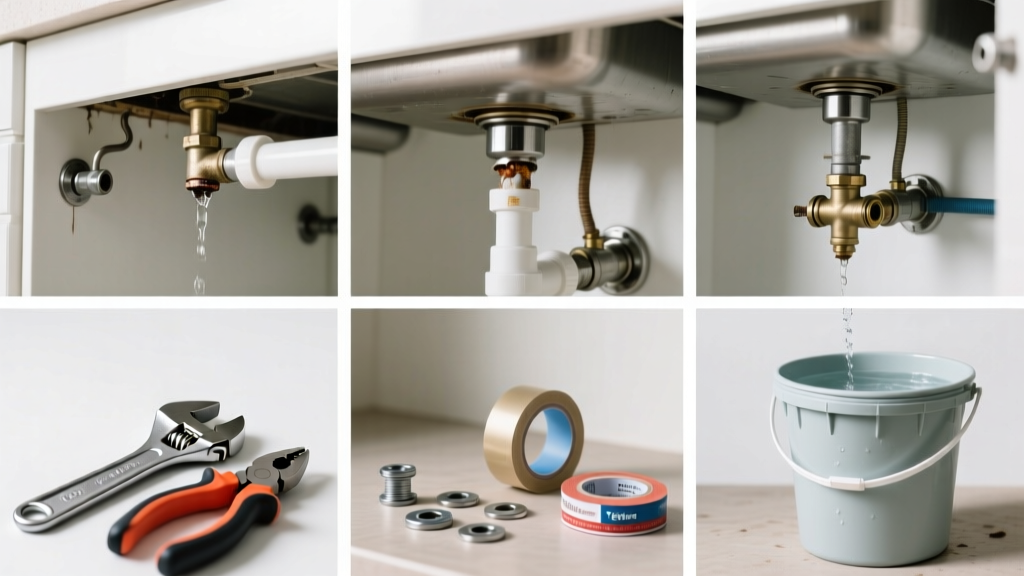
That slow drip under your kitchen sink isn’t just annoying — it’s wasting water, risking cabinet rot, and potentially costing you $100+ per year in wasted water bills. According to the U.S. EPA, 14% of household water usage is from leaks, and kitchen sink leaks account for nearly one-third of those. Catch it early, and you’ll avoid mold, warped subflooring, or a surprise call from your insurance adjuster.
Quick Diagnosis
Before grabbing tools, identify the source. Most kitchen sink leaks underneath stem from one of these five spots:
- Loose slip-nut connections on the P-trap or tailpiece
- Cracked or corroded P-trap (especially older brass or PVC)
- Worn or misaligned rubber washers in compression fittings
- Failed seal at the garbage disposal flange or dishwasher hose connection
- Pinhole corrosion in copper supply lines or solder joints
Tools & Materials Needed
| Item | Purpose | Estimated Cost |
|---|---|---|
| Adjustable wrench | Tightens slip nuts without stripping threads | $12–$25 |
| Channel-lock pliers | Grips stubborn or rounded nuts; useful for disposal mounts | $10–$18 |
| Plumber’s putty or silicone sealant | Re-seals flange joints and drain assemblies | $3–$8 |
| Replacement P-trap kit (PVC or ABS) | Includes trap, tailpiece, washers, and nuts — pre-matched and code-compliant | $8–$15 |
| Flashlight & shop towel | Essential for visibility and quick cleanup during inspection | $5–$12 |
Step-by-Step Fix
Start with the most common cause first — the P-trap — then move upstream if needed.
- Shut off both hot and cold water valves under the sink (turn clockwise until snug). Open the faucet to relieve pressure and drain remaining water into a bucket.
- Place a bucket and towel beneath the P-trap, then loosen the slip nuts connecting the trap to the tailpiece and drainpipe using an adjustable wrench. Don’t force it — if corroded, apply penetrating oil and wait 5 minutes.
- Remove the trap and inspect: Look for hairline cracks, mineral buildup, or warped plastic. If damaged, replace the entire P-trap assembly — don’t try to patch it. Reinstall with new rubber washers and hand-tighten plus ¼ turn with a wrench.
- If the leak persists, check the disposal flange: Tighten the mounting bolts evenly (don’t overtighten), and reapply plumber’s putty beneath the flange before reseating. For persistent seepage, replace the flange gasket — a $2 part that often degrades after 5–7 years.
- Test thoroughly: Run both hot and cold water for 5 minutes while watching all joints. Use paper towels to dab connections — moisture shows up faster than drips.
When to Call a Pro
Some leaks signal deeper trouble — especially when they involve structural or high-pressure components. Call a licensed plumber if:
- You spot green corrosion or pinholes on copper supply lines (a sign of aggressive water chemistry)
- The leak originates behind the wall or under the floor — not accessible from the cabinet
- You’re dealing with soldered copper joints and lack torch experience (improper heating risks fire or pipe warping)
- Water damage has already warped cabinet bases or softened drywall — remediation may require mold testing
According to the Insurance Institute for Business & Home Safety’s 2023 report, 68% of water damage claims linked to kitchen sinks involved delayed response to early leakage signs — many of which escalated due to DIY attempts beyond skill level.
Prevention Tips
Small habits extend your plumbing’s life significantly:
- Flush the P-trap monthly with ½ cup baking soda + ½ cup vinegar, followed by hot water — dissolves grease buildup before it traps debris
- Replace rubber washers every 3 years, even if no leak is visible — they harden and crack silently
- Avoid pouring coffee grounds, eggshells, or grease down the disposal — they accelerate corrosion and clog traps
- Install a water leak detector like the Moen Smart Water Detector under the sink — it sends alerts before puddles form
Can I use bleach to clean the P-trap?
No. Bleach reacts with residual grease and metal components, creating toxic fumes and accelerating corrosion in brass or galvanized parts. Stick to vinegar-baking soda or enzyme-based cleaners like Green Gobbler for safe, biodegradable breakdown.
Why does my P-trap leak only when the dishwasher runs?
This points to a failed air gap or improperly sloped dishwasher discharge hose. If the hose lacks a high-loop (secured above the sink’s flood rim), wastewater backs up into the P-trap during pump-out. Check the loop height and ensure the hose clamp at the disposal inlet is tight and corrosion-free.
Is Teflon tape okay on sink trap threads?
No — slip-joint connections (like P-traps) rely on compression washers, not thread sealing. Teflon tape can prevent proper washer seating and cause leaks. Only use it on threaded supply line connections (e.g., angle stops or faucet inlets).
How tight should slip nuts be?
Hand-tight plus ¼ to ½ turn with a wrench. Overtightening cracks PVC, distorts rubber washers, and strips brass threads. If it still leaks, the issue is alignment or washer condition — not torque.
Can I replace just the tailpiece instead of the whole P-trap?
Yes — but only if the tailpiece is the sole problem (e.g., bent or cracked near the strainer). Match the diameter (usually 1.5") and thread type. However, most leaks involve multiple worn parts, so replacing the full kit saves time and ensures compatibility.
What’s the best replacement material: PVC, ABS, or chrome-plated brass?
PVC is easiest for DIYers — lightweight, glue-free, and resistant to corrosion. ABS is slightly more impact-resistant but less common in kitchens. Chrome-plated brass looks sleek but costs 3× more and can corrode where plating chips. For most homes, schedule 40 PVC is the practical choice.
A steady drip under your sink doesn’t have to mean panic or a $200 service call. With the right diagnosis and a 20-minute intervention, you’ll stop the leak, protect your cabinets, and gain confidence for the next plumbing hiccup. Just remember: when in doubt about pipe integrity or hidden damage, pause and call a pro — some leaks are warnings, not chores.