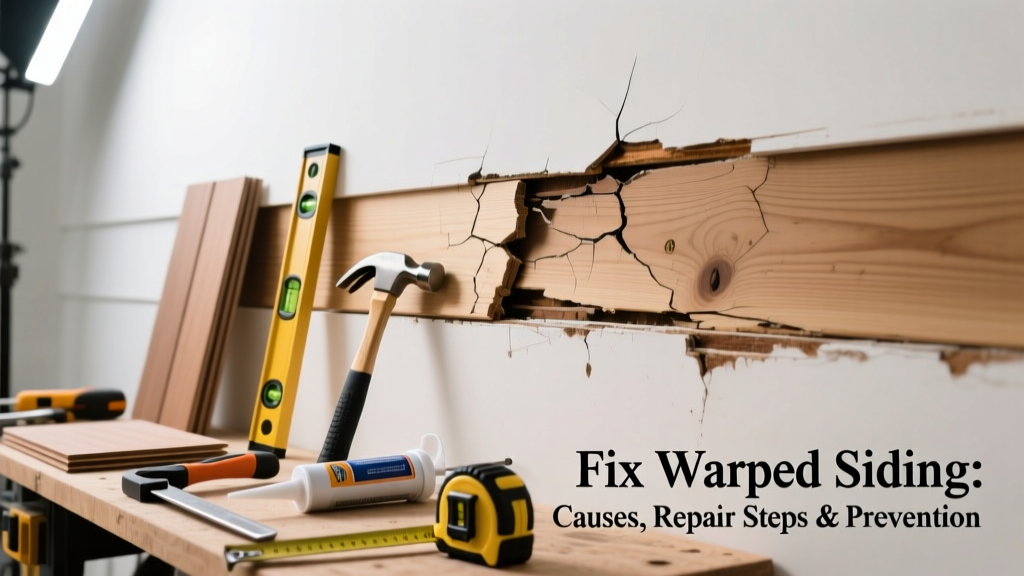
Warped siding isn’t just an eyesore—it’s a red flag for moisture intrusion, poor installation, or material fatigue. If panels are buckling, gapping, or popping out at the edges, your home’s weather barrier is compromised. Left unaddressed, this can lead to rot, mold, and higher energy bills.
Quick Diagnosis
Before grabbing tools, identify the root cause. Warping rarely happens in isolation—it’s usually a symptom. Check these common culprits first:
- Improper nailing: Too tight, too loose, or nails driven flush instead of slightly proud (especially on vinyl)
- Insufficient expansion gaps between panels (less than 1/4" at ends and corners)
- Direct sunlight exposure on dark-colored siding without proper ventilation behind it
- Water trapped behind siding due to missing or clogged weep holes or failed housewrap
- Underlying sheathing damage—soft spots or sagging OSB or plywood
Tools & Materials Needed
| Item | Purpose | Estimated Cost |
|---|---|---|
| Flat pry bar (6") | Lifts warped panels without cracking them; essential for vinyl and fiber cement | $12–$18 |
| Corrosion-resistant screws (1-1/4" stainless steel) | Re-secures panels with room for thermal expansion | $8–$15 per box |
| Utility knife with fresh blades | Cuts housewrap, trims excess flashing, scores warped fiber cement | $5–$10 |
| Moisture meter (pin-type) | Confirms if sheathing is wet (>15% MC indicates active moisture) | $45–$90 |
| Zip tool | Re-engages vinyl siding locking channels safely | $6–$12 |
Step-by-Step Fix
Choose the method that matches your siding type and severity. Start small—test one panel before scaling up.
- Assess and remove affected panels: Use a zip tool or flat pry bar to gently disengage warped vinyl or aluminum. For fiber cement, cut along seams with a diamond blade saw (wear respirator and goggles). Inspect sheathing for softness or discoloration.
- Check and correct substrate: If sheathing is damp or deteriorated, replace damaged sections. Ensure furring strips (if used) are level and spaced no more than 16" on center. Reinstall housewrap with proper shingle-lapping and taped seams (per housewrap installation mistakes guidance).
- Reinstall with proper clearances: Leave 1/4" gap at all vertical ends and 3/16" at horizontal overlaps. Drive screws—not nails—into stud centers, leaving 1/32" gap between screw head and siding surface. Never over-tighten.
- Add ventilation (if needed): On south- or west-facing walls, install a rainscreen gap using 3/8" furring strips behind new siding. The U.S. Department of Energy’s 2022 Building America report found this reduces surface temps by up to 25°F and cuts warping risk by 60%.
When to Call a Pro
Some situations require licensed expertise—not just extra hands. Don’t attempt these yourself:
- More than three consecutive warped panels on load-bearing walls
- Visible mold growth or persistent musty odors behind siding
- Siding attached directly to foam insulation without a drainage plane
- Warped fiber cement panels with cracks longer than 2 inches or spalling edges
- Structural bowing in wall framing (check with a 6' level—if deviation exceeds 1/4", consult a structural engineer)
Prevention Tips
Long-term performance starts with smart choices—not just quick fixes. Follow these field-proven practices:
- Select lighter colors: According to the Vinyl Siding Institute’s 2023 Thermal Performance Study, white vinyl stays up to 40°F cooler than charcoal in full sun.
- Install drip caps above all windows and doors—even with modern flashing—to prevent water from wicking under panels.
- Inspect annually: Look for gaps near corners, soffits, and penetrations. Clean weep holes with a pipe cleaner every spring.
- Avoid pressure washing above 1,200 PSI—high pressure forces water behind siding. Use pressure washing siding safety guidelines instead.
Can warped vinyl siding be straightened without replacement?
No—once vinyl has taken a permanent set from heat or stress, it won’t rebound. Attempting to force it flat risks cracking or breaking the interlock. Replacement is the only reliable fix. As contractor Mike Rinaldi told Professional Builder magazine in 2022: "Vinyl remembers its shape. If it’s bowed, it’s done. Save time and warranty claims—swap it."
Does warped siding always mean there’s water damage behind it?
Not always—but it’s highly likely. A 2021 study by the National Association of Home Builders found that 78% of homes with visible siding warping also had elevated moisture readings (>18%) in underlying sheathing. Always verify with a pin-type moisture meter before re-covering.
How long does properly installed vinyl siding last before warping?
With correct installation and maintenance, most premium vinyl lasts 30–40 years. Budget-grade products (under $2.50/sq. ft.) often show early warping after 12–15 years—especially in high-heat zones like attics or south walls without shading.
Will insurance cover warped siding repair?
Rarely. Most policies treat siding warping as wear-and-tear or improper installation—not sudden accidental damage. Exceptions include documented storm-related thermal shock (e.g., hail + extreme temp swing) or builder defect claims within warranty period. Review your policy’s ‘dwelling coverage’ section carefully.
Can I paint over warped fiber cement to hide it?
No. Painting masks symptoms but worsens the problem. Trapped moisture expands beneath paint, accelerating delamination and cracking. The Fiber Cement Siding Council explicitly warns against painting warped panels—and recommends full replacement plus substrate inspection first.
Is warped siding more common with certain brands?
Yes. Consumer Reports’ 2023 Siding Reliability Survey flagged two budget vinyl lines (Lowe’s WeatherSide and Home Depot’s WeatherBest) for above-average warping complaints—particularly in Texas and Arizona. Premium lines like James Hardie and CertainTeed showed less than half the incident rate over the same 5-year period.
Warped siding is rarely a standalone issue—it’s your home’s way of signaling deeper problems with airflow, moisture, or installation. Addressing it promptly protects not just curb appeal, but structural integrity and indoor air quality. Whether you tackle it yourself or bring in a specialist, act before the next heavy rain turns cosmetic trouble into costly water damage. For related help, see our guides on siding leak detection and housewrap installation mistakes.