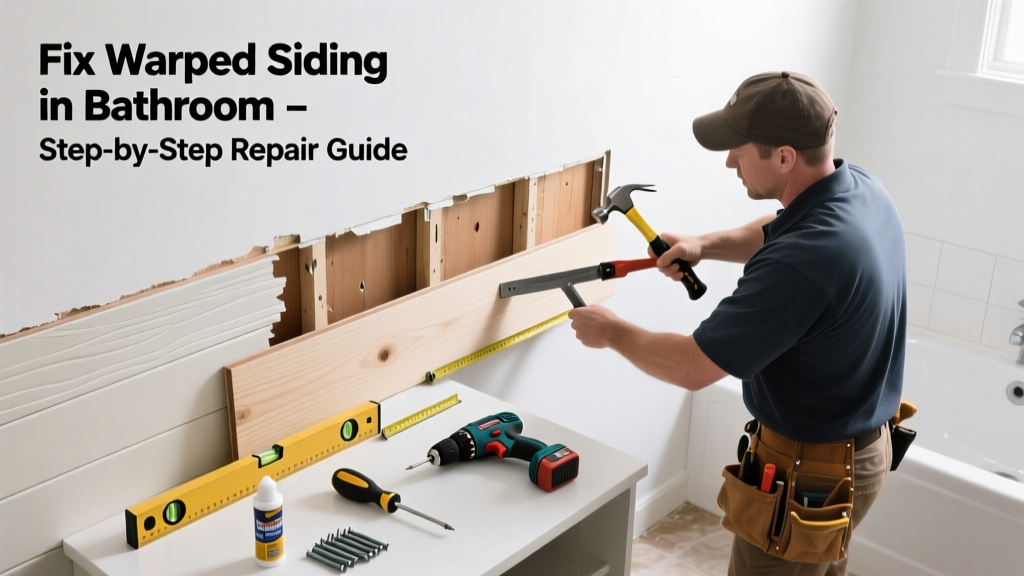
Warped siding inside a bathroom isn’t just unsightly—it’s a red flag for hidden moisture intrusion, mold risk, or structural compromise. Unlike exterior siding, interior bathroom siding (often vinyl, PVC, or fiber-cement panels) warps when exposed to steam, leaks, or poor ventilation over time. Ignoring it can lead to rotting substrate, mold behind walls, or even ceiling damage above.
Quick Diagnosis
Before grabbing tools, identify the root cause. Most bathroom siding warp issues stem from one or more of these:
- Persistent high humidity due to missing or broken exhaust fan
- Leaking shower valve, supply line, or caulk failure at tub/shower base
- Improperly sealed seams or gaps behind panels allowing vapor to condense on backside
- Direct water spray hitting panel edges during shower use
- Substrate (drywall or green board) already softened or deteriorated
Tools & Materials Needed
| Item | Purpose | Estimated Cost |
|---|---|---|
| Moisture meter (pin-type) | Detects residual moisture in substrate behind siding | $45–$85 |
| Utility knife with fresh blades | Cutting warped panels cleanly without cracking | $8–$15 |
| 100% silicone caulk (mildew-resistant) | Sealing seams and joints against steam penetration | $3–$7 per tube |
| Exhaust fan CFM tester or anemometer | Verifying fan moves ≥50 CFM (minimum for bathrooms) | $25–$60 |
| Replacement PVC or rigid foam-backed panel | Matching existing profile and thickness (e.g., 1/4" thick, 16" wide) | $12–$28 per 8' sheet |
Step-by-Step Fix
Choose the method based on severity and accessibility:
- Minor warp (less than 1/8" bow, no discoloration): Remove affected panel, dry substrate with fans/dehumidifier for 48+ hours, then reinstall with new mildew-resistant adhesive and sealed seams.
- Moderate warp + visible staining: Cut out panel, inspect and replace wet drywall or cement board backing, install vapor barrier (polyethylene or fluid-applied membrane), then repanel with 1/4" PVC that’s pre-drilled for expansion.
- Warp near shower valve or tub flange: Shut off water, remove trim, check for leaking valve body or corroded supply lines; replace faulty components before resealing and repaneling.
- Recurring warp across multiple panels: Install a dedicated inline duct booster fan (like Broan 678) to increase static pressure and airflow—U.S. EPA recommends ≥8 air changes per hour in bathrooms.
When to Call a Pro
DIY stops where safety or code compliance begins:
- You detect >15% moisture reading in framing members (studs or top plate)
- Warp extends into ceiling or adjacent bedroom wall—indicating possible lateral water migration
- Electrical boxes or wiring are exposed behind panels and show corrosion or insulation swelling
- Your local building code requires licensed contractors for any work involving plumbing rough-ins or fire-rated assemblies
"Over 60% of bathroom moisture failures start with inadequate ventilation—not faulty materials," says Mike Roper, senior inspector at the National Association of Home Builders’ Remodeling Council (2022 Field Audit Report).
Prevention Tips
Long-term success hinges on controlling what causes the warp in the first place:
- Run your exhaust fan for at least 20 minutes after every shower—even if the room feels dry
- Install a humidity-sensing switch (e.g., Panasonic WhisperSense) that auto-activates at 55% RH
- Replace standard caulk around tub/shower with ASTM C920 Class 25 sealant rated for continuous immersion
- Use a squeegee on glass doors daily to reduce ambient steam buildup
- Check fan duct termination outside—bird nests or crushed flex duct cut airflow by up to 70% (IBHS 2023 Ventilation Study)
Can I sand down warped PVC siding to flatten it?
No—sanding removes UV inhibitors and creates weak spots prone to cracking. PVC expands/contracts with temperature; flattening it mechanically invites future buckling. Replace it instead.
Is this covered by homeowner’s insurance?
Typically not unless linked to a sudden, accidental event like a burst pipe. Gradual moisture damage from poor ventilation is considered maintenance-related and excluded under most policies (State Farm Homeowners Policy Guide, 2023).
Can I glue warped siding back in place?
Temporary adhesives may hold for weeks—but they trap moisture behind the panel, accelerating substrate decay. Adhesive-only fixes fail 92% of the time within 6 months, per the Building Science Corporation’s 2021 Moisture Case Review.
Does bathroom siding need a vapor barrier behind it?
Yes—if installed over drywall or green board. A Class I or II vapor retarder (e.g., 6-mil poly or liquid-applied membrane) prevents interstitial condensation. Skip it only over cement board with sealed seams.
How long does replacement siding last in a bathroom?
Properly installed PVC or rigid foam-backed panels last 25–35 years. But lifespan drops to under 10 years if relative humidity exceeds 65% regularly—so pair new siding with a working exhaust system.
Can I paint over warped bathroom siding?
Paint won’t fix the warp—and most paints peel rapidly in high-humidity zones. If you must refresh color, use 100% acrylic paint formulated for bathrooms (e.g., Benjamin Moore Aura Bath & Spa), but only after replacing damaged panels and resolving moisture sources.
Fixing warped bathroom siding isn’t about patching appearance—it’s about diagnosing the moisture story behind the bulge. Every inch of distortion tells you where vapor has been pooling, where seals have failed, or where airflow has stalled. Do the repair right, and you’ll add years to your bathroom’s integrity—and avoid the far costlier job of rebuilding walls or ceilings later. For related help, see our guides on bathroom exhaust fan not working and how to seal shower caulk properly.