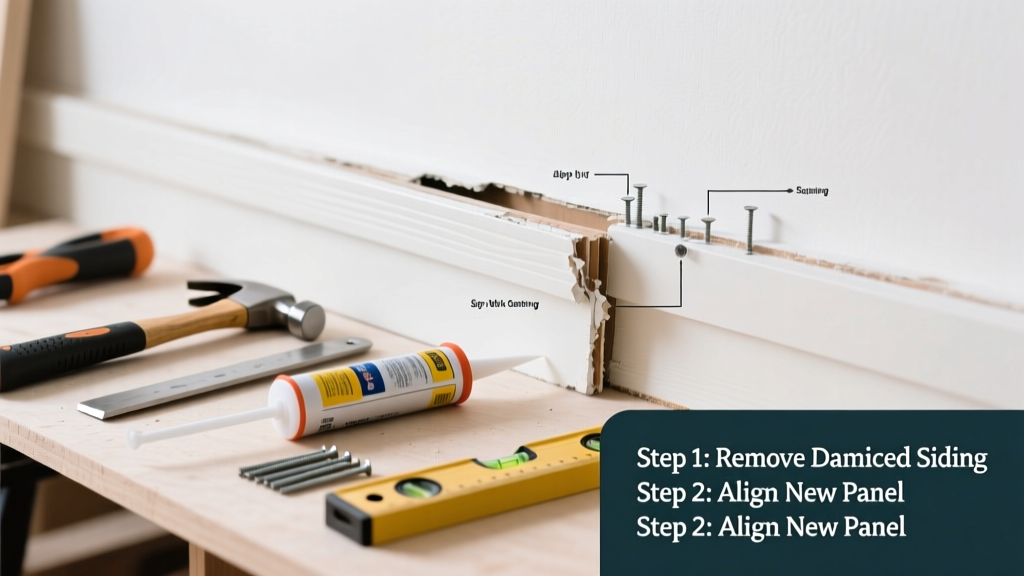
That fluttering sound in the wind? A gap near your soffit? Siding that wobbles when you tap it? Loose siding isn’t just an eyesore—it’s a red flag for moisture intrusion, air leaks, and potential structural compromise. Ignoring it can cost hundreds in mold remediation or insulation replacement down the line.
Quick Diagnosis
Before grabbing tools, identify what’s really going on. Most loose siding falls into one of these categories:
- Nails pulled out due to thermal expansion/contraction over time (especially vinyl and aluminum)
- Corroded or missing fasteners on wood or fiber cement
- Rotting or warped sheathing behind the siding
- Improper installation—nails driven too deep, too shallow, or not centered in the nailing hem
- Impact damage from ladders, trim work, or weather events like hail or falling branches
Tools & Materials Needed
| Item | Purpose | Estimated Cost |
|---|---|---|
| 16d galvanized ring-shank nails | Secure wood or fiber cement siding without splitting; grip better than smooth shank | $8–$12 |
| Vinyl siding removal tool | Unlocks interlocking panels without cracking or bending them | $6–$10 |
| Drill with Phillips bit | Drive screws into fiber cement or replace rusted fasteners efficiently | $25–$45 (if you don’t own one) |
| Level and tape measure | Ensure panels are reinstalled plumb and aligned with adjacent courses | $12–$20 |
| Utility knife & caulk gun | Cut excess flashing and seal gaps at joints or penetrations | $5–$15 |
Step-by-Step Fix
Choose the method based on your siding type and extent of looseness:
- Vinyl siding with popped nails: Use the removal tool to lift the lower edge of the loose panel, reposition the nail flange, and drive new 1¼" galvanized roofing nails through the flange—leaving a 1/32" gap for expansion.
- Fiber cement with corroded screws: Drill out old fasteners, pre-drill pilot holes, and install corrosion-resistant stainless steel screws with neoprene washers. Space screws no more than 12" apart along edges and 24" in the field.
- Wood lap siding pulling away at ends: Remove old nails, countersink new 2½" hot-dipped galvanized nails, and apply exterior-grade acrylic caulk under each nail head before driving to prevent water entry.
- Loose corner posts or J-channels: Check for bent or missing mounting clips. Replace damaged channels and secure with screws spaced every 16"—never rely solely on adhesive.
When to Call a Pro
DIY has limits—and safety is non-negotiable. Call a licensed contractor if:
- You spot rot, mold, or soft spots in the underlying OSB or plywood sheathing
- More than three consecutive panels are loose across two or more stories
- The house has stucco or EIFS over foam board—looseness may indicate drainage plane failure
- You’re uncomfortable working on ladders above 10 feet or near power lines
According to the Insurance Institute for Business & Home Safety's 2023 report, improperly secured siding contributes to 27% of wind-related water intrusion claims in single-family homes—many of which escalate after initial DIY attempts miss hidden substrate issues.
Prevention Tips
Maintaining siding integrity is cheaper than replacing it. Do these twice yearly:
- Inspect all fastener heads for rust, pop-out, or paint blistering around nail/screw sites
- Clear debris from weep holes and bottom-edge gaps—clogged drainage causes moisture buildup behind panels
- Trim tree branches within 3 feet of walls to reduce abrasion and pest access
- Re-caulk around windows, doors, and utility penetrations every 3–5 years using ASTM C920 silicone-modified acrylic
Can I reuse old nails when reattaching siding?
No. Reused nails lose up to 40% of their holding power due to micro-fractures and corrosion—even if they look intact. Always use new, code-compliant fasteners rated for your siding material and climate zone.
How do I know if my siding was installed too tightly?
Vinyl and metal siding must float—not bind. If panels buckle, ripple, or make popping noises in temperature swings, they were likely nailed too tightly or without proper expansion gaps. The Vinyl Siding Institute recommends a minimum 1/4" gap at vertical ends and 1/8" at horizontal overlaps.
Will tightening loose siding stop interior drafts?
Sometimes—but not always. Drafts often stem from missing or compressed insulation behind the wall cavity, not just surface gaps. If drafts persist after repair, consider an infrared scan or attic air leak detection to locate bypasses.
Do I need to replace the entire panel if one corner is loose?
Rarely. Most vinyl and fiber cement panels can be individually resecured. However, if the panel shows cracks, UV fading beyond adjacent pieces, or warping, replacement ensures uniform appearance and performance—check our siding replacement cost guide for budget planning.
Is pressure washing safe for loose siding?
No. High-pressure water can force moisture behind panels, worsen fastener pull-out, and damage backing materials. Use a soft-bristle brush and low-pressure garden hose with oxygen bleach solution instead—see our clean siding safely guide.
What’s the average lifespan of properly installed siding?
It varies: vinyl lasts 20–40 years, fiber cement 30–50 years, and cedar shake 25–40 years—with maintenance. But the U.S. Department of Energy notes that poor fastening cuts effective lifespan by up to 35%, especially in freeze-thaw climates.
Loose siding rarely fixes itself—and waiting usually makes it worse. A 15-minute inspection today could save you from a $2,000 moisture damage claim tomorrow. Tackle small issues early, document your repairs, and keep a log of fastener types and spacing for future reference. Your home’s envelope depends on it.