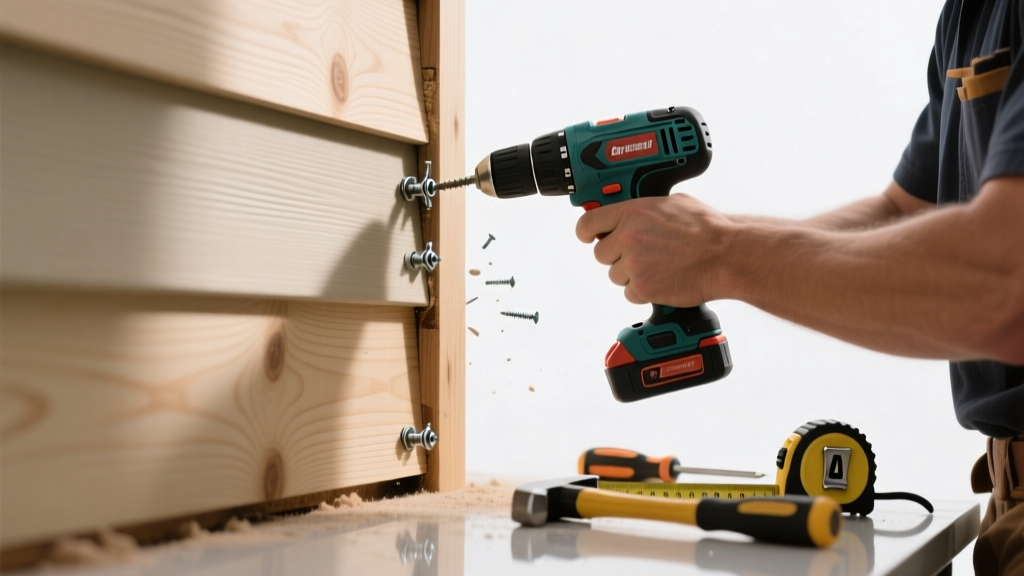
If your siding suddenly starts clattering like a tin can in a storm—or groaning when temperatures swing—you’re not imagining it. That noise is a red flag: something’s loose, misaligned, or failing. Ignoring it risks moisture intrusion, insulation damage, and even structural compromise over time.
Quick Diagnosis
Start by identifying the pattern and location of the noise:
- Rattling during high winds? Likely fasteners have backed out or siding panels aren’t lapped correctly.
- Popping or cracking on hot/cold days? Thermal expansion gaps are too tight—or nails were driven too deep into vinyl or fiber cement.
- Flapping near corners or soffits? Starter strip or J-channel is detached or improperly installed.
- Localized squeaking when walking upstairs? Underlying sheathing may be warped or furring strips have shifted.
Tools & Materials Needed
| Item | Purpose | Estimated Cost |
|---|---|---|
| 7/64" drill bit & cordless drill | Drill pilot holes without splitting wood or cracking fiber cement | $12–$25 |
| Stainless steel siding nails (1-1/4") | Corrosion-resistant fasteners rated for your siding type | $8–$15 per box |
| Zip tool or siding removal tool | Releases interlocking seams without breaking panels | $6–$14 |
| Level & tape measure | Verify panel alignment and gap consistency (should be 1/8"–3/16") | $10–$22 |
| Butyl rubber caulk (for fiber cement) | Seals nail heads without trapping moisture behind siding | $5–$9 |
Step-by-Step Fix
Choose the method based on your siding material and symptom:
- For vinyl siding popping or flapping: Use a zip tool to gently lift the affected course, inspect for missing nails or bent nailing hem, reposition, and reinstall with new stainless nails spaced 12" on center—leaving 1/32" gap at nail head to allow for expansion.
- For fiber cement panels rattling at butt joints: Remove loose panel, check for swollen or rotted sheathing underneath, replace damaged substrate, then reinstall using corrosion-resistant screws with neoprene washers—torqued to manufacturer specs (typically 12–15 in-lbs).
- For aluminum siding squeaking at corners: Loosen existing J-channel screws, slide channel 1/8" outward to relieve tension, re-secure with oversized washers to distribute load, and seal screw heads with non-silicone acrylic caulk.
When to Call a Pro
Don’t risk it if you encounter any of these:
- Siding is buckling upward more than 1/4" — indicates serious substrate failure or improper installation.
- Noise coincides with interior wall cracks, sagging soffits, or visible roofline distortion — possible framing movement.
- You spot black mold, rot, or wet insulation behind panels — moisture damage requires expert assessment and remediation.
- Your home has EIFS (Exterior Insulation and Finish System) — improper repair can trap moisture and accelerate decay.
According to the Insurance Institute for Business & Home Safety's 2023 report, 68% of siding-related water intrusion claims involved DIY repairs that compromised weather-resistive barriers.
Prevention Tips
Extend your siding’s life and silence with these habits:
- Inspect all siding annually—especially after storms—focusing on corners, windows, and roofline transitions.
- Clean gutters twice yearly; clogs cause splashback that accelerates fastener corrosion.
- Never pressure-wash vinyl or fiber cement above 1,200 PSI—high pressure forces water behind panels.
- Replace galvanized nails with stainless steel during repairs—even if original fasteners look fine.
Can I reuse old siding nails?
No. Reusing nails compromises holding power and increases risk of splitting or pull-through. Stainless steel nails cost under $1 each and last decades longer than reused hardware. Always discard bent, corroded, or undersized fasteners—even if they appear intact.
Does temperature affect how tightly I should fasten siding?
Absolutely. Vinyl expands up to 1/4" per 12-foot panel between -20°F and 110°F. Install in moderate temps (40–80°F) and leave proper nail head clearance—too tight causes buckling; too loose invites flapping. Fiber cement needs consistent 1/8" gaps regardless of season, but avoid installing below freezing unless acclimated for 48 hours.
How do I know if the noise is coming from behind the siding?
Tap along the noisy section with a rubber mallet—if sound is hollow and resonant, it’s likely the panel itself. If it’s dull or thudding, the issue may be loose furring strips, missing insulation, or detached house wrap. Remove one panel and visually inspect the cavity—look for torn WRB, missing staples, or bowed OSB sheathing.
Will caulking the seams stop the noise?
No—and it’ll make things worse. Caulking siding seams traps moisture, prevents drainage, and restricts thermal movement. The U.S. EPA estimates that 14% of household water usage is from leaks, many originating from improper sealing behind cladding. Leave expansion joints uncaulked; use only approved flashing and drip caps at penetrations.
Can loose siding cause higher energy bills?
Yes. Gaps let conditioned air escape and unconditioned air infiltrate. A 2022 study by the Department of Energy found homes with poorly sealed exterior cladding averaged 8–12% higher heating and cooling costs—especially noticeable near corners and upper floors where wind pressure is strongest.
Is this problem covered by my home warranty?
Most standard home warranties exclude siding unless it’s part of a builder’s limited 1-year workmanship guarantee. Third-party extended warranties rarely cover wear-and-tear issues like fastener loosening. Review your policy’s exclusions section—look for terms like "exterior cladding," "weather-resistive barrier," or "fastener corrosion."
Fixing loose siding isn’t just about silencing the racket—it’s about protecting your home’s envelope, efficiency, and long-term value. A few targeted fasteners and a careful inspection today can prevent thousands in water damage repairs down the line. For related guidance, see our vinyl siding repair and fiber cement installation checklist.