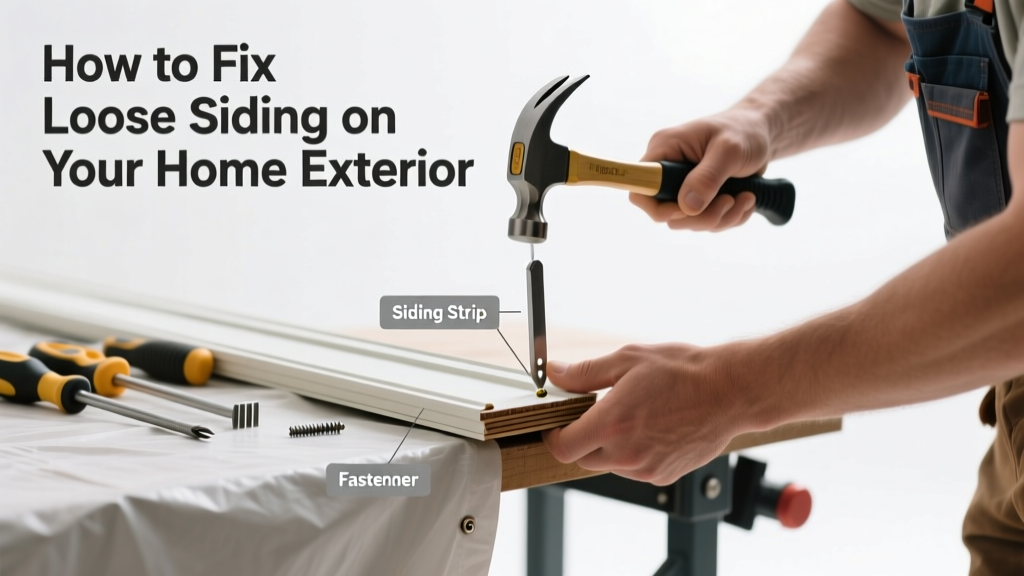
Loose siding isn’t just an eyesore—it’s a red flag for moisture intrusion, pest entry, and insulation failure. If you hear flapping in the wind or spot gaps near corners or windows, act fast before rot or mold takes hold. Most minor looseness can be fixed in under two hours with basic tools and careful inspection.
Quick Diagnosis
Before grabbing tools, identify what’s really going on. Loose siding rarely happens at random—here are the most common root causes:
- Missing, corroded, or stripped fasteners (nails or screws)
- Expansion/contraction gaps not accounted for during installation
- Underlying sheathing or framing rot from prior water leaks
- Impact damage from ladders, hail, or falling branches
- Improper nailing technique—nails driven too deep or too shallow
Tools & Materials Needed
| Item | Purpose | Estimated Cost |
|---|---|---|
| 16d galvanized ring-shank nails | Secure wood or fiber-cement siding without splitting or pulling out | $8–$12 |
| Cordless drill with Phillips #2 bit | Drive screws into vinyl or metal siding; avoids overdriving | $45–$120 |
| Flat pry bar (6") | Gently lift panels without cracking or warping | $12–$20 |
| Utility knife with fresh blades | Cut away damaged caulk or trim; score vinyl for clean removal | $5–$10 |
| Level and tape measure | Verify alignment and spacing before re-fastening | $10–$25 |
Step-by-Step Fix
Choose the method that matches your siding type and damage severity. Always start at the bottom row and work upward.
- Vinyl siding: Re-seat and re-fasten. Use a siding removal tool or flat pry bar to gently lift the locking edge. Slide panel back into the course below, then drive corrosion-resistant screws (not nails) through the nail hem—leaving 1/32" gap for expansion.
- Fiber-cement siding: Replace missing fasteners. Drill pilot holes slightly smaller than 2" stainless steel screws. Drive screws 1" from edges and 12" on-center—never into end joints. Seal heads with elastomeric caulk.
- Wood lap siding: Repair rotted substrate first. Probe behind loose boards with an awl. If sheathing feels spongy, cut out and replace 1/2" CDX plywood behind it before re-nailing with hot-dipped galvanized nails.
- Aluminum or steel siding: Check for bent channels. Inspect the J-channel or furring strips. Straighten or replace bent metal with aviation snips and pop rivets. Re-engage panels using a rubber mallet.
When to Call a Pro
Some situations demand licensed expertise—not just for safety, but to preserve warranty coverage and structural integrity.
- More than three consecutive panels are loose or bowed outward
- You find black mold, saturated insulation, or soft framing behind the siding
- The house has stucco-over-siding or EIFS (Exterior Insulation and Finish System)
- Looseness coincides with recent foundation settlement or wall bowing
- Your siding is under manufacturer warranty—and DIY repairs void it
"Over 62% of siding failures stem from improper fastener placement or omission—not material defects," states the Vinyl Siding Institute's 2022 Installation Best Practices Guide.
Prevention Tips
Maintaining siding isn’t about perfection—it’s about catching small issues before they cascade. Schedule biannual inspections in spring and fall, focusing on high-wind zones like gables and corners. Keep gutters clear to prevent splash-back erosion behind lower courses. Never pressure-wash vinyl or fiber-cement above 1,200 PSI—it forces water behind panels. And always follow manufacturer spacing specs: for example, James Hardie requires fasteners every 8" on center for horizontal lap siding in coastal zones.
Can I reuse old nails or screws when re-securing siding?
No. Corroded or bent fasteners have lost up to 40% of their holding power, per ASTM D1761 testing standards. Always use new, code-compliant fasteners rated for your siding type and climate zone.
Why does my siding only loosen after heavy rain?
This signals water infiltration behind the panel—likely from failed caulk at window/door perimeters or missing flashing. Moisture swells wood sheathing or rusts metal furring, creating micro-gaps that worsen with freeze-thaw cycles.
Will tightening loose siding stop drafts inside my home?
Often yes—but only if the air leak originates at the siding layer. Drafts may also come from unsealed rim joists, recessed lighting, or attic bypasses. Use a smoke pencil or incense stick outdoors on a windy day to trace airflow paths before assuming siding is the sole culprit.
Can I paint over loose siding to hide the problem?
Painting won’t fix movement—and may trap moisture behind compromised panels. The U.S. EPA estimates that 14% of household water usage is from leaks, many originating behind poorly maintained exteriors. Address the cause first, then repaint if needed.
How long should properly installed siding last before loosening?
Vinyl: 20–40 years with proper installation; fiber-cement: 50+ years; wood: 15–30 years with annual maintenance. Loosening before those benchmarks usually points to installation error or environmental stress—not age alone.
Do I need a permit to repair loose siding?
In most municipalities, cosmetic repairs covering less than 25% of one wall face don’t require permits—but check with your local building department. If you’re replacing sheathing or altering drainage planes, a permit and inspection are almost always mandatory.
A few minutes spent diagnosing and repairing loose siding now saves hundreds in moisture-related repairs later. It’s one of those rare exterior fixes where your effort directly translates into tighter envelopes, lower energy bills, and peace of mind when the next storm rolls in. For deeper issues—like hidden rot or flashing failures—don’t hesitate to reach out to a siding replacement specialist or consult our guide on how to inspect exterior walls. And if you’re weighing full replacement, compare options in our vinyl vs fiber-cement siding breakdown.