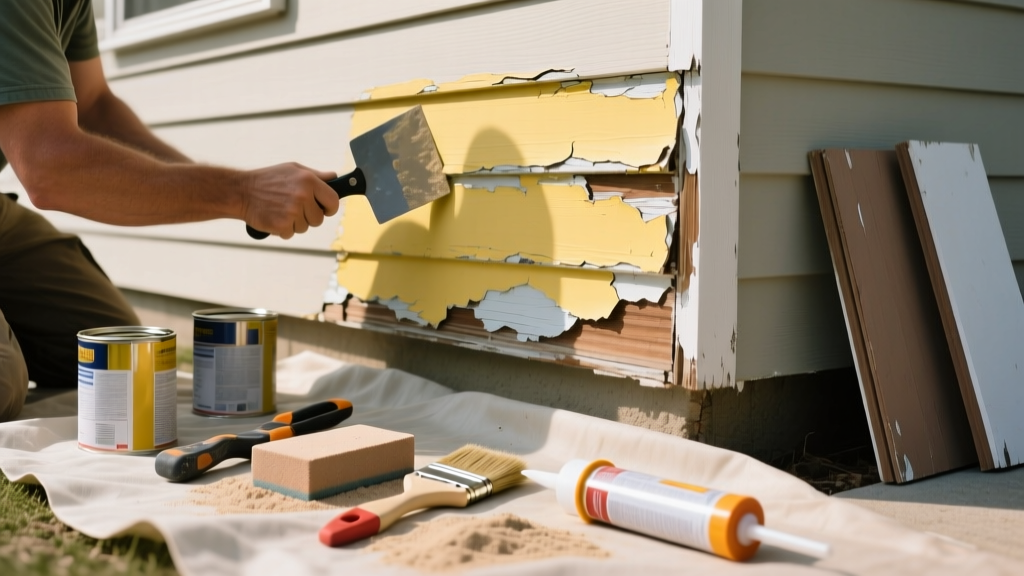
Discolored siding isn’t just an eyesore—it’s often the first sign that moisture, UV damage, or material failure is compromising your home’s weather barrier. If your vinyl, fiber cement, or wood siding has faded, stained, or chalked unevenly, it may no longer be shedding water or resisting mold as designed. Ignoring it can lead to rot, insulation damage, or even interior moisture intrusion.
Quick Diagnosis
Start by identifying what’s really happening—not all discoloration means the same thing. Use this checklist before grabbing tools:
- Green or black streaks on north-facing walls → algae or mold growth (common on vinyl and fiber cement)
- White, powdery residue that rubs off easily → vinyl chalking from UV degradation
- Yellow-brown stains near gutters or downspouts → iron oxide runoff from corroded fasteners or nearby metal fixtures
- Blotchy fading only on sun-exposed panels → pigment breakdown due to poor-grade vinyl or improper installation orientation
- Dark, spongy patches behind discoloration → underlying moisture trapped behind siding or sheathing
Tools & Materials Needed
| Item | Purpose | Estimated Cost |
|---|---|---|
| Soft-bristle brush (non-metal) | Prevents scratching delicate vinyl or fiber cement surfaces | $8–$15 |
| Oxygen bleach powder (e.g., OxiClean Outdoor) | Kills algae/mold without damaging siding or landscaping | $12–$20 |
| Low-pressure garden sprayer (max 1,200 PSI) | Cleans effectively without forcing water behind panels | $25–$45 |
| Stainless steel screws & caps (if replacing fasteners) | Prevents future rust staining on light-colored siding | $18–$32 |
| Moisture meter (pin-type) | Confirms whether discoloration hides hidden wetness in substrate | $45–$90 |
Step-by-Step Fix
Choose the method based on your diagnosis—and always test cleaning solutions on a small, inconspicuous area first:
- Algae/mold stains: Mix 1 cup oxygen bleach per gallon of warm water. Spray evenly, let dwell 10–15 minutes, then gently scrub with soft brush. Rinse top-to-bottom with low-pressure spray.
- Chalking vinyl: Wipe panel with damp microfiber cloth—if white residue transfers, the protective acrylic layer is gone. Seal with a UV-resistant clear acrylic coating like Sherwin-Williams VinylSafe Clear Coat.
- Rust staining: Replace corroded nails or screws with stainless steel versions. Treat existing stains with a rust remover gel (e.g., Evapo-Rust), then rinse thoroughly and reseal joints with silicone caulk rated for siding.
- Faded color mismatch: For vinyl, use a professional-grade vinyl restoration kit (e.g., ReNew-It) — not paint. For fiber cement, prime with Sherwin-Williams Loxon Concrete & Masonry Primer, then apply 100% acrylic latex in manufacturer-recommended colors.
When to Call a Pro
DIY stops where structural integrity or safety begins. Call a licensed exterior contractor if you notice any of these:
- More than 3 consecutive panels with bulging, warping, or buckling—signs of thermal expansion failure or moisture-saturated sheathing
- Discoloration accompanied by musty odors inside walls or peeling interior drywall near windows/doors
- Moisture meter readings above 18% in OSB or plywood sheathing behind siding
- Siding installed before 2005 using early-generation fiber cement (e.g., CertainTeed WeatherBoards) known for premature delamination
"Over 62% of siding replacement jobs we handle begin with unaddressed discoloration that masked underlying water intrusion," says Mike Rizzo, certified exterior inspector with the National Association of Home Inspectors (NAHI), 2023 Field Survey.
Prevention Tips
Long-term protection starts with maintenance habits—not just one-time fixes:
- Clean siding every 18–24 months, especially under eaves and near shrubbery where airflow is limited
- Install gutter guards and redirect downspouts at least 5 feet from foundation to prevent splash-back staining
- Trim tree branches to keep foliage 2+ feet from walls—reducing shade-humidity traps that breed algae
- Use only stainless steel or coated fasteners when repairing or replacing panels
- For homes in humid climates (e.g., Gulf Coast, Pacific Northwest), add a breathable housewrap like Tyvek DrainWrap behind new installations
Can I use chlorine bleach on discolored siding?
No. Chlorine bleach degrades vinyl’s UV inhibitors, accelerates chalking, and kills beneficial microbes in soil near foundations. It also damages aluminum trim and corrodes fasteners faster. Oxygen bleach is safer and more effective for organic growth.
Will power washing fix discoloration?
Only if pressure is kept below 1,200 PSI and the wand is held at least 12 inches from the surface. High-pressure washing forces water behind panels—especially at seams and corners—leading to trapped moisture, freeze-thaw damage, and mold growth inside walls.
Why does only part of my siding look faded?
Uneven fading usually points to inconsistent exposure: panels shaded by awnings or trees retain color longer, while south/west-facing sections degrade faster. But if fading aligns with seams or fastener lines, it may indicate poor-quality batch-matching during installation—or thermal bridging through metal framing behind thin panels.
Does discolored siding mean it’s no longer waterproof?
Not automatically—but discoloration from algae or rust often signals prolonged moisture retention, which breaks down sealants and compromises joint integrity. According to the Insurance Institute for Business & Home Safety's 2023 report, 41% of water intrusion claims involved siding with pre-existing discoloration that went untreated for over two years.
Can I paint over discolored fiber cement siding?
Yes—but only after thorough cleaning, sanding rough areas, and priming with a masonry-specific primer. Skip acrylic-latex paints meant for wood; instead, use 100% acrylic elastomeric coatings like Benjamin Moore Aura Exterior, which bridge minor hairline cracks and resist UV breakdown.
How long should cleaned siding stay color-consistent?
With proper cleaning and maintenance, most quality vinyl and fiber cement siding retains uniform appearance for 7–10 years. Wood siding needs recoating every 3–5 years. If discoloration returns within 12 months, investigate drainage issues, shading patterns, or underlying moisture sources—check for hidden leaks or review your gutter maintenance schedule.
A little discoloration is normal over time—but when it spreads, streaks, or feels damp beneath the surface, it’s your siding’s way of asking for attention. Addressing it early doesn’t just restore curb appeal; it preserves the structural envelope protecting everything inside your home. And if you’re unsure whether it’s surface-level or something deeper, grab a moisture meter and learn how to interpret those numbers before deciding between soap-and-water or a full panel replacement.