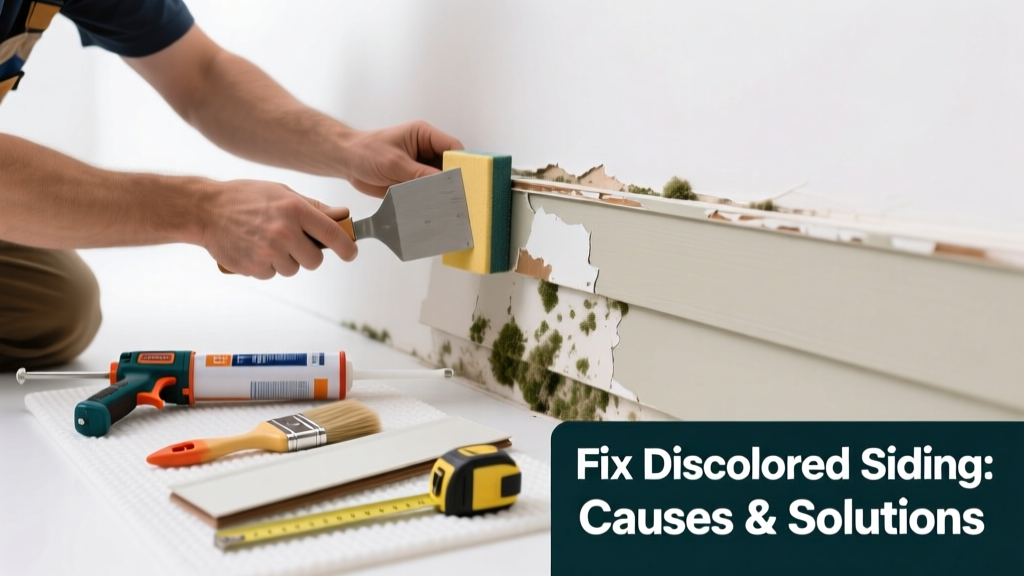
If you've spotted yellowing, brown streaks, or fuzzy gray patches on the exterior siding directly behind your bathroom wall, moisture is leaking — and it’s already doing damage. This isn’t just cosmetic: discolored siding signals hidden water intrusion that can compromise framing, insulation, and indoor air quality. Ignoring it risks $3,000–$8,000 in structural repairs, per the National Association of Home Builders’ 2022 moisture damage assessment.
Quick Diagnosis
Start here to pinpoint the source before scrubbing or scraping:
- Visible condensation trails or drip lines on interior drywall near windows or exhaust vents
- Moldy odor near baseboards or ceiling corners adjacent to bathroom walls
- Soft, spongy, or warped siding panels — especially near the shower wall or tub surround
- Missing or cracked caulk around bathroom windows, vent ducts, or exterior trim
- Exhaust fan venting into attic or soffit instead of outside (a code violation in all 50 states since 2018 IRC R303.3)
Tools & Materials Needed
| Item | Purpose | Estimated Cost |
|---|---|---|
| Moisture meter (pin-type) | Detects hidden moisture in siding and sheathing beneath surface discoloration | $45–$85 |
| Oxygen bleach powder (e.g., OxiClean Outdoor) | Safely removes organic stains without damaging vinyl, fiber cement, or wood | $12–$22 |
| 1:1 vinegar-water spray bottle | Kills surface mold spores pre-cleaning; safer than chlorine bleach on most sidings | $3–$6 |
| 3M Scotch-Brite non-scratch pad | Cleans textured surfaces without scratching or removing factory finish | $4–$8 |
| Butyl rubber caulk (e.g., OSI Quad Max) | Seals gaps around bathroom vents and windows; remains flexible for 20+ years | $10–$15 |
Step-by-Step Fix
Choose the method based on severity and siding type. Always test cleaning solutions on a small, inconspicuous area first.
- Stop the leak first: Turn off bathroom exhaust fan, inspect ductwork from attic or crawl space. If duct terminates inside attic or soffit, reroute it through roof or wall with rigid metal ducting and a proper roof cap (not flex duct).
- Clean organic staining: Mix 1 cup oxygen bleach + 1 gallon warm water. Spray on affected siding, let dwell 10 minutes, gently scrub with non-scratch pad, rinse thoroughly with garden hose (no pressure washer — can force water behind siding).
- Treat mold-prone zones: After drying, apply vinegar-water solution to kill residual spores. Let air-dry fully before sealing.
- Reseal vulnerable points: Remove old caulk around bathroom window frames, vent boots, and trim. Clean joints with isopropyl alcohol, then apply butyl rubber caulk in a continuous bead. Tool smooth with damp finger.
- Monitor for recurrence: Recheck moisture readings weekly for 3 weeks using pin-type meter. Consistent readings above 15% indicate ongoing intrusion needing deeper investigation.
When to Call a Pro
DIY ends where safety or structural integrity begins. Call a licensed contractor if:
- Moisture meter reads >20% in sheathing or framing behind siding
- You see black mold colonies larger than 10 square inches — EPA guidelines require professional remediation
- Siding feels soft or gives under light pressure (sign of rot or delamination)
- Discoloration appears only after heavy rain — suggests flashing failure or roof-to-wall interface breach
- Your home has stucco, EIFS, or brick veneer — these systems require specialized diagnostics and repairs
Prevention Tips
Long-term protection starts with airflow and accountability:
- Run bathroom exhaust fan for 20 minutes after every shower — not just during (U.S. EPA Indoor Air Quality Guide, 2021)
- Install a humidity-sensing switch (e.g., Broan Ultra Sense) so fans auto-run when RH exceeds 55%
- Inspect exterior caulk and vent caps twice yearly — spring and fall
- Keep bathroom door slightly ajar when not in use to improve cross-ventilation
- Replace older exhaust fans rated below 80 CFM — current IRC requires minimum 50 CFM for bathrooms under 100 sq ft, but 80+ CFM prevents moisture buildup more effectively
Can I use bleach on this?
No — chlorine bleach damages vinyl, fades fiber cement, and doesn’t penetrate deep mold roots. It also produces toxic fumes when mixed with ammonia-based cleaners common in bathrooms. Oxygen bleach is pH-neutral and breaks down organic matter without corrosive risk.
Is this covered by homeowner’s insurance?
Rarely — most policies exclude damage from ‘gradual water intrusion’ or maintenance-related failures (e.g., worn caulk, clogged vents). According to the Insurance Information Institute’s 2023 Claims Report, only 12% of water-damage claims involving siding are approved for discoloration alone.
Why does only one wall show discoloration?
Bathroom walls with showers or tubs have higher vapor drive — especially if insulation is missing or compressed behind that section. Thermal bridging through studs creates cold spots where condensation forms, then migrates outward. That’s why discoloration often appears lowest on the wall, near the foundation line.
Will power washing fix it?
Power washing may remove surface grime but worsens the problem by driving water behind siding, saturating sheathing, and accelerating rot. The U.S. Department of Energy explicitly warns against pressure washing over vapor-permeable barriers like housewrap (2022 Building America Report).
How long should repairs last?
A properly sealed, ventilated, and cleaned repair lasts 7–10 years before recaulking is needed — assuming annual visual inspections and fan maintenance. Homes with unvented attics or poorly insulated exterior walls may need intervention every 3–5 years.
Can I paint over discolored siding?
Only after confirming zero moisture behind it and treating all biological growth. Painting over wet or moldy siding traps moisture and causes blistering, peeling, and accelerated decay. Use 100% acrylic latex with mildewcide — never oil-based paints on vinyl or fiber cement.
"The single biggest predictor of siding discoloration behind bathrooms isn’t age — it’s whether the exhaust duct terminates outdoors with a backdraft damper. We see 9 out of 10 cases linked to improper venting." — Mike Rafferty, Certified Moisture Inspector, InterNACHI, 2023
Discolored siding behind your bathroom isn’t just an eyesore — it’s your home’s early warning system. Address the moisture source, not just the stain, and you’ll protect both your exterior envelope and indoor health. Pair these fixes with routine checks of your exhaust fan installation and window flashing details, and you’ll stop recurrence before it starts. For persistent issues, consult a certified moisture inspector — their thermal imaging and invasive probes catch what the eye misses.