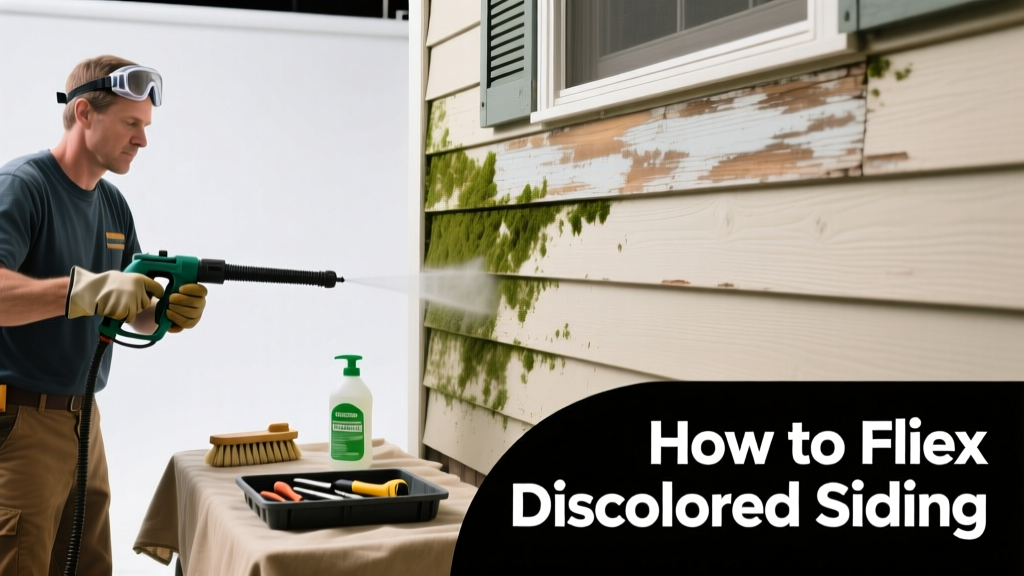
That patch of chalky gray, rusty orange, or green-streaked siding isn’t just an eyesore—it’s often the first sign of moisture intrusion, biological growth, or material breakdown. Left untreated, discoloration can accelerate deterioration, lower curb appeal, and even hint at underlying rot or mold. The good news? Most cases respond well to targeted cleaning or minor surface restoration—if caught early.
Quick Diagnosis
Before grabbing tools, identify the culprit. Discoloration rarely appears without cause:
- Green or black streaks: Usually algae or mildew (common on north-facing walls with shade and moisture)
- Rust-colored stains: Often from corroding fasteners, nearby metal gutters, or iron-rich water runoff
- White chalky residue: Chalking paint or PVC degradation on vinyl siding
- Yellow-brown splotches: Tannin leaching from cedar or redwood siding exposed to rain
- Faded, uneven patches: UV damage or improper prior cleaning with harsh chemicals
Tools & Materials Needed
| Item | Purpose | Estimated Cost |
|---|---|---|
| Soft-bristle brush (non-metal) | Scrubbing without scratching vinyl or fiber cement surfaces | $8–$15 |
| Oxygen bleach (e.g., OxiClean Outdoor) | Kills algae/mold without damaging plants or siding color | $12–$20 |
| Garden sprayer (1-gallon, adjustable nozzle) | Even application of cleaning solution; avoids overspray | $18–$30 |
| Pressure washer (≤1,500 PSI) | Low-pressure rinse only—high PSI warps vinyl and forces water behind panels | $80–$120 rental/day |
| Latex primer & 100% acrylic paint (for wood/fiber cement) | Sealing tannin bleed or covering stubborn stains before repainting | $45–$75 total |
Step-by-Step Fix
Match your method to the cause—not all discoloration responds to the same treatment:
- Algae/mildew stains: Mix 1 part oxygen bleach with 4 parts water in a garden sprayer. Saturate affected areas, let dwell 10–15 minutes (don’t let dry), then gently scrub with soft brush. Rinse thoroughly with low-pressure hose spray.
- Rust stains: Apply a rust remover gel (like Naval Jelly) directly to stain with a sponge. Wait 5 minutes, scrub lightly, rinse. For recurring rust, replace galvanized nails with stainless steel screws during next repair cycle.
- Tannin bleed (cedar/redwood): Clean with oxalic acid solution (1 cup crystals per gallon warm water), apply with brush, rinse after 3 minutes. Follow with oil-based primer like Zinsser Cover Stain before repainting.
- Chalking vinyl: Wash with mild detergent and water first. If powder persists, lightly sand affected panels with 220-grit paper, wipe clean, then apply vinyl-safe restorative like Rejuvenate Siding Shine.
When to Call a Pro
Some discoloration signals deeper trouble that DIY can’t safely resolve:
- Siding feels soft, spongy, or gives under light pressure—possible hidden rot beneath
- Stains reappear within 2–3 weeks despite proper cleaning—suggests ongoing moisture intrusion or unsealed seams
- Discoloration covers >30% of one wall or wraps corners—indicates systemic issues like improper flashing or gutter misalignment
- You spot buckling, warping, or gaps between panels—structural movement or poor installation requiring expert assessment
"Over 60% of premature siding failures begin with untreated discoloration linked to moisture retention," notes the National Association of Home Builders’ 2022 Exterior Cladding Field Guide.
Prevention Tips
Long-term protection beats repeat cleaning:
- Clean siding annually—even if it looks fine—to remove spores and mineral deposits before they bond
- Trim tree branches at least 3 feet from walls to reduce shade and improve airflow
- Install gutter extensions that direct runoff ≥5 feet away from foundations and siding bases
- Use zinc or copper strips under roof shingles near eaves—the runoff naturally inhibits algae growth on vertical surfaces
Can I use chlorine bleach on vinyl siding?
No—chlorine bleach degrades vinyl’s UV inhibitors and accelerates fading. It also kills nearby grass and shrubs. Oxygen bleach is safer, EPA Safer Choice certified, and just as effective against biological growth.
Will power washing fix discoloration permanently?
Only if paired with proper cleaning chemistry. A high-PSI rinse alone may blast away surface grime but leaves algae roots intact—and risks driving water behind panels. Always pre-treat with oxygen bleach and use ≤1,500 PSI.
Why does only one side of my house show discoloration?
North- and east-facing walls get less sun and stay damp longer—ideal for algae and mildew. South- and west-facing sides bake dry daily, slowing biological growth. This asymmetry is normal but confirms moisture + shade = the main drivers.
Can I paint over discolored fiber cement siding?
Yes—but only after thorough cleaning, sanding rough spots, and priming with 100% acrylic masonry primer. Skipping prep leads to peeling within 12–18 months. Use paints rated for fiber cement, like Sherwin-Williams Duration Home.
Does discolored siding affect home value?
Yes—according to a 2023 National Association of Realtors® curb appeal study, homes with visibly stained or faded siding sold for 3.2% less on average than comparable homes with clean, uniform exteriors. Buyers assume deferred maintenance.
How long should cleaning results last?
With annual maintenance, oxygen bleach treatments typically hold for 12–18 months. Zinc strips extend this to 2–3 years. In humid coastal zones or shaded urban lots, expect 6–9 months before touch-ups are needed.
Discolored siding isn’t just cosmetic—it’s your home’s first line of defense speaking up. Addressing it promptly keeps moisture out, preserves material integrity, and maintains resale readiness. Whether you tackle it yourself or bring in a specialist, acting now prevents small stains from becoming costly replacements later. For related guidance, see our siding inspection checklist and gutter cleaning schedule.