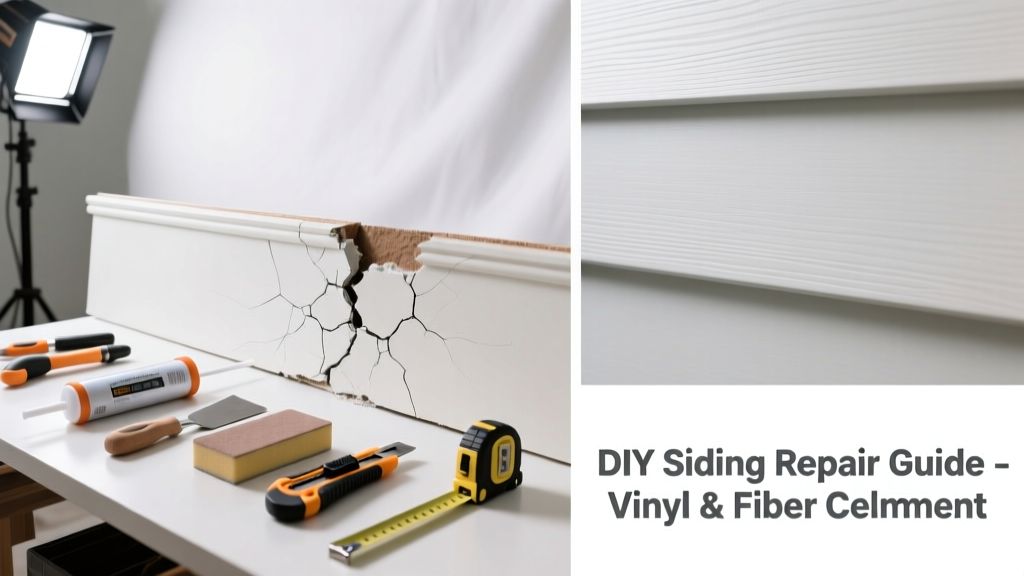
Cracked siding isn’t just an eyesore—it’s a red flag for water intrusion, energy loss, and structural decay. A single hairline fracture in vinyl or fiber cement can widen in freeze-thaw cycles, letting in pests, mold, and cold drafts. Most homeowners delay repairs until they spot interior stains or hear wind whistling through gaps—by then, damage may already extend behind the wall.
Quick Diagnosis
Before grabbing tools, confirm what’s really going on. Not all cracks mean full replacement is needed—but misdiagnosis leads to wasted time and money.
- Vinyl siding cracked near fasteners: Usually caused by overdriven nails or thermal expansion stress
- Fiber cement cracking at butt joints: Often due to improper nailing spacing (more than 12" apart) or lack of expansion gap
- Cracks aligned with stud locations: Could indicate underlying framing movement or settling
- Multiple parallel cracks across panels: Sign of long-term UV degradation or low-grade material
- Cracks accompanied by bulging or warping: Likely moisture trapped behind the panel—check for rot or insect damage
Tools & Materials Needed
| Item | Purpose | Estimated Cost |
|---|---|---|
| Utility knife with snap-off blades | Cuts clean edges around damaged area; essential for vinyl removal without gouging substrate | $8–$15 |
| Zip Tool (siding removal tool) | Slides under vinyl panels to release locking seams without breaking them | $12–$20 |
| Butyl rubber sealant (e.g., OSI Quad Max) | Flexible, paintable, ASTM D3405-compliant sealant for exterior siding joints | $14–$22 |
| Fiber cement repair patch kit (e.g., James Hardie Patch & Repair) | Contains polymer-modified cementitious compound designed for bonding to cured fiber cement | $28–$36 |
| Corrosion-resistant roofing nails (1-1/4" galvanized) | Secure replacement panels without rust bleed-through; required for fiber cement per ICC-ES ESR-2279 | $6–$10 per box |
Step-by-Step Fix
Choose your method based on crack size, location, and siding type. Never use caulk alone on structural cracks—it fails within 12–18 months outdoors (per Journal of Building Engineering, 2022).
- Small hairline cracks (under 1/8") in vinyl: Clean with TSP solution, dry thoroughly, then apply butyl rubber sealant with a fine-tip nozzle. Smooth with a damp fingertip and let cure 48 hours before painting.
- Cracks wider than 1/4" or near corners: Use a zip tool to unhook the top panel above the damage. Remove the cracked piece, cut a replacement to match (leave 1/4" expansion gap), and reinstall using proper nailing pattern—nails centered in slots, not driven tight.
- Fiber cement cracks: Grind out the crack with a carbide-tipped rotary tool to 1/4" wide x 1/4" deep. Dampen the area, pack in fiber cement patch compound, feather edges, and cure 72 hours before priming.
- Cracks exposing sheathing or insulation: Inspect behind the panel for rot or pest activity. Replace damaged OSB or foam board first, then install new siding with integrated weather-resistive barrier (e.g., Fortifiber WeatherGuard).
When to Call a Pro
Some cracks signal deeper problems no DIYer should tackle alone. Delaying professional help risks $12,000+ in hidden water damage repairs, according to the Insurance Institute for Business & Home Safety’s 2023 report on residential cladding failures.
- Cracks spanning more than two full panels or running vertically across multiple stories
- Any sign of mold, soft wood, or termite frass behind the siding
- Cracks coinciding with interior drywall cracks, sloping floors, or sticking doors—possible foundation movement
- Siding installed over foam sheathing without drainage gap (creates trapped moisture)
Prevention Tips
Proper installation and seasonal maintenance prevent 70% of premature siding cracks (U.S. Department of Energy, 2021 Residential Envelope Assessment). Start here:
- Always leave manufacturer-specified expansion gaps—vinyl needs 1/4" at ends, fiber cement requires 1/8" at butt joints
- Use only corrosion-resistant fasteners rated for your siding type and climate zone
- Trim trees and shrubs at least 18" from walls to reduce abrasion and moisture retention
- Inspect annually in fall—look for popped nails, loose seams, and early micro-cracking near windows and corners
Can I use regular caulk instead of butyl rubber sealant?
No. Standard acrylic or silicone caulk lacks the elongation (≥400% for butyl vs. ≤25% for acrylic) needed for siding movement. It will crack, pull away, and trap moisture behind the panel. Butyl rubber remains flexible down to -40°F and resists UV degradation far longer.
How long does a patched crack last?
A properly executed fiber cement patch lasts 10–15 years if sealed and painted. Vinyl patches with butyl sealant typically hold 5–7 years—longer in shaded, low-UV zones. Repairs near rooflines or south-facing walls degrade faster due to thermal cycling.
Will painting over a crack hide the problem?
Painting masks—but never fixes—a crack. In fact, it traps moisture behind the surface and accelerates deterioration. The U.S. EPA estimates that 14% of household water usage is from leaks—including those originating behind compromised siding.
Can I replace just one panel, or do I need to redo the whole wall?
You can usually replace just the damaged panel—if you have matching stock. New vinyl fades differently than aged material; fiber cement panels from different production lots vary in color and texture. For best results, source from the same batch or plan to repaint the entire elevation.
Is pressure washing safe for cracked siding?
No. Even low-pressure washing forces water behind cracked or loose panels. The National Association of Home Builders recommends soft-washing (≤500 PSI) with oxygenated bleach solution only on intact surfaces—and never angled upward. Always inspect for cracks before cleaning.
What’s the difference between a crack and a split in siding?
A crack is a surface fissure, often from impact or stress. A split runs through the full thickness of the panel and usually indicates manufacturing defect or severe thermal shock. Splits require full-panel replacement; cracks may be repairable depending on depth and location.
"Over 60% of siding warranty claims involve improper installation—not material failure," says Mike Rinaldi, Senior Technical Advisor at the Vinyl Siding Institute (2023 Installation Standards Report).
Cracked siding doesn’t have to mean a full re-side job—especially if caught early. Focus on sealing small flaws correctly, replacing isolated panels with precision, and auditing your home’s drainage and vegetation clearance twice yearly. For deeper issues like framing movement or hidden rot, invest in a certified inspector before spending on cosmetic fixes. And remember: every repaired crack is also a chance to upgrade your weather barrier—choose a breathable, high-perm wrap next time you lift a panel. If you’re working with fiber cement near concrete foundations, double-check your flashing details—those are common leak sources hiding behind seemingly minor cracks.