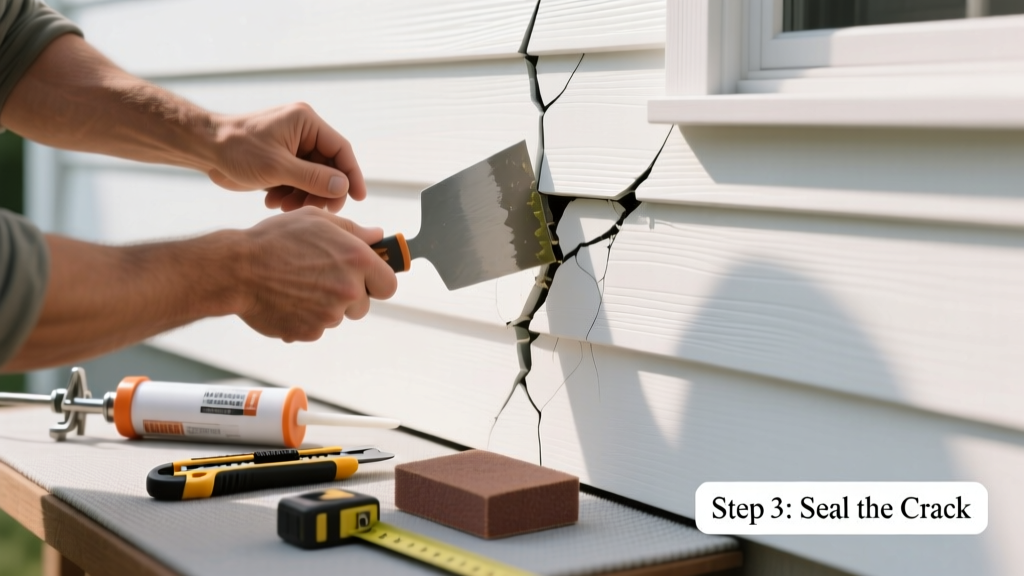
Cracked siding isn’t just an eyesore—it’s a potential entry point for moisture, pests, and drafts. Left unaddressed, even hairline fractures can widen into gaps that compromise insulation and structural integrity. Most cracks appear on vinyl, fiber cement, or wood siding after temperature swings, impact, or aging.
Quick Diagnosis
Before grabbing tools, identify the root cause. Misdiagnosis leads to temporary fixes that fail within months.
- Thermal expansion/contraction stress (especially in vinyl near windows or corners)
- Impact damage from ladders, hail, or lawn equipment
- UV degradation weakening polymer bonds in older vinyl or composite panels
- Improper installation—nails driven too tight or panels not allowed to float
- Underlying substrate rot or framing movement behind wood or fiber cement
Tools & Materials Needed
| Item | Purpose | Estimated Cost |
|---|---|---|
| Utility knife with snap-off blades | Cuts cleanly through vinyl or fiber cement without splintering | $8–$15 |
| Butyl rubber sealant (e.g., OSI Quad Max) | Flexible, paintable, and ASTM D3405-compliant for exterior siding joints | $12–$18 |
| Replacement siding panel (matching profile & color) | Required if crack exceeds ¼" or spans seam lines | $25–$60 per 12' panel |
| Zip Tool (for vinyl) | Releases interlocking seams without breaking adjacent pieces | $10–$14 |
| Corrosion-resistant screws (stainless or coated) | Secure replacement panels without rust bleed-through | $6–$12 per box |
Step-by-Step Fix
Choose your method based on crack size, location, and siding type. Never use caulk alone on wide cracks—it will peel or fail under thermal cycling.
- Small cracks (<1/8") in vinyl or fiber cement: Clean with TSP solution, dry thoroughly, then apply butyl rubber sealant using a 1/8" bead and backer rod for depth control. Smooth with a damp finger and allow 72 hours to cure before painting.
- Cracks crossing panel seams or >1/4" wide: Remove damaged panel using a zip tool and locking pliers. Measure and cut replacement panel to match exposure (typically 6–8" for horizontal lap siding). Install with 1/4" clearance at top and sides for expansion.
- Wood siding cracks: Assess for rot first. If sound, rout out crack with a 1/4" V-groove bit, prime with oil-based primer, then fill with elastomeric wood filler (e.g., Timbermate). Sand flush, prime again, and repaint.
- Fiber cement cracks near fasteners: Drill out old screw, countersink new stainless steel screw 1/8" below surface, and seal head with butyl sealant—not silicone.
When to Call a Pro
Some cracks signal deeper issues you shouldn’t tackle alone. Safety and warranty concerns escalate quickly in these cases.
- Cracks accompanied by bulging, warping, or discoloration over large areas (possible hidden water intrusion)
- More than three cracked panels within a 10-foot span (indicates foundation settlement or framing shift)
- Cracks located above windows, doors, or corners where structural load transfer occurs
- Siding installed under manufacturer warranty—and patching voids coverage without certified installer approval
"Over 62% of siding warranty claims are denied due to unauthorized repairs or improper materials," according to James Hardie's 2022 Warranty Compliance Report.
Prevention Tips
Extend siding life by addressing environmental and installation stressors before they cause failure.
- Trim trees and shrubs at least 18" from walls to reduce moisture trapping and abrasion
- Install gutter extensions to direct runoff at least 5 feet from the foundation
- Inspect annually in spring and fall—focus on south- and west-facing walls where UV exposure peaks
- Never pressure wash vinyl or fiber cement above 1,500 PSI; use fan-tip nozzles and hold 12" away
Can I use regular caulk instead of butyl rubber sealant?
No. Standard acrylic or silicone caulk lacks the elongation (≥300%) and adhesion stability required for siding movement. The U.S. Department of Energy confirms that non-ASTM D3405 sealants fail 3x faster on exterior cladding surfaces.
Will painting over a repaired crack hide it permanently?
Only if the repair is fully cured and properly primed. Skipping primer on filled cracks causes flashing—where the patch shows through paint within one season. Use 100% acrylic primer like Benjamin Moore Fresh Start on all filled areas.
How long does a proper siding crack repair last?
A butyl-sealed crack lasts 7–10 years on well-maintained vinyl or fiber cement. Replacement panels, when installed correctly, match the original system’s 25–50-year lifespan. Wood repairs typically last 5–8 years before re-sanding and repainting.
Is cracked siding covered by homeowners insurance?
Rarely. Most policies exclude wear-and-tear or gradual deterioration. However, sudden damage from hail, windstorms, or falling branches may be covered—if documented with dated photos and an adjuster’s report. File claims within 72 hours of incident.
Can I replace just one cracked piece without matching the rest?
You can—but expect visible color variance. Vinyl fades unevenly, especially on south-facing walls. Order replacement panels from the same manufacturer lot number if possible. If unavailable, consider replacing a full course (horizontal row) for uniformity. See our guide on siding color matching techniques.
Do I need to remove siding to check for rot behind a crack?
Yes—if the crack is in wood or fiber cement and you notice softness, sponginess, or dark staining nearby. Probe gently with an awl: if it sinks deeper than 1/8", remove the panel and inspect sheathing. For guidance, refer to our wood siding rot repair walkthrough.
Fixing cracked siding early saves hundreds in moisture-related repairs down the line—and keeps your home’s curb appeal intact. Whether you patch, replace, or pause to call a contractor, act before winter rains or summer humidity exploit those openings. A little prep and precision today means tighter seams, lower energy bills, and peace of mind for years to come.