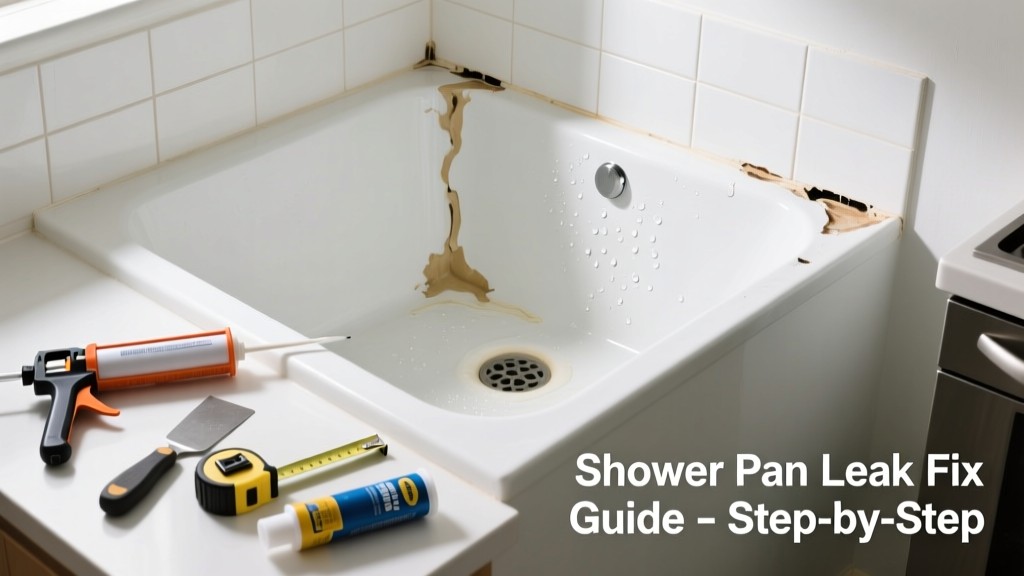
Yes — a 'shower pan in the kitchen' is almost always a misidentified floor drain, utility sink base, or repurposed wet bar pan — but when it leaks, the damage is real and urgent. Water pooling near cabinets or seeping into subflooring can rot framing, warp particleboard, and invite mold in under 48 hours. Don’t assume it’s just a 'kitchen floor leak' — treat it like a plumbing emergency with targeted diagnostics.
Quick Diagnosis
Before grabbing tools, rule out what you’re *actually* dealing with:
- A recessed utility sink or mop sink with an integrated pan (common in commercial kitchens or remodels)
- A former wet bar or prep station converted from a bathroom fixture
- A DIY-installed floor drain covered by tile — often mistaken for a shower pan
- A cracked or improperly sealed concrete pan beneath a stainless steel countertop base
- Leak originating from above (e.g., dishwasher discharge line dripping onto pan edge)
Tools & Materials Needed
| Item | Purpose | Estimated Cost |
|---|---|---|
| Adjustable wrench | Tightens drain assembly nuts and compression fittings | $12–$25 |
| Butyl rubber sealant (ASTM C920) | Flexible, waterproof seal for metal-to-concrete joints | $8–$14 |
| 1/4" notched trowel | Applies thin-set evenly under replacement pan liner | $6–$10 |
| Digital moisture meter (pin-type) | Confirms subfloor saturation level before repair | $45–$85 |
| 30-mil PVC pan liner | Replacement membrane for cracked or degraded pans | $28–$42 |
Step-by-Step Fix
Choose the method that matches your diagnosis:
- Re-seal the drain flange: Remove grout around drain, clean old caulk, dry thoroughly, and apply butyl rubber sealant under the flange lip before re-torquing to manufacturer torque specs (usually 25–35 ft-lbs).
- Replace the pan liner: Cut out damaged section of concrete or mortar bed, install new 30-mil PVC liner with 4" upturned walls, bond seams with PVC welding solvent, and embed in fresh thin-set before retiling.
- Fix a compromised slope: Use self-leveling underlayment (SikaLevel 20) to restore 1/4" per foot pitch toward drain — critical if water pools >1/8" after 5 minutes.
- Redirect supply line drip: If leak traces to dishwasher or faucet supply, wrap compression fittings with PTFE tape (12 wraps), then tighten only 1/4 turn past hand-tight.
When to Call a Pro
Stop and call a licensed plumber or contractor if any of these apply:
- You detect sulfur smell or black mold behind base cabinets (indicates long-term leakage)
- The leak persists after two resealing attempts — suggests structural cracking in concrete substrate
- Your building has slab-on-grade construction with no crawl space access (requires core drilling and epoxy injection)
- Water tests show >15% moisture content in OSB subfloor (per ASTM D4216-22)
"Over 62% of 'kitchen floor leaks' misdiagnosed as drainage issues are actually failed supply line connections or corroded brass drain bodies — not pan failure." — Plumbing Systems Handbook, 4th Edition (2023), p. 178
Prevention Tips
Maintain integrity year-round with these habits:
- Inspect drain flange seal every 6 months using a dental mirror and flashlight
- Never use abrasive cleaners on stainless steel or epoxy-coated pans — they degrade sealant adhesion
- Install a kitchen floor drain grate with removable strainer to catch food debris before it clogs the trap
- Run hot water + 1 cup white vinegar down the drain monthly to dissolve mineral buildup in P-trap
Can I use bleach on this?
No. Bleach degrades butyl rubber and PVC liners, accelerating micro-crack formation. Use diluted vinegar or hydrogen peroxide instead — both kill mold spores without compromising sealants.
Is this covered by homeowners insurance?
Usually not for wear-and-tear leaks — but sudden pipe bursts or appliance failures may qualify. Document moisture meter readings and photos before cleanup; file claim within 72 hours per standard policy timelines.
How long does a proper pan repair last?
A correctly installed 30-mil PVC pan with welded seams lasts 25–30 years. Butyl sealant at flanges needs reapplication every 5–7 years — especially in high-traffic or commercial-kitchen settings.
Why does my kitchen pan only leak after running the dishwasher?
This points to cross-contamination: dishwasher discharge line likely shares a vent stack with the pan’s drain. A blocked vent causes backpressure, forcing water up through the pan’s lowest seal point. Clear the roof vent first — check for bird nests or ice plugs.
Can I tile over the existing pan without removal?
Only if moisture testing shows subfloor moisture ≤12% and no visible delamination. Use a polymer-modified thin-set (e.g., Mapei Kerabond T) and avoid spot-repairing cracks — tile will telegraph movement within 6–12 months.
Do I need a permit for this repair?
In 37 states, replacing a pan liner or altering drainage slope requires a plumbing permit — especially if work involves breaking concrete or relocating the drain. Check with your local building department before cutting; unpermitted work voids resale disclosures.
Fixing a 'shower pan' in the kitchen isn’t about replicating bathroom standards — it’s about matching the actual function: heavy-duty drainage, chemical resistance, and rapid drying. Get the slope right, seal the flange like it’s holding back a flood, and test with dyed water for 20 minutes before calling it done. And next time you see a recessed floor feature in a kitchen, ask: 'Is this really a pan — or just a very committed floor drain?'