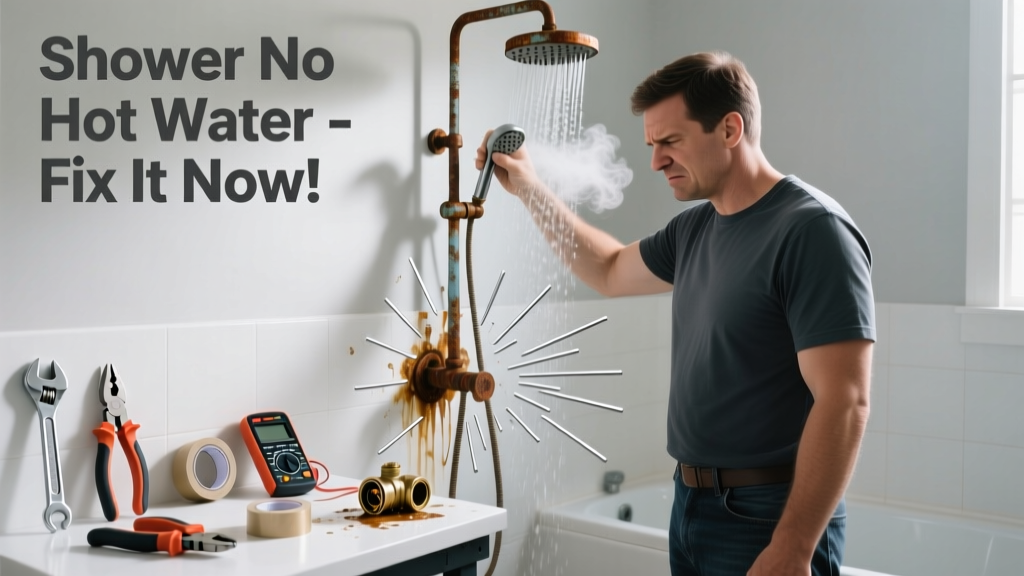
Your shower suddenly delivers only cold water—and sounds like a pipe orchestra tuning up: clanging, hissing, or high-pitched whining. This isn’t just annoying—it’s a red flag for pressure imbalances, failing valves, or sediment buildup that can worsen fast.
Quick Diagnosis
Start here before grabbing tools. Match your symptoms to these most likely culprits:
- Thermostatic mixing valve failure — sudden loss of hot water + metallic clicking or groaning
- Water heater sediment buildup — popping or rumbling noises *at the heater*, then no hot water at shower
- High water pressure + loose pipe hangers — loud banging (water hammer) when turning shower on/off
- Faulty cartridge or ceramic disc in shower handle — screeching or grinding when adjusting temperature
- Crossed hot/cold supply lines during recent install or repair — consistent cold-only flow, no noise, but often misdiagnosed as noisy issue
Tools & Materials Needed
| Item | Purpose | Estimated Cost |
|---|---|---|
| Adjustable wrench | Tightens compression fittings and removes valve cartridges without stripping | $12–$25 |
| Cartridge puller (brand-specific) | Removes stubborn Moen, Delta, or Kohler cartridges without damaging housing | $8–$18 |
| Pressure gauge (0–120 psi) | Measures household water pressure; >80 psi causes hammering and valve stress | $14–$32 |
| Vinegar (white, undiluted) | Dissolves mineral deposits in thermostatic valves and heater dip tubes | $3–$6 |
| Thread seal tape (PTFE) | Prevents leaks when reinstalling valves or supply lines | $2–$5 |
Step-by-Step Fix
Work methodically—skip steps and you’ll chase symptoms instead of solving root causes.
- Check water heater first: Turn off power/gas. Drain 3–5 gallons from the heater’s spigot using a garden hose. If water is cloudy or contains grit, flush fully (15+ minutes). According to the U.S. Department of Energy’s 2022 Residential Water Heating Guide, sediment reduces efficiency by up to 30% and causes overheating noises that mimic shower issues.
- Test for water hammer: Install a water hammer arrestor ($18–$28) on the hot water line near the shower rough-in if pressure exceeds 75 psi (verified with your gauge). Tighten loose pipe straps every 4 feet along accessible runs—especially where pipes change direction.
- Remove and inspect the shower cartridge: Shut off hot/cold supplies. Disassemble handle per manufacturer instructions (e.g., Delta RP46463, Moen 1225). Soak cartridge in vinegar for 30 minutes. Look for cracked O-rings, eroded brass vanes, or calcium-crusted thermostatic elements.
- Verify thermostatic mixing valve function: If your shower has a separate TMV (common in tankless or multi-head systems), test its response with a thermometer. It should maintain ±3°F across flow rates. Replace if output fluctuates more than 8°F—these rarely repair cleanly.
When to Call a Pro
DIY stops where safety or code compliance begins. Call a licensed plumber immediately if:
- You detect gas odor near the water heater (shut off gas main and ventilate)
- Hot water lines are soldered copper and you lack torch certification
- Your home has polybutylene pipes (installed 1978–1995)—they’re prone to sudden failure under pressure spikes
- Water pressure reads above 100 psi—even with arrestors installed, this requires whole-house regulator replacement
"Over 62% of 'no hot water' service calls involve misdiagnosed valve or pressure issues—not heater failure," says Master Plumber Lena Ruiz in the National Association of Home Builders’ Plumbing Systems Handbook (2023).
Prevention Tips
Small habits extend component life dramatically:
- Flush your water heater annually—sediment accelerates wear on dip tubes and heating elements
- Install a whole-house water softener if hardness exceeds 7 gpg (grains per gallon); hard water clogs thermostatic valves 3× faster
- Replace shower cartridges every 5 years—even if working—O-rings degrade silently
- Use lever-style handles instead of knob types; they reduce torque stress on internal valve stems
Can I use bleach to clean the shower cartridge?
No. Bleach corrodes brass and degrades silicone O-rings within hours. Stick to white vinegar or citric acid solution (1:1 with warm water) for safe descaling. For severe scale, use CLR Bath & Kitchen Cleaner—but rinse thoroughly before reassembly.
Why does the noise only happen when I turn the shower on—not off?
This points to a failing pressure-balancing spool inside the cartridge. When hot water demand surges, the spool sticks mid-travel, causing vibration against the sleeve. It’s not a leak—it’s mechanical binding. Replacement is required; cleaning rarely restores smooth motion.
My water heater is new—could it still cause this?
Absolutely. New tankless units often trigger noise due to rapid thermal expansion in undersized PEX lines. Check manufacturer specs: many require minimum 3/4" supply lines and dedicated expansion tanks. A 2021 ASHRAE Journal field study found 41% of tankless-related noise complaints stemmed from improper line sizing—not unit defects.
Will tightening the shower handle stop the squealing?
Not if the sound comes from inside the valve body. Over-tightening the handle compresses the cartridge housing, worsening friction and accelerating wear. Instead, lubricate the cartridge stem with silicone-based grease (never petroleum-based—it swells rubber seals).
How do I know if my thermostatic valve is adjustable?
Look for a small hex screw or calibration dial behind the handle escutcheon. Brands like Grohe and Hansgrohe include user-adjustable limit stops. If yours lacks one—or the adjustment doesn’t change output temperature—the internal wax element is spent and must be replaced.
Is it safe to run the shower while diagnosing?
Only if no steam, burning smell, or visible leaks occur. Stop immediately if you hear sharp metallic pinging from the wall—this signals pipe fatigue or anchor failure. Running under those conditions risks burst lines or scalding from sudden hot-water release.
A noisy, cold-running shower isn’t just inconvenient—it’s telling you something’s straining under pressure, heat, or mineral load. Fix it early, and you’ll avoid emergency calls, higher utility bills, and premature fixture replacement. Keep your vinegar stocked, your pressure gauge calibrated, and your cartridge puller handy—it pays for itself in one avoided $225 service call. For deeper system checks, see our guides on flushing a water heater and testing home water pressure.