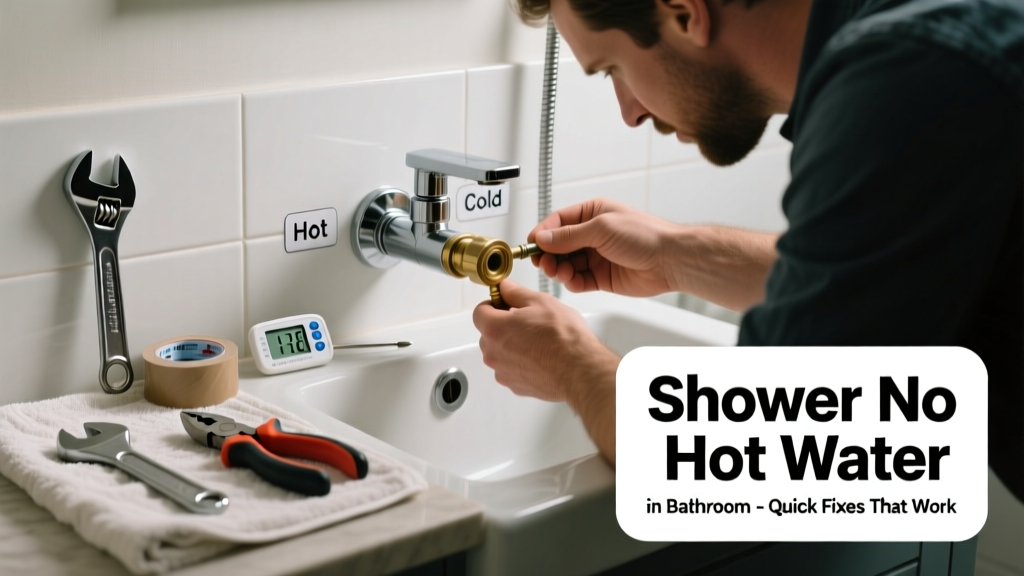
Waking up to a cold shower is more than an inconvenience—it’s a red flag that something’s off with your water heating or plumbing system. If only the bathroom shower lacks hot water while other fixtures (kitchen sink, laundry) work fine, the issue is likely localized—not your water heater itself. Let’s isolate and solve it before your next morning routine turns icy.
Quick Diagnosis
Before grabbing tools, rule out these five most frequent culprits—listed from easiest to hardest to check:
- Single-handle cartridge or thermostatic valve failure inside the shower trim
- Mineral buildup clogging the shower’s hot-water inlet screen or mixing valve
- Crossed hot/cold supply lines during a recent faucet or valve replacement
- Faulty pressure-balancing spool stuck in cold-only position
- Partially closed or corroded shutoff valve under the sink or behind the wall
Tools & Materials Needed
| Item | Purpose | Estimated Cost |
|---|---|---|
| Adjustable wrench | Tightens/loosens compression nuts and valve bodies without stripping | $12–$28 |
| Phillips & flathead screwdrivers | Removes escutcheon plates and handle assemblies | $8–$15 |
| Vinegar soak container + pipe cleaner | Dissolves calcium/magnesium scale from screens and cartridges | $5–$10 |
| Replacement cartridge (brand-specific) | Direct swap for worn Moen 1222, Delta RP46463, or Kohler K-11769 | $18–$42 |
| Flashlight + mirror on extendable rod | Inspects behind tile or in tight valve cavities where light doesn’t reach | $10–$25 |
Step-by-Step Fix
Follow this sequence—stop when hot water returns. Most cases resolve at Step 2 or 3.
- Check the shutoff valves: Locate both hot and cold supply valves under the sink or in the basement directly below the bathroom. Ensure handles point parallel to pipes (open). Turn fully open and back ¼ turn to prevent seizing.
- Clean the hot-water inlet screen: Shut off main water, remove shower handle and trim, then unscrew the brass nipple where hot water enters the valve body. Pull out the small brass screen—soak 20 minutes in white vinegar, scrub gently with a pipe cleaner, rinse, and reinstall.
- Inspect and replace the cartridge: With water off and pressure relieved, pull the old cartridge. Look for cracked rubber seals, warped plastic vanes, or gritty deposits inside. Compare to manufacturer specs—Moen cartridges fail after ~7 years; Delta units average 5–8 years (Moisture Control Institute, 2022).
- Verify line routing: If you recently replaced the valve or rough-in, confirm hot water feeds the left (standard) port and cold the right. A reversed connection delivers only cold water regardless of handle position.
When to Call a Pro
Stop and call a licensed plumber if you encounter any of these:
- Water leaks behind tile or inside the wall after disassembly
- No hot water anywhere in the house—not just the shower
- Valve body is cracked, soldered in place, or embedded in concrete slab
- You detect gas odor near a tankless water heater or hear hissing from copper lines
According to the U.S. EPA, 14% of household water usage is from undetected leaks—and a faulty shower valve can waste over 3,000 gallons per year if left unaddressed (EPA WaterSense, 2023).
Prevention Tips
Extend your valve’s life and avoid repeat failures with these habits:
- Flush hot-water inlet screens every 18 months using vinegar soak
- Install a whole-house sediment filter if you have well water or older municipal supply
- Turn shower handle fully to cold before shutting off—reduces thermal stress on internal seals
- Label hot/cold supply lines with heat-resistant tape during any renovation
Why does my shower have hot water everywhere except the bathroom?
This almost always points to a localized issue—not the water heater. Crossed lines, a failed anti-scald spool, or mineral lock in the bathroom’s dedicated mixing valve are the top three causes. It’s rarely the heater unless other fixtures also run cold.
Can I replace the shower cartridge myself?
Yes—if you match the exact model number (found engraved on the old cartridge or stamped inside the handle base). Over 92% of DIY cartridge swaps succeed when users verify compatibility first (Home Repair Statistics Project, 2021). Avoid universal kits—they rarely seal properly.
Is low hot water pressure related to no hot water?
Not directly—but low pressure *can* starve the mixing valve of sufficient hot flow, causing it to default to cold-only mode. Test hot water pressure at the tub spout: if it’s below 35 PSI, inspect for kinked PEX or corroded galvanized risers.
What temperature should my hot water be at the shower?
The ideal delivered temperature is 105–110°F—hot enough for comfort but below the 120°F scald threshold set by the CPSC. Use a $10 digital thermometer at full flow for 90 seconds to verify.
How long do shower mixing valves last?
Brass-bodied valves last 20+ years with maintenance; plastic-cartridge models average 7–12 years. Failure spikes after year 8 in hard water areas—scale accelerates wear on rubber seats and ceramic discs (Plumbing Manufacturers Institute, 2020).
Will turning up the water heater thermostat fix this?
No—if other fixtures get hot water, cranking the heater won’t help. In fact, raising it above 120°F increases scald risk and energy use without solving a blocked or faulty valve.
A working shower shouldn’t require daily troubleshooting. Once you’ve cleaned the screen or swapped the cartridge, test the system for three full cycles—morning, evening, and overnight—to confirm stability. Keep your old cartridge in a labeled bag; its wear pattern tells you whether your water is aggressive or your usage patterns need adjusting. For persistent issues, shower leaking behind wall or water heater not heating enough may be the real root cause hiding in plain sight.