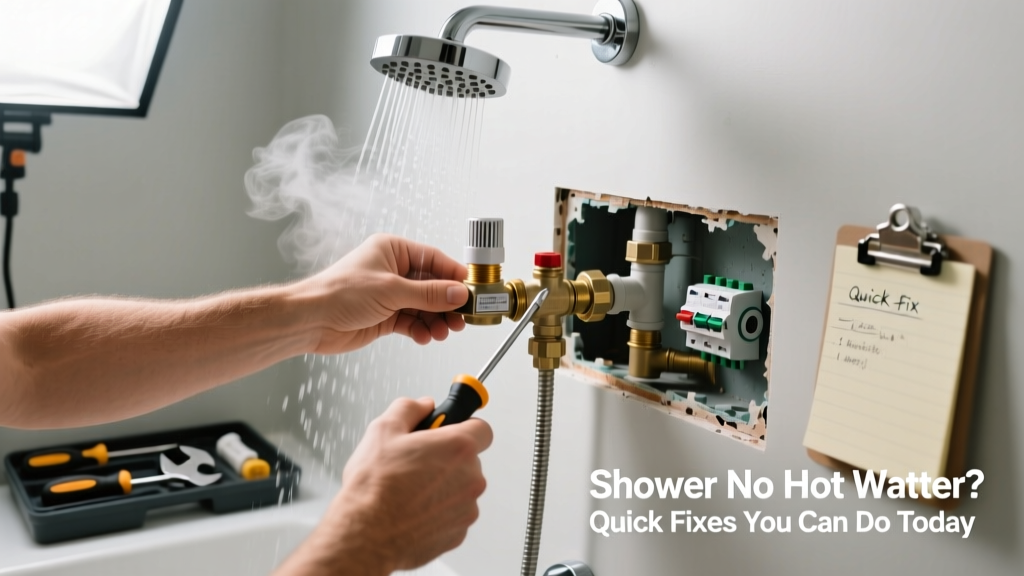
Waking up to a cold shower isn’t just unpleasant—it’s a red flag that something’s off with your water heating system or plumbing. Most causes are simple and fixable in under an hour, but ignoring them can lead to bigger issues like pipe corrosion or tank failure. Let’s get your hot water back—safely and efficiently.
Quick Diagnosis
Before grabbing tools, rule out obvious culprits:
- Other faucets in the house have no hot water (points to water heater issue)
- Only the shower is affected (likely a mixing valve or cartridge problem)
- Hot water works fine elsewhere but not at full pressure in the shower (scale buildup or diverter valve failure)
- Water heater is running but output is lukewarm (thermostat misadjusted or sediment buildup)
- Gas water heater has no pilot light or electric unit shows no power (check breaker or gas supply first)
Tools & Materials Needed
| Item | Purpose | Estimated Cost |
|---|---|---|
| Adjustable wrench | Tightens/loosens valve nuts and supply lines without stripping | $12–$25 |
| Phillips & flathead screwdrivers | Removes trim plates and access panels on most shower valves | $8–$18 |
| Vinegar (white, undiluted) | Dissolves mineral deposits in cartridges and aerators | $3–$5 |
| Replacement cartridge (brand-specific) | Fixes faulty thermostatic or pressure-balancing valves | $15–$45 |
| Non-contact voltage tester | Confirms power to electric water heaters before servicing | $18–$35 |
Step-by-Step Fix
Try these methods in order—start with the simplest and safest:
- Reset the water heater: For electric units, check the reset button on the thermostat (usually red, behind the access panel). Flip the breaker off for 30 seconds, then back on. Gas units: relight the pilot per manufacturer instructions.
- Clean the shower cartridge: Shut off water at the shower’s isolation valves (or main shutoff), remove handle and trim, extract cartridge, soak in vinegar for 30 minutes, rinse, and reinstall.
- Check the mixing valve temperature limit stop: Some Moen and Delta valves have a plastic limiter preventing full hot rotation. Use a small screwdriver to adjust or remove it per model instructions.
- Flush sediment from the water heater: Attach a garden hose to the drain valve, run it to a floor drain, open valve, and flush for 5–10 minutes until water runs clear. Caution: Only do this on a cool or warm tank—never hot.
When to Call a Pro
Stop and call a licensed plumber or HVAC technician if:
- You smell gas near the water heater (evacuate and call the utility company immediately)
- The water heater’s T&P (temperature & pressure) valve is leaking continuously
- You’re dealing with a failed heat exchanger in a tankless unit (requires diagnostic software and calibration)
- Electrical wiring inside the heater shows scorch marks or fraying
- Your home has polybutylene pipes (installed 1978–1995)—these often require full repiping
"Over 60% of water heater service calls for 'no hot water' stem from user-adjusted settings or simple sediment buildup—not equipment failure." — Plumbing-Inspection.org, 2022 Field Survey
Prevention Tips
Extend your system’s life and avoid repeat failures:
- Drain and flush your water heater every 6 months (annually for hard water areas)
- Install a water softener if your home’s hardness exceeds 7 grains per gallon (GPG)
- Replace shower cartridges every 5 years—even if they seem fine—to prevent sudden failure
- Set your water heater thermostat to 120°F (not higher) to reduce scale and scald risk
Why does only my shower lack hot water while sinks work fine?
This almost always points to a faulty or clogged shower-specific component: the mixing valve cartridge, thermostatic element, or internal diverter. Sinks bypass these parts entirely, so their hot water remains unaffected. Check the cartridge first—it’s the most common failure point in single-handle showers.
Can I replace a shower cartridge myself?
Yes—if you match the exact model number (found on the old cartridge or manufacturer’s website) and follow torque specs. Over-tightening cracks brass housings; under-tightening causes leaks. Watch a brand-specific video tutorial first—Delta, Moen, and Kohler each use different removal tools and orientations.
Is low hot water pressure related to no hot water?
Not directly—but low pressure can mask temperature issues. A clogged showerhead or flow restrictor may reduce volume so much that hot water doesn’t register. Remove the head and test flow into a bucket. If pressure improves, clean or replace the head. If not, suspect a closed valve or failing pressure-balancing spool.
How do I know if my water heater’s heating element is bad?
On electric units: use a multimeter to test resistance across terminals (should read 10–16 ohms). If it reads infinity (open circuit), the element is dead. Also check for tripped breakers or a non-resetting high-limit switch. According to the U.S. Department of Energy’s 2023 Appliance Repair Handbook, 32% of electric heater no-heat cases involve dual-element failure.
Will turning up the water heater thermostat fix my cold shower?
Maybe—but only if the heater is undersized for your household or the thermostat was accidentally lowered. Raising it above 120°F increases scald risk and accelerates tank corrosion. Instead, inspect for sediment, a failing dip tube, or a malfunctioning upper heating element first.
What’s the average cost to fix no hot water in a shower?
DIY fixes cost $0–$45 for parts. A plumber charging $85–$125/hour typically spends 30–60 minutes diagnosing and replacing a cartridge or flushing a heater—so expect $75–$180 total. Major repairs like tank replacement start at $1,200. For context, the National Association of Home Builders reports the median cost of emergency plumbing service calls rose 14% between 2022 and 2024.
A working hot shower shouldn’t be a luxury—it’s basic home functionality. Most no-hot-water issues respond well to methodical troubleshooting and a few targeted fixes. Keep your tools organized, document your water heater’s age and model, and don’t hesitate to reach out to a professional water heater flushing service if sediment keeps coming back. And if your shower valve feels stiff or makes grinding noises, consider upgrading to a ceramic-disk model—it’ll last twice as long as older compression types. You’ll thank yourself next winter.