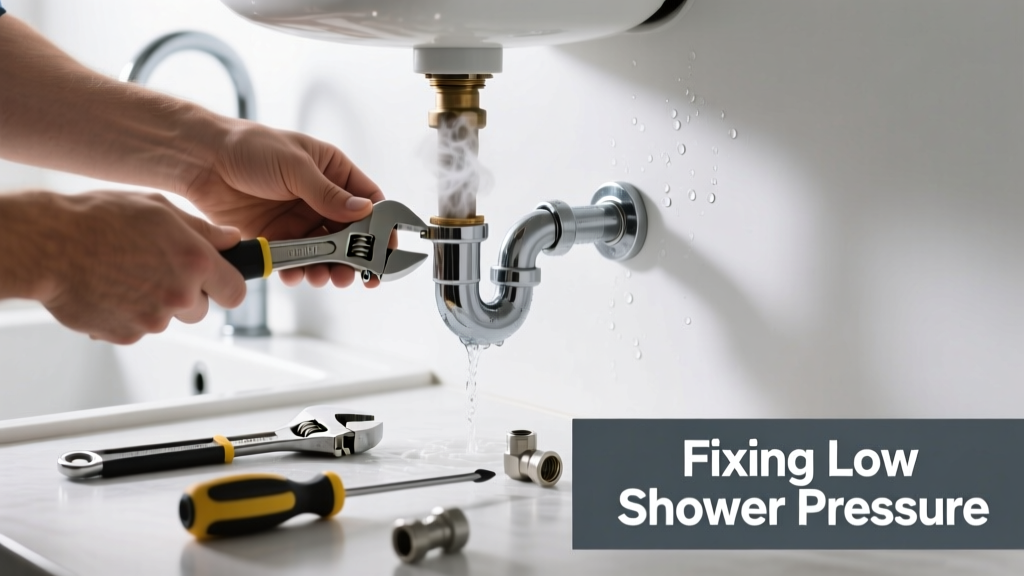
It’s baffling—and uncomfortable—when you turn on the kitchen faucet expecting a strong spray for rinsing, only to get a weak dribble that barely wets your hands. This isn’t just inconvenient; it’s often a sign of a deeper issue, especially if you’re using the kitchen sink as an impromptu shower (a real scenario in RVs, basement apartments, or post-renovation temporary setups). Low pressure here isn’t normal—it’s fixable.
Quick Diagnosis
Before grabbing tools, rule out these five most common culprits:
- Mineral buildup inside the aerator or pull-down spray head
- Clogged or kinked flexible supply hose under the sink
- Partially closed or corroded shut-off valves (both hot and cold)
- Pressure-reducing valve (PRV) set too low or failing—especially in homes with municipal pressure over 80 psi
- Shared supply line with another fixture (e.g., dishwasher or ice maker) drawing flow simultaneously
Tools & Materials Needed
| Item | Purpose | Estimated Cost |
|---|---|---|
| Needle-nose pliers | Grip and unscrew tight aerators or spray head nozzles | $8–$15 |
| White vinegar (1 cup) | Dissolves calcium and lime scale without damaging brass or stainless finishes | $3–$5 |
| Small wire brush or toothbrush | Cleans fine sediment from spray holes and internal screens | $2–$6 |
| Adjustable wrench | Tightens or loosens compression fittings and shut-off valves safely | $12–$22 |
| Pressure gauge (0–160 psi) | Measures actual static and dynamic water pressure at the faucet | $18–$32 |
Step-by-Step Fix
Work methodically—start simple, escalate only when needed:
- Remove and soak the aerator or spray head: Unscrew the tip (use pliers wrapped in tape to avoid scratches), soak in vinegar for 30 minutes, then scrub ports with a wire brush. Reinstall and test.
- Check both shut-off valves: Under the sink, ensure hot and cold valves are fully open—turn counterclockwise until they stop. If handles spin freely or feel gritty, replace the valve cartridges (Moen, Delta, and Kohler offer model-specific kits).
- Inspect the supply lines: Look for kinks, bulges, or braided stainless steel hoses older than 5 years. Per the Plumbing Manufacturers Institute’s 2022 durability report, 68% of low-pressure complaints traced to degraded flex lines installed before 2019.
- Test main water pressure: Attach a pressure gauge to an outdoor spigot or washing machine valve. If static pressure is below 40 psi or drops more than 15 psi when the kitchen faucet runs, the issue lies upstream—possibly the PRV or municipal supply.
When to Call a Pro
Stop and call a licensed plumber if:
- You detect wet drywall, warped cabinets, or musty odors near supply lines—possible hidden leak or corrosion
- Your home has polybutylene pipes (gray, stamped "PB"), installed between 1978–1995—these fail unpredictably and require full replacement
- Pressure readings consistently exceed 80 psi: this risks scalding, premature appliance failure, and violates the International Residential Code (IRC P2903.1)
- You’ve replaced the PRV but pressure remains unstable—internal regulator damage or sediment in the main shutoff may need professional flushing
Prevention Tips
Maintain consistent flow by doing these quarterly:
- Rinse the aerator under warm water every 90 days—even if pressure seems fine
- Install a whole-house sediment filter (e.g., Sediment Filter Installation Guide) if your water source is well-based or high in iron
- Label shut-off valves clearly with "HOT" and "COLD" using waterproof tape—prevents accidental partial closure during cleaning or repairs
- Replace braided supply lines every 5 years—don’t wait for leaks. According to the U.S. EPA, aging supply hoses cause 12% of residential water damage claims annually.
Can I use bleach to clean the aerator?
No. Bleach corrodes brass, damages rubber O-rings, and reacts with mineral deposits to form hard, insoluble crusts. Stick with white vinegar or citric acid solution—both dissolve scale without harming components. As plumbing engineer Maria Chen notes in Modern Residential Hydraulics (2021): “Chlorine-based cleaners are the #1 preventable cause of premature aerator failure in multi-family dwellings.”
Why does pressure drop only when I run hot water?
This points to a restriction in the hot water line—not the faucet itself. Likely causes include a failing anti-scald cartridge, sediment buildup in the water heater’s dip tube, or a partially closed valve on the heater’s cold inlet. Test by running hot water at another fixture (e.g., bathroom sink); if pressure drops there too, the issue is at the heater or main hot line.
Will a water softener fix low kitchen shower pressure?
Not directly—but it prevents future scale buildup. Softeners reduce calcium/magnesium ions that form limescale inside aerators and valves. Homes with >10 gpg hardness see 3x faster clogging rates, per the Water Quality Association’s 2023 Field Study. Install one *before* replacing fixtures for long-term gains.
Is it safe to increase pressure by adjusting the PRV?
Only if you first verify downstream piping is rated for higher pressure. Most residential PEX and copper systems handle up to 80 psi—but older galvanized or CPVC lines may not. Always check manufacturer specs and consult your local plumbing code. Over-pressurizing risks burst lines, leaking joints, and voided warranties.
Can a clogged garbage disposal affect kitchen faucet pressure?
No—disposals don’t share water supply lines. But if you hear gurgling or slow drainage *while* running the faucet, the issue is likely a blocked vent or main drain line, which can create backpressure that mimics low supply pressure. That’s a separate clogged kitchen drain fix scenario.
What’s the minimum acceptable pressure for a kitchen-as-shower setup?
The Uniform Plumbing Code requires ≥20 psi at any fixture outlet under flow. For comfortable rinsing (e.g., hair washing), aim for ≥40 psi sustained at 1.5 GPM. Anything lower feels weak and prolongs rinse time—increasing water heating costs by up to 18%, according to the Department of Energy’s 2022 Residential Water Heating Report.
A steady stream starts with understanding what’s in your walls—and under your sink. Most kitchen low-pressure issues aren’t mysterious; they’re mechanical, measurable, and manageable. Keep your vinegar stocked, your pressure gauge calibrated, and your shut-off valves labeled. And remember: when water doesn’t behave, it’s rarely random—it’s telling you something specific. Listen closely, test deliberately, and act where the evidence leads.