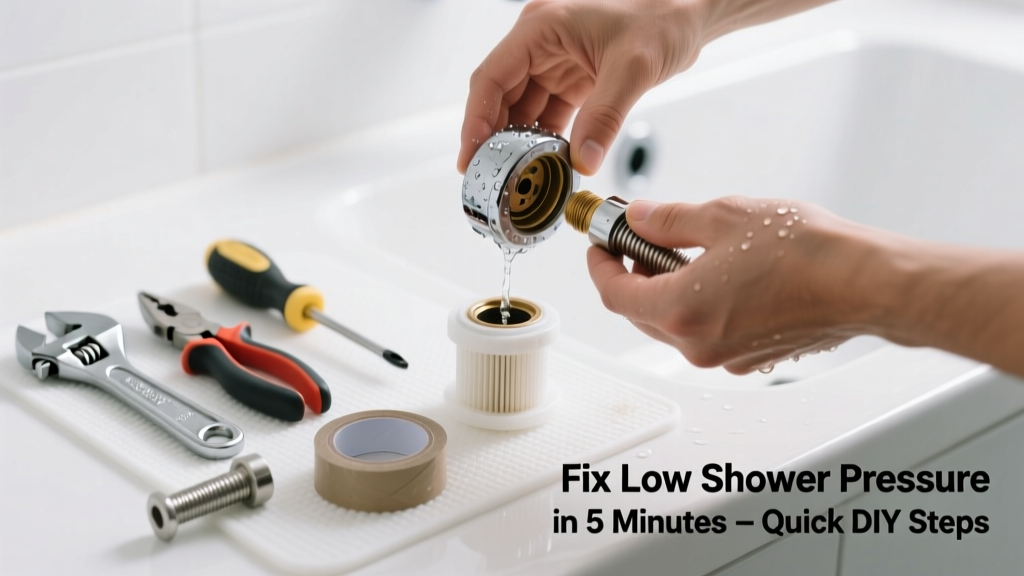
Nothing kills a relaxing morning faster than stepping into a shower with a trickle instead of a steady stream. Low pressure in just one bathroom—especially when other fixtures work fine—points to a localized issue you can likely solve in under an hour. Let’s cut through the noise and fix it right.
Quick Diagnosis
Before grabbing tools, rule out obvious culprits. Low pressure isolated to the shower (not sinks or tub spouts) usually stems from one of these:
- Mineral buildup in the showerhead or flow restrictor
- A partially closed or corroded shut-off valve behind the wall or in the access panel
- A kinked or deteriorated supply line (especially braided stainless steel lines older than 5 years)
- Scale accumulation inside the cartridge or mixing valve (common in single-handle Moen or Delta units)
- Pressure-balancing valve failure (causing sudden drop when toilet flushes or dishwasher runs)
Tools & Materials Needed
| Item | Purpose | Estimated Cost |
|---|---|---|
| Adjustable wrench | Tightens/loosens shower arm and supply line connections without marring metal | $12–$24 |
| White vinegar (1 quart) | Dissolves calcium and magnesium deposits in showerheads and cartridges | $3–$6 |
| Small wire brush or toothbrush | Cleans tiny orifices and threads where scale hides | $2–$5 |
| Replacement flow restrictor (if missing or damaged) | Restores proper GPM while complying with EPA water-efficiency standards | $1–$4 |
| Cartridge puller (brand-specific) | Safely removes stuck ceramic cartridges without damaging valve body | $8–$18 |
Step-by-Step Fix
Start with the simplest, most common cause first—and escalate only if needed:
- Remove and soak the showerhead: Unscrew it from the arm, place it in a bowl of white vinegar for 30–60 minutes, then scrub nozzles with a toothbrush. Reinstall and test.
- Check the flow restrictor: Most modern showerheads have a plastic disc behind the faceplate. If it’s cracked, warped, or clogged, replace it—don’t remove it entirely (that violates EPA WaterSense standards and may trigger local code violations).
- Inspect the shut-off valve: Locate the valve behind the shower (often in an adjacent closet or basement ceiling). Turn it fully counterclockwise. If it’s stiff or won’t budge, don’t force it—stop and call a pro.
- Test the supply line: Shut off main water, disconnect the line at both ends, and hold it up to light. Look for kinks, bulges, or cloudy discoloration inside the braiding—signs of internal collapse. Replace if suspect.
- Flush the valve cartridge: For single-handle showers, shut off water, remove handle, and extract the cartridge. Soak in vinegar for 20 minutes, rinse, and reinstall. If pressure remains low, the cartridge is likely worn and needs replacement.
When to Call a Pro
DIY stops where safety or system integrity begins. Call a licensed plumber if you encounter any of these:
- Water pressure drops across multiple fixtures—not just the shower
- You hear banging, hissing, or whistling from pipes behind the wall
- The shower valve body is leaking around the escutcheon plate or handle base
- You’ve replaced the cartridge twice in 18 months—indicating underlying corrosion or improper installation
- Your home has polybutylene piping (installed 1978–1995), which requires full-system evaluation before any repair
According to the Insurance Institute for Business & Home Safety's 2023 report, undetected leaks behind walls contribute to nearly 28% of homeowner insurance claims related to water damage—many starting as seemingly minor pressure issues.
Prevention Tips
Keep your shower flowing strong year after year with these habits:
- Rinse the showerhead monthly with warm water to prevent mineral layering
- Install a whole-house water softener if your tap water tests above 7 grains per gallon hardness
- Replace braided supply lines every 5 years—even if they look fine (internal delamination isn’t visible)
- Use a vinegar soak routine every 6 months, especially in hard water areas
- After any plumbing work, open all hot and cold valves slowly to purge air pockets that mimic low pressure
Can I use bleach to clean my showerhead?
No. Bleach corrodes brass, chrome plating, and rubber washers inside the showerhead and valve. It also reacts dangerously with vinegar residue if used in sequence. Stick to white vinegar or citric acid-based descalers like CLR Bath & Kitchen Cleaner.
Why does my shower pressure drop only when the washing machine runs?
This points to undersized supply lines or a failing pressure-balancing valve. Homes built before 2000 often have ½-inch supply lines feeding multiple high-flow appliances. The valve tries to maintain safe temperature but sacrifices pressure—replacing it with a thermostatic mixing valve (like the Grohe 34 123) resolves this reliably.
Will removing the flow restrictor increase pressure?
It might—but not safely or legally. Removing it often increases flow by 1.5–2.0 GPM, but violates federal EPA WaterSense standards, risks scalding, and can overtax your water heater. Instead, upgrade to a high-efficiency showerhead like the High Sierra H2Okinetic model, which delivers strong perceived pressure at just 1.5 GPM.
My shower has low hot water pressure only—what’s wrong?
This almost always indicates sediment buildup in the hot water line or dip tube inside your water heater. Drain 3–5 gallons from the heater’s spigot annually. If pressure doesn’t improve, the dip tube may be disintegrated—requiring professional replacement.
Can a clogged aerator cause low shower pressure?
No—showers don’t use aerators. That’s a sink fixture component. Confusing the two leads to wasted time. Showerheads use flow restrictors and spray plates; sinks use aerators. Check the right part for your fixture.
Is low shower pressure covered by home warranty?
Most home warranties cover repair or replacement of faulty faucets, valves, and supply lines—but exclude wear-and-tear items like mineral-clogged showerheads or degraded hoses. Review your policy’s “Plumbing Systems” section and confirm whether “mechanical breakdown” vs. “maintenance issue” applies. Many providers deny claims for untreated hard water damage.
A consistent, satisfying shower shouldn’t require engineering degrees or $200 service calls. Most low-pressure cases stem from simple buildup or overlooked valves—and now you know exactly where to look, what to try, and when to pause and phone a pro. Keep vinegar on hand, check your shut-offs twice a year, and your shower will reward you with reliable pressure for years to come.