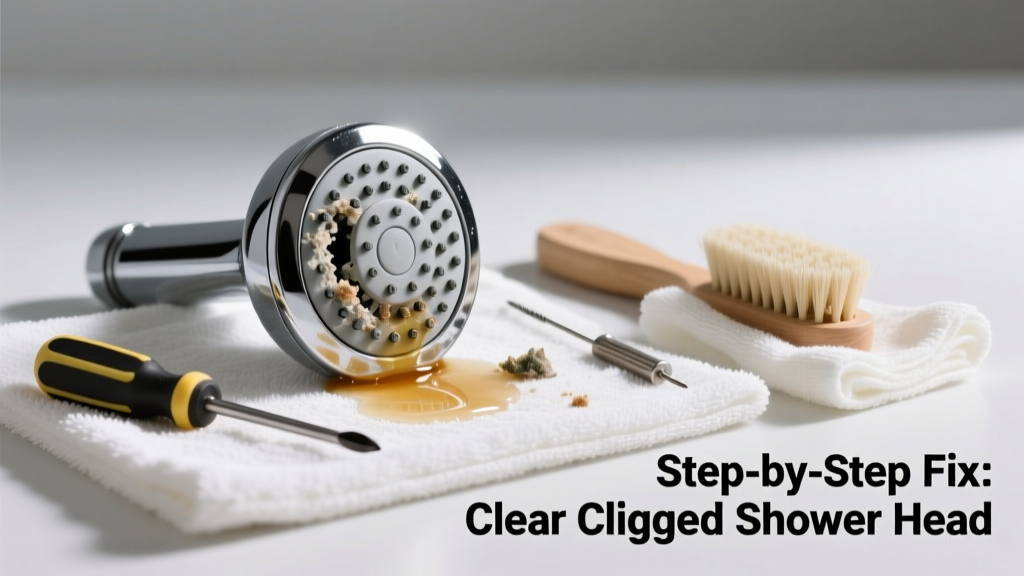
That weak, sputtering spray from your shower head isn’t just annoying—it’s a sign of mineral buildup or debris choking the flow. Most clogs happen silently over months, especially in hard water areas where calcium and magnesium deposits accumulate inside tiny nozzles. The good news? Over 90% of clogged shower heads can be revived in under 30 minutes with household supplies.
Quick Diagnosis
Before grabbing tools, rule out simple causes:
- Low water pressure elsewhere in the house (check sink/faucet flow)
- Shower valve partially closed or misadjusted
- Visible white crust or discoloration on the faceplate
- One or two jets spraying while others are dry or dribbling
- Recent plumbing work that may have dislodged pipe scale
Tools & Materials Needed
| Item | Purpose | Estimated Cost |
|---|---|---|
| Vinegar (white, 5% acetic acid) | Dissolves calcium, lime, and rust without damaging brass or chrome | $2.50–$4.00 |
| Small plastic bag & rubber band | Holds vinegar in contact with nozzles during soak | $1.00–$2.00 |
| Old toothbrush (soft bristle) | Gently scrub nozzle openings and crevices | $1.50–$3.00 |
| Needle or straight pin | Clears stubborn debris from individual spray holes | $0.50–$1.50 |
| Adjustable wrench or channel-lock pliers | Safely removes shower head without scratching finish | $8.00–$18.00 |
Step-by-Step Fix
Try these methods in order—start gentle, escalate only if needed:
- Vinegar soak (no disassembly): Fill a plastic bag with 1 cup white vinegar, secure it over the shower head with a rubber band, and leave for 2–4 hours (or overnight for heavy buildup). Rinse thoroughly and test flow.
- Deep clean with removal: Unscrew the shower head using a wrench wrapped in cloth. Soak the entire unit in vinegar for 6–8 hours. Use a soft toothbrush to scrub the faceplate and threads, then rinse and reinstall.
- Nozzle needle cleaning: With the shower head off, gently insert a needle into each clogged jet—don’t force it. Rotate slightly to break up deposits. Wipe away residue with a damp cloth.
- Filter screen check: Many modern shower heads contain an internal mesh screen near the inlet. Remove it with tweezers, soak in vinegar, and rinse under running water before reinserting.
When to Call a Pro
DIY stops where safety or system integrity begins. Call a licensed plumber if:
- You notice leaks at the shower arm threads after reinstallation—even with new Teflon tape
- Water pressure remains low across multiple fixtures (suggests whole-house supply or valve issues)
- The shower head is part of a thermostatic or digital system with electronic controls
- You’ve stripped the shower arm threads or cracked the fitting trying to remove it
According to the Insurance Institute for Business & Home Safety's 2023 report, 27% of bathroom water damage claims stem from improper DIY repairs involving threaded connections and sealants.
Prevention Tips
Stop clogs before they start with consistent care:
- Rinse shower head weekly under hot water for 30 seconds to flush loose minerals
- Soak in vinegar every 3 months—even if flow seems fine
- Install a whole-house water softener if your area has >7 grains per gallon hardness (USGS data, 2022)
- Choose shower heads with silicone nozzles—they resist buildup and allow easy finger-wipe cleaning
Can I use bleach instead of vinegar?
No. Bleach won’t dissolve mineral deposits—it’s effective against mold and bacteria but can corrode metal finishes and degrade rubber gaskets. Stick with vinegar or citric acid solutions for limescale.
Why does my shower head leak after cleaning?
Most often, it’s a damaged or misplaced rubber washer inside the shower head or at the shower arm connection. Replace the washer (standard size: ½-inch flat or dome) and wrap the shower arm threads with 3–4 layers of Teflon tape before reinstalling.
Is it safe to use a drill or power tool to unscrew a stuck shower head?
Absolutely not. Power tools apply uneven torque and frequently crack brass or chrome housings. Use a wrench with a cloth barrier—and if it’s truly seized, apply penetrating oil like PB Blaster, wait 15 minutes, then try again by hand.
Do all shower heads have removable filters?
No—only about 60% of models sold since 2020 include user-accessible screens, per Plumbing Manufacturers International’s 2023 product survey. Check your manual or look for a small hex or slot near the inlet; if unsure, skip disassembly and stick with soaking.
Can hard water damage my shower head permanently?
Yes—if left untreated for years, calcium carbonate can fuse into a ceramic-like layer inside nozzles, making them impossible to clear. The U.S. EPA estimates that 14% of household water usage is from leaks—including those caused by corroded or clogged fixtures.
What’s the best vinegar concentration for cleaning?
Standard 5% white vinegar works for most cases. For extreme buildup, mix 1 part vinegar with 1 part warm water to reduce fumes—but never exceed 10% acetic acid (industrial strength), which risks damaging chrome plating and rubber seals.
A working shower head shouldn’t feel like a luxury—it should be reliable, efficient, and easy to maintain. Keep a small vinegar spray bottle in your linen closet and make monthly nozzle checks part of your routine. If you’re dealing with other bathroom flow issues, see our guide on shower valve leaking when off or low water pressure in shower. Consistent care today means fewer surprises tomorrow—and more hot, steady water when you need it most.