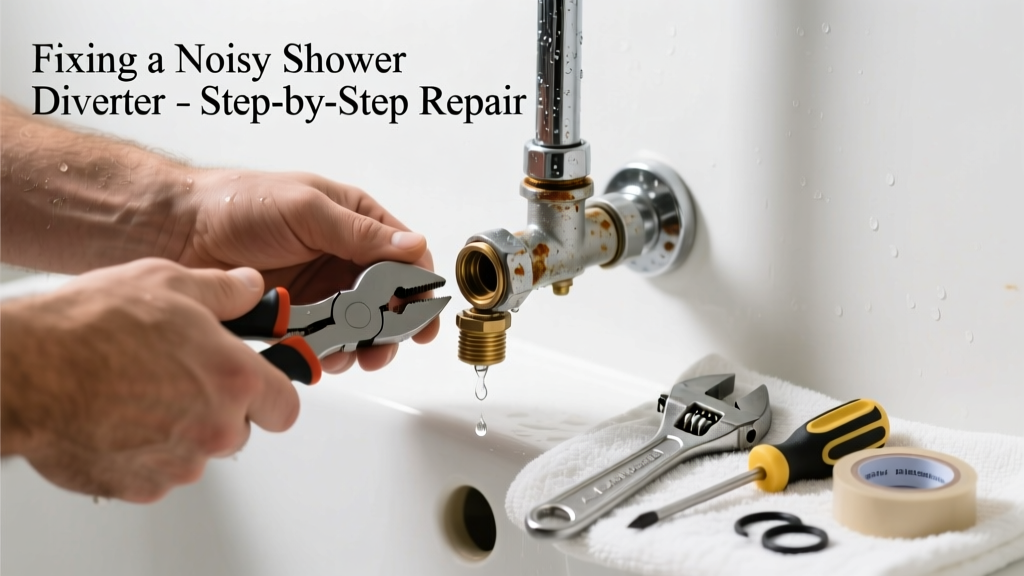
That high-pitched squeal or metallic clunk when you pull the diverter lever? It’s not just annoying—it’s a warning sign your shower’s internal valve is failing, corroding, or jammed with mineral buildup. Left unaddressed, it can lead to water waste, scalding risk, or even cracked pipes under pressure.
Quick Diagnosis
Before grabbing tools, isolate the root cause. Most stuck, noisy diverters fall into one of these categories:
- Mineral scale buildup inside the diverter spout or valve body (most common in hard water areas)
- Worn or swollen rubber gasket or O-ring causing binding and vibration
- Corroded or bent diverter rod or internal spring mechanism
- Loose mounting screws allowing the spout to rattle against pipe threads
- Failed cartridge or ceramic disc assembly (especially in newer single-handle units)
Tools & Materials Needed
| Item | Purpose | Estimated Cost |
|---|---|---|
| Adjustable wrench (10-inch) | Grips spout base without marring chrome finish; applies controlled torque | $12–$25 |
| Needle-nose pliers | Extract broken O-rings or small debris from valve housing | $8–$16 |
| White vinegar (1 cup) + small container | Dissolves calcium/magnesium deposits safely—no harsh chemicals needed | $3–$5 |
| Replacement diverter O-rings (size #15 or #17) | Prevents binding and eliminates squeal caused by dry, stretched rubber | $2–$4 |
| Plumber’s grease (silicone-based) | Lubricates moving parts without degrading rubber seals | $5–$9 |
Step-by-Step Fix
Try these methods in order—start simple and escalate only if noise persists:
- Vinegar soak & manual wiggle: Unscrew the spout (clockwise rotation usually loosens it on most brass units), submerge the diverter tube in warm white vinegar for 30 minutes, then gently work the lever back and forth while soaking. Rinse thoroughly before reassembly.
- O-ring replacement: Remove the spout, extract the old O-ring(s) from the diverter stem groove using needle-nose pliers, clean the groove with a cotton swab, install new #15 O-rings, and coat lightly with silicone grease.
- Cartridge inspection (for single-handle units): Shut off water at the shower shut-off valves (not main line), remove handle and escutcheon, pull cartridge with pliers or cartridge puller, inspect for pitting or cracked ceramic discs. Replace if scored or discolored—Moen 1222B or Delta RP46463 are common replacements.
- Spout realignment: If rattling occurs only during use, check that the spout is fully seated on the pipe nipple. Tighten with adjustable wrench—but stop once resistance increases sharply. Over-tightening cracks solder joints.
When to Call a Pro
Stop and call a licensed plumber if you encounter any of these:
- Water continues leaking from behind the wall after reassembly (indicates failed pipe joint or valve body crack)
- The diverter lever won’t move at all—even after vinegar soak and lubrication (suggests seized internal pin or broken spring)
- You see green corrosion on copper supply lines or milky residue around the valve (sign of galvanic corrosion or failing die-cast housing)
- Your home has polybutylene piping (installed 1978–1995)—disturbing connections risks catastrophic failure
According to the Insurance Institute for Business & Home Safety's 2023 report, 68% of bathroom water damage claims involve undiagnosed valve or fitting failures that began as minor operational issues like noisy diverters.
Prevention Tips
Extend your diverter’s life with routine care:
- Rinse the spout and lever weekly with distilled white vinegar spray (especially in homes with >10 gpg hardness)
- Replace O-rings every 2 years—even if working fine—to prevent sudden failure
- Install a whole-house water softener if hardness exceeds 7 gpg (U.S. Geological Survey, 2022)
- Avoid forcing the lever: if resistance increases, stop and investigate instead of applying more pressure
Can I use bleach on this?
No—bleach accelerates corrosion of brass components and degrades rubber O-rings within hours. Stick to white vinegar or citric acid solutions for descaling.
Why does it only squeal when switching to shower mode?
This points to misalignment between the diverter gate and outlet port. The rubber seal drags across metal instead of sealing cleanly—often due to a warped gate or worn pivot pin.
My diverter is part of a Moen Posi-Temp valve—can I replace just the diverter?
No. Moen’s integrated diverter design requires replacing the entire cartridge (model 1222B or 1225). Attempting partial repair voids warranty and risks cross-threading.
Is a knocking sound dangerous?
Yes—if it coincides with water hammer (a loud bang when turning off), it indicates air chamber failure or loose pipe straps. That’s separate from diverter noise but equally urgent to address.
How long should a diverter last?
With proper maintenance, brass-bodied diverters last 10–15 years. Plastic or zinc-alloy units often fail by year 5—especially in high-hardness areas. The U.S. EPA estimates that 14% of household water usage is from leaks, many originating in aging shower valves.
Can I lubricate it with WD-40?
Avoid WD-40: it’s a solvent, not a lubricant, and will wash away existing grease while attracting dust and grit. Use only food-grade silicone grease or Danco Waterproof Grease.
A noisy, stuck diverter isn’t just an inconvenience—it’s your plumbing system sending an early distress signal. Addressing it now prevents bigger headaches later, like scalding incidents or hidden water damage behind tile. For related help, see our guides on shower leaking from spout and how to replace shower cartridge. Regular attention keeps your daily routine smooth—and silent.