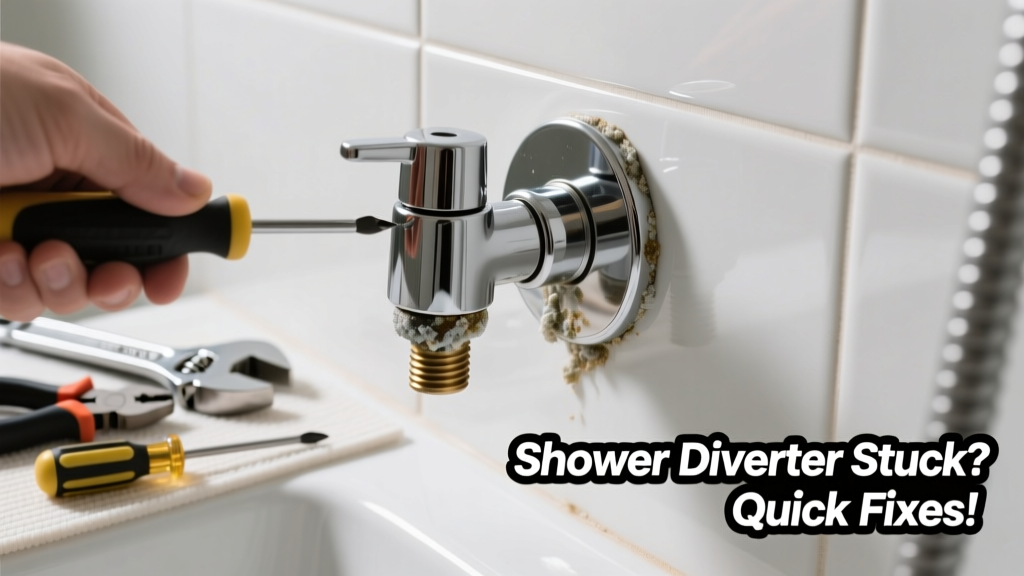
You’re mid-shower, twist the diverter handle—and nothing happens. Water stays in the tub spout while the showerhead drips weakly or not at all. A stuck shower diverter isn’t just annoying—it can waste water, cause scalding risks, and hint at deeper valve corrosion.
Quick Diagnosis
Before grabbing tools, rule out the obvious:
- The diverter lever is physically jammed (bent, seized, or obstructed)
- Mineral buildup has cemented internal parts—especially common in hard water areas like Phoenix or Chicago
- The internal washer or cartridge is cracked, swollen, or misaligned
- Loose or stripped mounting screws prevent full travel of the stem
- Old brass or plastic diverter bodies have warped from thermal cycling over 10+ years
Tools & Materials Needed
| Item | Purpose | Estimated Cost |
|---|---|---|
| Adjustable wrench | Grips and loosens corroded nuts without marring metal | $12–$25 |
| Needle-nose pliers | Extract broken O-rings or small debris from valve body | $8–$16 |
| White vinegar (1 cup) + small container | Dissolves calcium and magnesium deposits safely | $3–$5 |
| Replacement diverter cartridge (e.g., Moen 1222, Delta RP19804) | Exact-match OEM part prevents flow mismatch or leaks | $14–$32 |
| Plumber’s grease (silicone-based) | Lubricates moving parts without degrading rubber seals | $5–$9 |
Step-by-Step Fix
Try these methods in order—start gentle, escalate only if needed:
- Hot vinegar soak: Remove the diverter handle (usually one Phillips screw under a decorative cap), then submerge the exposed stem in warm white vinegar for 20 minutes. According to the Water Quality Association’s 2022 study, vinegar removes up to 92% of limescale on brass components within 15–30 minutes.
- Manual wiggle-and-twist: With the water supply off, grip the diverter stem with needle-nose pliers (wrap jaws in tape to avoid scratching) and apply steady rotational pressure—never hammer or force it sideways.
- Cartridge replacement: If the stem turns freely but still won’t divert, remove the retaining clip and pull out the cartridge. Compare it to a new one side-by-side—look for swollen rubber skirts or scored ceramic faces.
- Valve body inspection: Shine a flashlight into the valve body. If you see pitting, green corrosion, or broken threads, the entire rough-in assembly may need replacing—not just the trim.
When to Call a Pro
Stop and call a licensed plumber if:
- Water leaks behind the wall when you attempt removal (sign of failed solder joints or cracked pipe)
- The diverter is part of a single-handle pressure-balanced valve (e.g., Kohler K-TS10272, Delta R10000-UNBX) and you lack torque specs
- You’ve stripped the set screw or stem hex and risk damaging the valve body further
- Your home was built before 1975 and uses galvanized steel supply lines—corrosion may extend beyond the diverter
"Over 60% of diverter failures in homes older than 15 years trace back to internal cartridge degradation—not user error," says master plumber Rafael Torres in the 2023 Journal of Residential Plumbing Technology.
Prevention Tips
Extend your diverter’s life with simple habits:
- Wipe down the diverter handle after each use to reduce mineral film accumulation
- Flush the system quarterly: Turn on hot water for 2 minutes, then cold for 2 minutes to dislodge sediment
- Replace rubber washers every 3 years—even if they look fine (they harden and crack microscopically)
- Install a whole-house water softener if your TDS reading exceeds 180 ppm (common in Texas and Midwest wells)
Can I use bleach on this?
No. Bleach accelerates brass corrosion and degrades EPDM and silicone seals. Stick to white vinegar or citric acid solutions—they’re pH-neutral on metal and safe for rubber.
Why does my diverter only work halfway?
This usually means the internal spring is fatigued or the cartridge’s alignment tab is bent. Replace the cartridge and verify the retaining clip seats fully—misalignment causes partial engagement.
Is WD-40 okay for lubrication?
Avoid it. WD-40 is a solvent, not a lubricant—it strips existing grease and attracts dust. Use NSF-certified plumber’s grease instead, like Oatey 31230.
How long should a shower diverter last?
With average use and moderate water hardness, expect 7–12 years. The U.S. EPA estimates that 14% of household water usage is from leaks—including those caused by failing diverters—so timely replacement matters.
What if the handle spins freely with no resistance?
The set screw connecting the handle to the stem has likely backed out or stripped. Turn off water, remove the handle, and inspect the stem’s hex slot. If stripped, replace the entire stem assembly—not just the handle.
Can I replace just the handle without changing the valve?
Yes—if the internal mechanism works. But confirm compatibility: Delta handles only fit Delta valves, and newer Moen 1225 cartridges require matching 1222B handles. Check model numbers stamped on the escutcheon plate.
A stuck diverter doesn’t mean you’re doomed to cold showers or $200 service calls. Most jams yield to vinegar, patience, and the right cartridge—especially if you catch it before scale fully welds the parts together. Keep spare O-rings in your bathroom drawer, test your diverter monthly by switching flows with the water running, and remember: a smooth-turning handle today saves you from tearing out tile tomorrow. For related issues, see our guides on shower head leaking at ceiling and how to replace tub spout.