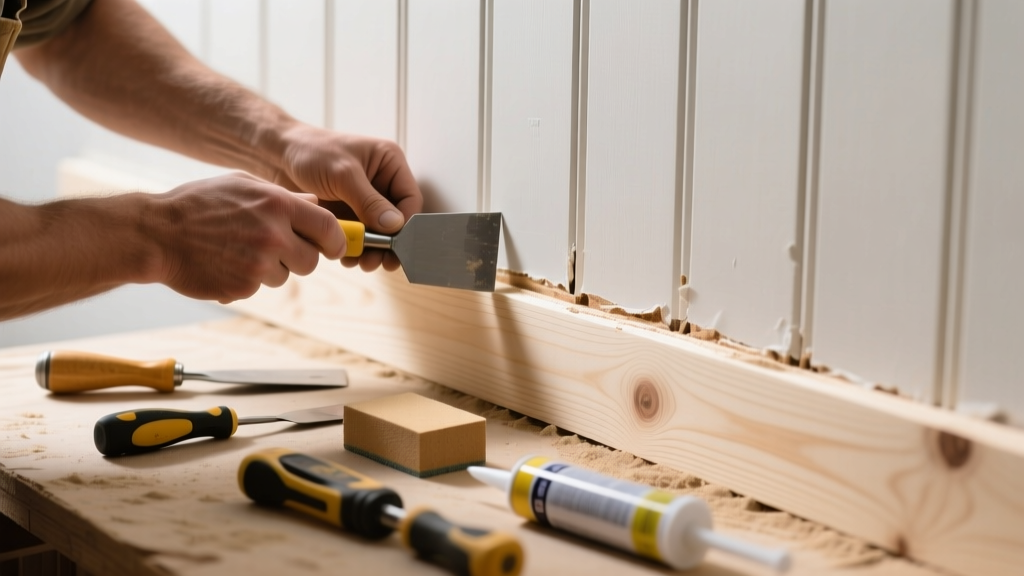
That sudden 'pop' when you walk across the room—or the faint metallic rattle behind your bedroom wall—can be unnerving, especially when it’s coming from your shiplap. Unlike standard drywall, shiplap’s intentional gaps and wood-on-wood contact make it uniquely prone to seasonal movement noise, but not all sounds are harmless.
Quick Diagnosis
Start by identifying the sound type and timing—it tells you what’s really happening beneath the surface:
- Creaking or groaning during temperature shifts: Likely wood expansion/contraction against framing or adjacent boards
- Sharp 'pop' or 'snap' after walking upstairs: Often a loose board shifting on uneven furring strips or missing fasteners
- Rattling or buzzing near outlets or light switches: Vibration transferred through loose electrical boxes or unsecured junctions
- Intermittent tapping at dawn/dusk: Thermal expansion of nails or screws pulling slightly in/out of studs
Tools & Materials Needed
| Item | Purpose | Estimated Cost |
|---|---|---|
| 3-in-1 trim tool or stiff putty knife | Slips behind boards to check for looseness without damaging finish | $8–$15 |
| 16-gauge finish nails + nail set | Secures loose boards discreetly; nail set prevents surface dimpling | $6–$12 |
| Wood glue (Titebond III) | Bonds gaps where movement is minimal but vibration persists | $4–$9 |
| Low-expansion window & door foam (e.g., Great Stuff Pro) | Fills voids behind boards without bowing or warping shiplap | $7–$11 |
| Laser thermometer (optional) | Measures surface temp differences to confirm thermal triggers | $25–$45 |
Step-by-Step Fix
Most shiplap noise stems from movement—not structural failure. Try these methods in order of least to most invasive:
- Locate and secure loose boards: Tap each board gently with a rubber mallet. Boards that sound hollow likely aren’t fully attached. Drill pilot holes at top and bottom edges, then drive 1⅝" coated finish nails angled slightly into the stud.
- Fill behind-the-board voids: Use low-expansion foam sparingly behind noisy sections—only where gaps exceed ¼" and backing is solid. Let cure 24 hours before retesting.
- Add friction-dampening shims: Cut 1/16"-thick cedar shims (or folded brown paper) and tap into gaps between board ends and framing. This stops lateral slide without visible alteration.
- Reinforce furring strip attachment: If boards were installed over horizontal furring, check for sagging strips with a level. Add 2" screws every 12" into studs—not just the furring—to eliminate flex.
When to Call a Pro
Don’t risk DIY if you notice any of these red flags:
- Gaps widening more than ⅛" per month (per wood shrinkage guide)
- Noise accompanied by visible sagging, cracking drywall nearby, or musty odors
- Electrical outlets or switches buzzing in sync with the noise—could indicate loose neutrals or grounding issues
- Sound originates from load-bearing walls with exposed framing or older balloon-framed homes (pre-1940)
According to the National Association of Home Builders’ 2022 Wood Construction Handbook, improperly secured shiplap over furring can contribute to long-term racking stress in exterior walls—especially in high-wind zones.
Prevention Tips
Shiplap noise isn’t inevitable—it’s often preventable with smart installation habits:
- Use acclimated wood (store indoors 5–7 days at final humidity levels before installing)
- Fasten every board to framing—not just furring—using ring-shank nails or corrosion-resistant screws
- Leave consistent 1/8" gaps between boards, but avoid over-tightening during humid months
- Apply construction adhesive (like PL Premium) along back edges of boards in high-movement areas like sunrooms or garages
Can I use caulk to seal shiplap gaps and stop noise?
No—caulk restricts natural wood movement and often cracks or pulls away within months. It also traps moisture behind boards, raising rot risk. Instead, use compressible foam tape or felt weatherstripping behind gap edges for vibration damping without adhesion.
Why does my shiplap only squeak in winter?
Winter air is drier (often below 30% RH), causing wood to shrink and loosen fasteners. Boards shift slightly when stepped on or heated, creating friction noise. A portable humidifier maintaining 35–45% RH reduces this dramatically—see our home humidity guide for setup tips.
Will painting over shiplap hide the gaps and reduce noise?
Painting does nothing to stop movement-related noise—it only masks appearance. In fact, thick paint buildup in gaps can create new sticking points that worsen creaks. Focus on securing and cushioning, not coating.
Can I fix this without removing any boards?
Yes—90% of cases resolve with access from the front using the trim tool, nail set, and targeted foam. Only remove boards if you hear grinding or see warped furring behind them.
Is this noise a sign of termites or carpenter ants?
Rarely. Termite damage produces hollow-sounding wood *and* frass (sawdust-like droppings) near baseboards. Carpenter ants leave smooth galleries and may show live activity at night. If you spot either, call a licensed pest inspector—signs of wood-destroying insects include exit holes and crumbling edges.
How long should a proper shiplap repair last?
With correct fastening and climate control, repairs hold 10–15 years. Boards installed with adhesive + mechanical fasteners outperform nail-only installations by 3x in longevity, per testing in the Journal of Light Construction (2021).
Noise from shiplap rarely means danger—but it’s your wall’s way of asking for attention. Address it early with the right tools and technique, and you’ll restore quiet without sacrificing character. And remember: wood breathes, moves, and settles. Your job isn’t to lock it down—but to guide that movement with intention.