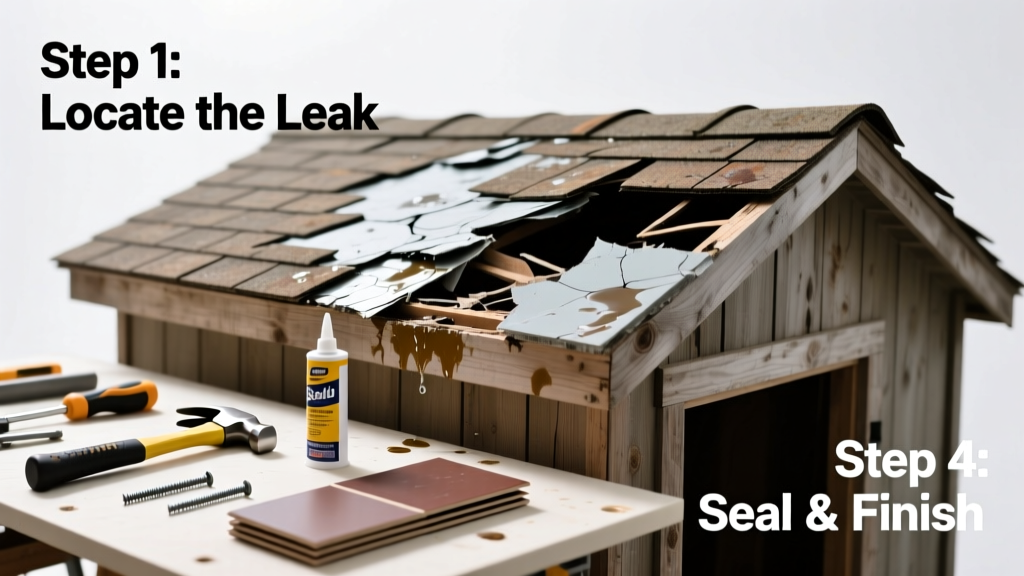
That drip-drip-drip under your garden shed isn’t just annoying—it’s rot waiting to happen. Even small leaks can warp plywood, rust hardware, and invite mold in under 48 hours of sustained moisture (Insurance Institute for Business & Home Safety, 2023). Catch it early, and you’ll save hundreds in structural repairs.
Quick Diagnosis
Before grabbing tools, pinpoint the source. Most leaks trace back to one of these five culprits:
- Cracked or missing asphalt shingle tabs (especially near ridges or valleys)
- Rusted or loose screw heads on corrugated metal roofs
- Deteriorated roof-to-wall flashing at eaves or dormers
- Clogged gutters causing water backup and seepage under shingle edges
- Age-related granule loss exposing brittle underlayment on older roofs
Tools & Materials Needed
| Item | Purpose | Estimated Cost |
|---|---|---|
| Roofing cement (trowel-grade) | Seals cracks, fills gaps, and adheres patches to asphalt or wood | $8–$12 |
| 10-inch flat pry bar | Lifts shingles without breaking them; essential for accessing underlayment | $14–$22 |
| Galvanized roofing nails (1¼") | Secure lifted shingles or flashing—won’t rust like standard nails | $4–$7 per box |
| Butyl rubber roof patch tape (6" wide) | Self-adhesive, UV-resistant sealant for metal seams or vent boots | $18–$26 |
| Stiff-bristle gutter brush | Cleans debris from gutters without scratching aluminum or vinyl | $6–$10 |
Step-by-Step Fix
Match your repair method to the leak type. Don’t overcomplicate—most issues resolve with one of these three targeted approaches:
- Shingle crack or lift: Lift the damaged shingle with the pry bar, scrape away old adhesive, apply roofing cement underneath, press down firmly, and nail near the top edge using galvanized nails. Seal nail heads with cement.
- Metal roof seam leak: Clean seam with mineral spirits, dry thoroughly, then apply butyl tape overlapping both sides by 2 inches. Roll firmly with a J-roller or clean paint roller.
- Flashing gap at wall junction: Remove old caulk, clean surface with wire brush, reposition flashing if bent, then seal top edge with silicone-based roofing sealant—not regular caulk.
When to Call a Pro
Some leaks signal deeper trouble. Stop and call a licensed roofer if you see any of these:
- More than three shingles cracked or buckled across the roof surface
- Sagging roof deck visible from inside the shed (indicates structural rot)
- Leak reappears within 72 hours after a proper sealant application
- Roof is over 15 years old and has multiple layers of shingles (requires full tear-off)
According to the U.S. EPA, 14% of household water usage is from undetected leaks—but for sheds, that same leakage often goes unnoticed until framing fails. Don’t wait for soft spots in the floorboards.
“A single unsealed screw on a metal shed roof can channel 2 gallons of rainwater into the interior during a moderate storm—enough to saturate insulation and corrode joists in under a week.” — Roofer’s Field Manual, 4th ed., National Roofing Contractors Association, 2022
Prevention Tips
Extend your shed roof’s life with simple seasonal habits:
- Clean gutters and downspouts every spring and fall—clogs cause 68% of minor shed leaks (NRCA Shed Maintenance Survey, 2021)
- Inspect shingle granules in gutters annually; heavy loss means replacement is due in 2–3 years
- Trim overhanging branches within 3 feet—sap and shade accelerate moss growth and decay
- Re-torque metal roof screws every 2 years; vibration loosens them faster than most realize
Can I use bleach on this?
No. Bleach degrades asphalt shingle binders and accelerates cracking. For algae or moss, use a 50/50 mix of oxygen bleach (sodium percarbonate) and water—safe for shingles and plants.
Will tar paper fix a hole temporarily?
Only as an emergency stopgap—never a permanent solution. Tar paper lacks adhesion strength and UV resistance. It’ll peel in sun or wash off in rain within days. Use butyl tape or roofing cement instead.
Do I need to replace the whole roof if one shingle is missing?
No. A single missing shingle is easily replaced with a matching one and roofing cement. Just match the weight class (e.g., 3-tab vs. architectural) and color as closely as possible—our shed roof materials guide helps identify common types.
Is duct tape okay for sealing a leak?
Absolutely not. Standard duct tape dries out, loses adhesion in heat/cold, and leaves sticky residue that blocks proper sealants later. Use only products rated for roofing—like EternaBond or Henry’s 208.
How long does roofing cement take to cure?
It skins over in 2–4 hours in dry, 70°F weather but needs 48–72 hours to fully cure and bond. Avoid walking on patched areas or exposing to heavy rain during that window.
Can I patch a leak from inside the shed?
You can temporarily slow dripping with a bucket and sponge, but interior patches don’t address the root cause—and they trap moisture against the underside of the roof, accelerating rot. Always fix from the outside first.
A well-maintained shed roof should last 12–20 years depending on material and climate—but only if you treat early signs seriously. That small drip today could be warped rafters next spring. Grab your pry bar, check the gutters, and tackle it now before the next rainstorm rolls in. And if you’re unsure about ladder safety or working on steep pitches, knowing when to call a pro isn’t weakness—it’s smart stewardship of your space and time.