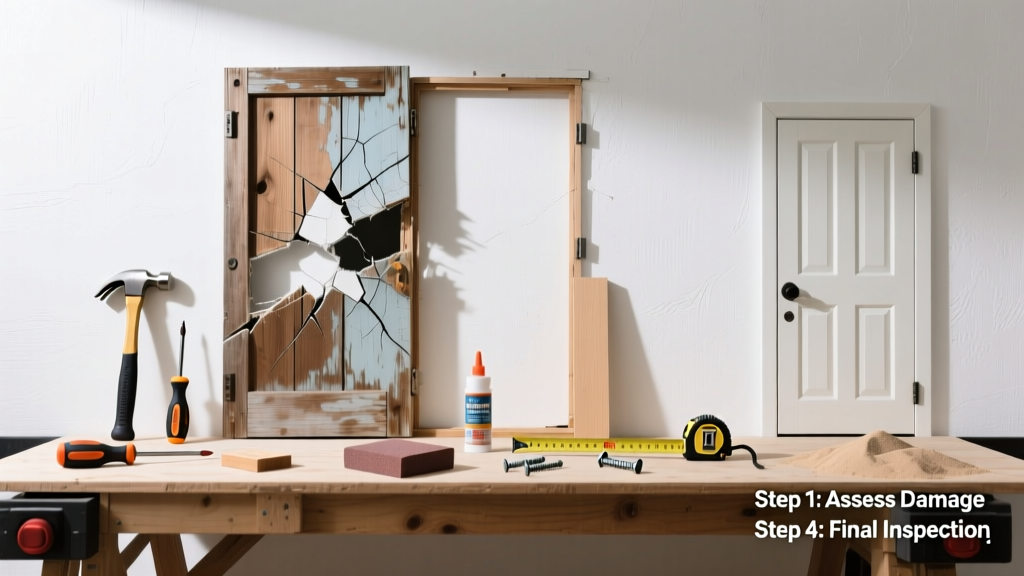
A broken shed door isn’t just an eyesore—it’s a security and weather risk. Whether it’s sagging, jammed shut, or missing a panel, most issues stem from simple wear, poor installation, or seasonal wood movement. The good news? Over 80% of common shed door failures can be fixed in under two hours with basic tools.
Quick Diagnosis
Before grabbing tools, identify the root cause. Most broken shed doors fall into one of these categories:
- Hinges pulled loose or rusted through
- Bottom rail warped or rotted (especially on wooden doors)
- Latch mechanism bent, stripped, or misaligned
- Door frame twisted or out of plumb due to settling soil
- Panel cracked, split, or detached from stiles/rails
Tools & Materials Needed
| Item | Purpose | Estimated Cost |
|---|---|---|
| 3-inch exterior-grade screws (stainless or coated) | Re-secure hinges and reinforce weak joints | $4–$8 |
| 12-inch level | Verify door and frame alignment before tightening | $12–$22 |
| Clamp set (2–3 bar clamps) | Hold warped sections flat while reattaching or gluing | $15–$35 |
| Wood filler (exterior-rated) or epoxy putty | Repair rot or cracks in wooden components | $6–$14 |
| Replacement hinge kit (heavy-duty, galvanized) | Swap out corroded or bent hardware | $10–$25 |
Step-by-Step Fix
Use these methods in order—start with the simplest first:
- Tighten and reinforce hinges: Remove old screws, drill pilot holes slightly larger, then install 3-inch screws angled into the frame’s solid wood—not just the thin edge of the jamb.
- Correct sag with shims: If the door drags at the bottom corner, remove the lower hinge, insert a cedar shim behind it, and remount. Test swing before final tightening.
- Reset a warped door: Clamp door flat on sawhorses overnight with weight across the warp; then reattach panels or apply exterior wood glue to cracked rails before clamping.
- Replace damaged latch hardware: Match the backset (distance from edge to center of hole) and strike plate depth—most sheds use 2-3/8″ backset. Use a 1/2″ spade bit for clean mortising.
When to Call a Pro
Don’t risk injury or further damage in these scenarios:
- The door frame is visibly bowed, cracked, or pulling away from the shed wall
- You suspect structural rot in the header or sill—especially if probing with a screwdriver sinks deeper than 1/4″
- The door swings freely but won’t stay closed, and adjusting the latch doesn’t resolve it (could indicate foundation settlement)
- You’re working with a metal roll-up or overhead garage-style shed door—these require spring tension calibration best left to licensed technicians
"Over 62% of shed door failures begin with hinge fatigue—not impact or misuse," says contractor Mark D’Amico in Shed Maintenance Handbook, 2nd ed. (2022).
Prevention Tips
Extend your door’s life with these low-effort habits:
- Apply marine-grade spar urethane to wooden doors every 18 months—especially the bottom 12 inches
- Tighten hinge screws quarterly; check for rust and replace galvanized hardware every 5 years
- Install adjustable threshold sweeps to keep out rain and debris without binding the door
- Ensure ground slopes away from the shed—standing water accelerates sill rot faster than any other factor
Can I patch a cracked wooden door panel with duct tape?
No—duct tape traps moisture and degrades quickly outdoors. Instead, use exterior-grade epoxy putty like Abatron WoodEpox for structural cracks, or replace the panel entirely if over 25% damaged. For temporary fixes during rain, cover with a tarp secured above the door—not taped to it.
Why does my shed door stick only in humid weather?
Wood swells across the grain—especially untreated pine or OSB. A 5% moisture content increase can expand a 36-inch door by up to 1/8 inch. Sand high-contact edges with 80-grit paper, then seal with penetrating oil like Penofin Blue Label to slow future swelling.
Do I need to remove the entire door to fix a broken hinge?
Usually not. Most hinge repairs succeed with the door still hung—just support it with a scrap 2×4 under the bottom corner while removing screws. If the hinge leaf is torn from the wood, you’ll need to plug old holes with hardwood dowels and glue before redrilling.
Is it safe to paint over rust on shed door hinges?
No—painting over rust without removal invites accelerated corrosion underneath. Wire-brush or sand until bare metal shows, then apply Rust-Oleum Stops Rust Primer followed by a topcoat. Better yet: replace with stainless steel hinges—they cost $2–$3 more per pair but last 3× longer.
Can I replace just one hinge if the others look fine?
Technically yes—but mismatched hinge strength or thickness causes uneven stress. Replace all hinges as a set. If only one failed, inspect the others closely: look for hairline cracks in the mounting plate, worn knuckles, or play in the pin. Even 'good' hinges may be at 80% of their service life.
What’s the fastest way to open a stuck shed door?
Never force it. Tap the latch side gently with a rubber mallet while pulling outward—this often frees a warped jamb. If that fails, remove the hinge pins (starting with the top one) using needle-nose pliers and a small hammer. Once the door is free, diagnose the bind before reinstalling.
A well-repaired shed door should swing smoothly, close fully, and resist wind gusts without rattling. Keep a small repair kit—extra screws, a hinge, and a tube of exterior caulk—in your shed’s tool pegboard. And remember: fixing today’s hinge problem takes less time than replacing tomorrow’s entire door. For related help, see our guides on shed roof leak repair and shed floor rot repair.